
Google Patents a Smart Display That Wheels Itself Over to You
Google is patenting a smart display that doesn't wait for you to walk over to it — it drives itself across the room to meet you, and it's smart enough to know when not to bother.
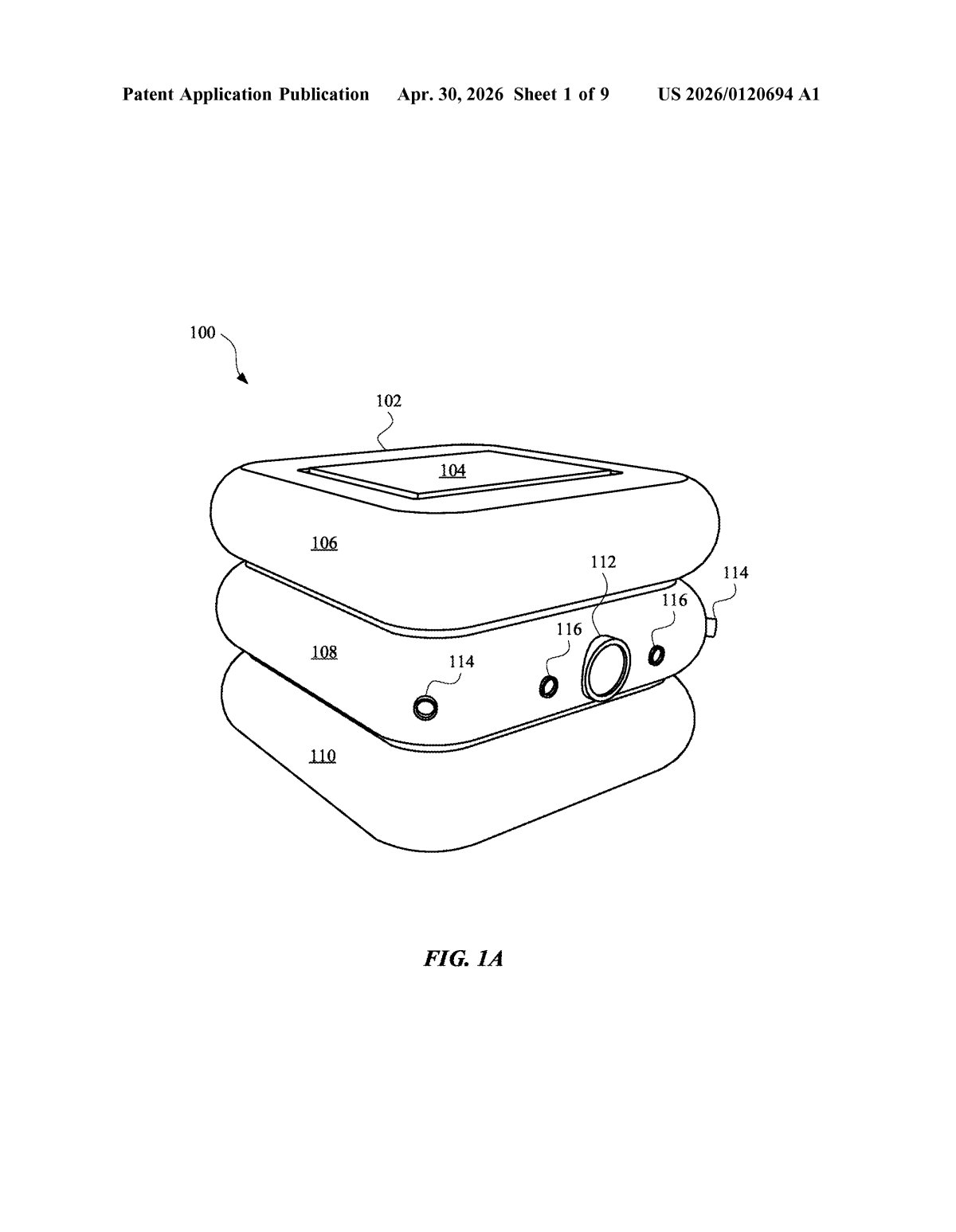
What Google's self-driving smart display actually does
Imagine asking your smart home display to show you a recipe, and instead of you having to get up and squint at it across the kitchen, it just… rolls over. That's the core idea behind this Google patent.
Google's motorized display listens to what you ask for and figures out whether you actually need to see something. If you ask for a recipe card or a photo, it wheels itself toward you and rotates its screen to face you directly. If you only ask for music or a weather report you can hear, it stays put — no unnecessary motoring around your living room.
The device even calculates how close it needs to get based on what's on screen. Small text? It'll park itself right next to you. A big bold headline? It might stop a few feet away. It's essentially a display with social awareness baked into its navigation logic.
How the device decides when — and how close — to roll
The patent describes a mobile computing device — think a tablet-sized screen on wheels — equipped with multiple microphones, wheel motors, and a display motor for rotating the screen.
When you speak a command, the device does a few things in sequence:
- It detects your voice and parses your spoken utterance using an automated assistant (Google Assistant, presumably).
- It determines whether your request requires graphical content (something you'd need to look at) or just audio output.
- If visual content is needed, it calculates a target viewing distance — the ideal distance between you and the screen — based on factors like text size and content type.
- If you're currently farther away than that target, it actuates the wheel motors to drive toward you, and rotates the display panel to face you.
The system also handles a nuanced edge case: if the motors are already running when you speak, it modifies its behavior accordingly — presumably slowing or pausing to better capture your voice through the microphones. That's a thoughtful touch that suggests the engineers thought carefully about real-world noise conditions.
What this means for the future of home assistant displays
Smart displays like the Google Nest Hub have been stuck in one place since they launched — you come to them, not the other way around. This patent sketches out a fundamentally different model where the device adapts to your physical location, not the other way around. For accessibility use cases — elderly users, people with mobility limitations, or anyone with their hands full in a kitchen — that's a meaningful shift.
It also hints at a more ambient computing future where devices have enough spatial awareness to behave less like appliances bolted to a counter and more like attentive assistants. Whether Google actually ships something like this is another question, but the underlying logic — content type should determine device behavior, including physical movement — is a genuinely interesting design principle.
This is one of those patents that sounds like a gimmick until you think about it for thirty seconds. A display that knows when to roll over and when to stay put — based on what you actually need to see — is a smarter design than it first appears. The accessibility angle alone gives this real-world weight, and the engineering detail in the claim (variable target distance based on text size!) suggests this isn't just a blue-sky idea.
There are more where this came from
We read every patent application Big Tech publishes and send you the ones worth knowing. Plain English, free, every week.
Want this weekly breakdown for a company we don't cover? Patentlyze Pro →