
IBM Patents a System That Tracks and Logs Every Change AI Makes to Code
When an AI writes your software, who's accountable if something goes wrong? IBM's new patent tries to answer that with a tamper-proof record of every prompt, every response, and every human approval.
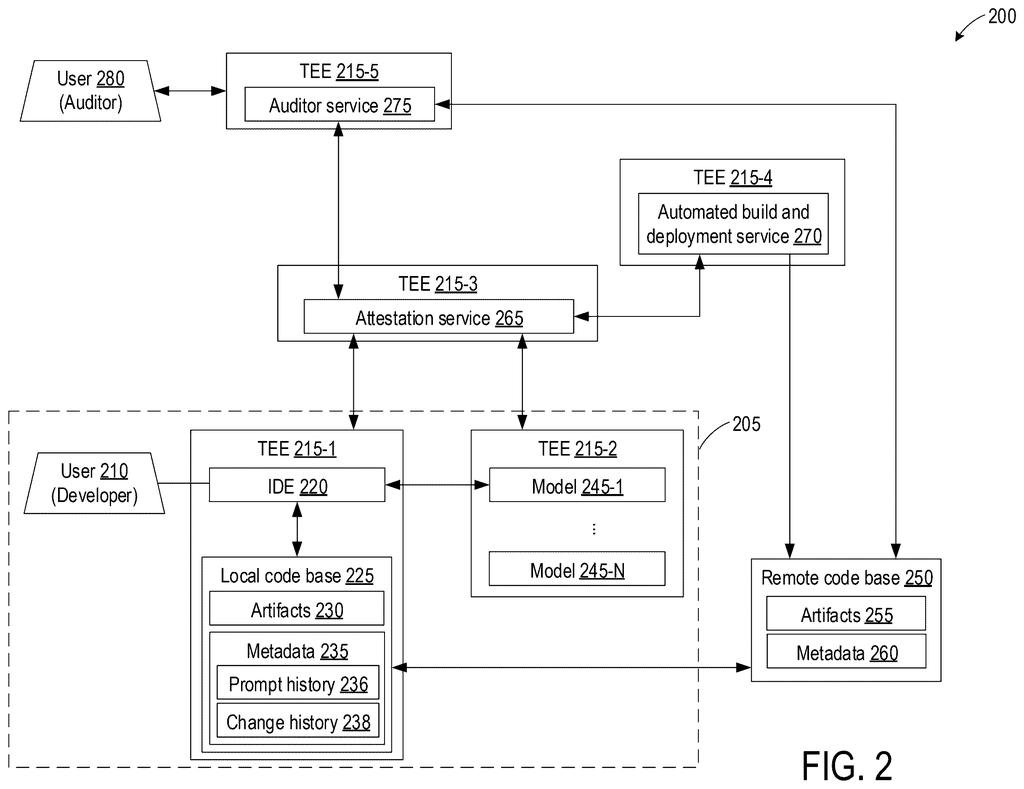
How IBM keeps AI code writing inside a safe box
Ever asked a chatbot to write code for you and wondered whether anyone actually checked if it was safe? That's the gap IBM is trying to close here.
The idea is to wrap the entire AI coding session inside a protected digital container, sometimes called a secure enclave, where the AI model itself runs in isolation from the outside world. Every time you type a prompt and the AI spits out code, both the request and the response are logged in a history that can't be edited. When you decide to accept or reject that code, that decision is recorded too.
The result is a chain of custody for software. If a bug or a security flaw later turns up in code that an AI wrote, your team has a complete record of exactly what was asked, what was generated, and who signed off. That kind of paper trail is increasingly what regulators and enterprise security teams are asking for.
receiving, within a trust boundary comprising one or more Trusted Execution Environments (TEEs), a prompt from a user requesting generation of source code …
Translation: The system starts inside a secure digital zone when a user asks an AI to write code.
Inside IBM's trusted enclave for code generation
The patent describes a system built around one or more Trusted Execution Environments (TEEs), which are isolated regions of a processor that the rest of the computer, and anyone on the network, cannot read or tamper with. Think of a TEE as a locked room inside your server where even the operating system isn't allowed in.
Inside that locked room, the patent establishes a trust boundary that holds three things:
- The AI model doing the code generation
- A prompt history that logs every user request paired with the AI's response
- A set of source code artifacts, the actual files the AI has produced, along with a change history recording each update
When a user submits a prompt, the request goes to the model inside the boundary. The generated code comes back, gets logged, and the user is asked to accept or reject it. That accept/reject decision updates the artifact store and the change history. Nothing leaves the boundary without that provenance attached.
The practical effect is that every piece of AI-written code carries a verifiable record of its origin. Because the environment is a TEE, the logs themselves are considered trustworthy by design, not just by policy.
… updating, responsive to an input indicating whether the user accepts the generated source code, a set of source code artifacts stored within the trust boundary …
Translation: It saves the code and logs the change only if the user decides to keep what the AI made.
What this means for teams shipping AI-written software
For most developers today, AI coding assistants are essentially a black box. You get code, you paste it in, and if it causes a problem six months later there's no structured record of where it came from or whether anyone reviewed it. This patent describes infrastructure that makes that history automatic and verifiable, which is exactly what compliance-heavy industries like banking, healthcare, and government software need before they'll let AI anywhere near production code.
IBM's steady investment in trusted-compute filings suggests the company is positioning itself as the enterprise choice for AI that can pass an audit. Whether developers outside of strictly regulated sectors will care enough to adopt the overhead of a full enclave setup is a fair question, but for the sectors that do care, having a tamper-proof provenance system built into the coding tool itself is a real selling point.
That makes this IBM's 49th filing we've tracked since May in the AI guardrails race, following one on live data sharpening and Red Hat's locked response method.
For the person actually writing software with an AI assistant, this patent addresses a failure mode that currently has no good fix: you accepted a suggestion, it shipped, and now nobody can prove what the AI said versus what you changed. That's a bad place to be when a security audit comes around.
The concrete payoff is a log you can hand to an auditor, a regulator, or a colleague doing a post-mortem. You don't have to reconstruct the AI's reasoning from memory because the system preserved it automatically inside a hardware-protected zone that can't be retroactively altered.
The trade-off is real, though. Running AI models inside a Trusted Execution Environment adds cost and operational complexity. Teams that aren't already subject to compliance requirements will probably find the overhead hard to justify. This is infrastructure built for regulated industries first, and everyone else maybe later.
There are more where this came from
We read every patent application Big Tech publishes and send you the ones worth knowing. Plain English, free, every week.
The drawings
7 drawing sheets from US 2026/0267620 A1 · click any drawing to enlarge


Want this weekly breakdown for a company we don't cover? Patentlyze Pro →