
Nvidia Patents an AI That Predicts Where Your Eyes Are Going Next
Tracking where a person's eyes land is hard enough when everything is in view. Nvidia's new patent takes on the trickier problem: predicting gaze even when the object someone is looking toward isn't visible at all.
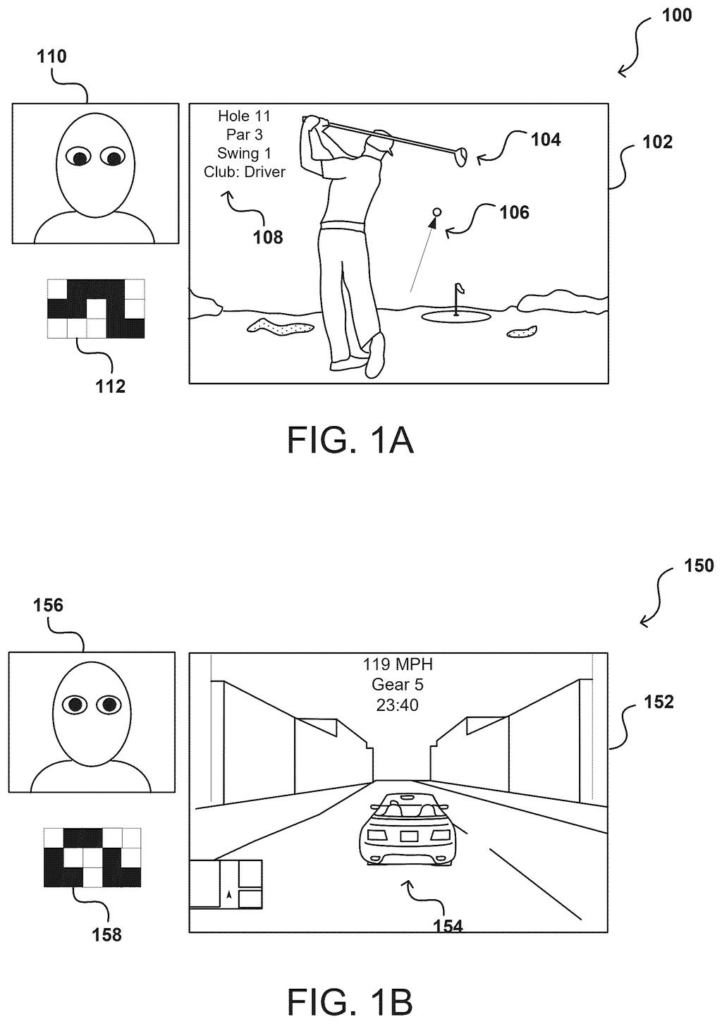
How Nvidia's eye-tracking AI handles what you can't see
A person glances at a doorway the moment before someone walks through it. That anticipatory look, aimed at something not yet there, is exactly the kind of gaze that trips up most eye-tracking systems today.
Nvidia's patent describes training an AI to predict where your eyes are pointed, including when you're looking at objects that are blocked, off-screen, or not yet in view. The system learns from examples that include those tricky, object-not-visible moments rather than skipping over them.
For you as a user, that could mean a headset or monitor that adjusts what it renders based on a more complete read of your attention, even in fast-moving scenes where your eyes are already moving toward something before it appears.
… a network is trained to predict a gaze of one or more users based, at least in part, on one or more gazes corresponding to objects not always visible to the one or more users.
Translation: An AI learns to figure out where people are looking, even at things they cannot currently see.
How the neural network trains on hidden-object gaze data
The patent describes a gaze prediction system built around one or more neural networks (AI models trained on large sets of example data). The core insight is about training data: most gaze-tracking AI learns from situations where the user is clearly looking at a visible object. This system deliberately includes training examples where the object being looked at is not visible to the user at that moment.
That matters because human eyes don't wait for something to appear before moving toward it. We look at where we expect something to be, or where it just was. A model trained only on fully visible objects misses that behavior entirely.
- Training input: gaze data paired with scenes that include off-screen or occluded objects
- Prediction target: the direction and focus point of a user's gaze, even under partial-information conditions
- Architecture: one or more neural networks, with the filing leaving room for multi-model pipelines
The practical output is a more accurate gaze signal that systems like foveated rendering (where a display renders detail only where you're looking, saving processing power) can use without waiting for a clean, fully visible target to lock onto.
What better gaze prediction means for displays and VR
Eye-tracking is already built into high-end VR headsets and is coming to more PC monitors. The bottleneck has been accuracy in realistic conditions, where your gaze jumps ahead of what's on screen. A system that handles those gaps means foveated rendering (the technique that sharpens only where your eye lands) becomes usable in more situations, cutting the processing cost of high-resolution graphics.
Nvidia's steady investment in neural rendering and display technology makes this a natural extension. For the average person, the payoff would be sharper, faster visuals in a headset or a display that feels more responsive without burning more power to get there.
This is the fifth Nvidia filing we've tracked in our AR glasses race watch since July, adding to work like one on gaze-based controls and eye tracking sans real faces.
The problem this patent attacks is real. Eye-tracking accuracy in dynamic scenes, where gaze moves toward things not yet on screen, is a genuine bottleneck for foveated rendering. Every frame a display renders at full resolution because it lost track of where your eye was going is wasted work, and at VR frame rates that waste adds up fast.
The proposed fix is logically sound: if the model was never trained on the situations where it fails, feed it those situations. That's less a research leap and more a training-data correction, which is either reassuringly practical or a sign the contribution is narrow, depending on your expectations.
The first independent claim is listed as canceled, which limits what we can say about the patent's final scope. The core idea has legs, but whether this filing ends up covering anything defensible depends heavily on what survives examination.
There are more where this came from
We read every patent application Big Tech publishes and send you the ones worth knowing. Plain English, free, every week.
The drawings
52 drawing sheets from US 2026/0267406 A1 · click any drawing to enlarge


Want this weekly breakdown for a company we don't cover? Patentlyze Pro →