
Google Patents Tap-to-Identify Screen Buttons That Tell AI Exactly What You're Pointing At
Google's latest patent describes an on-screen element that physically flows toward objects you're interested in and pulls away from ones you're not, turning a vague gesture into a precise instruction for an AI model.
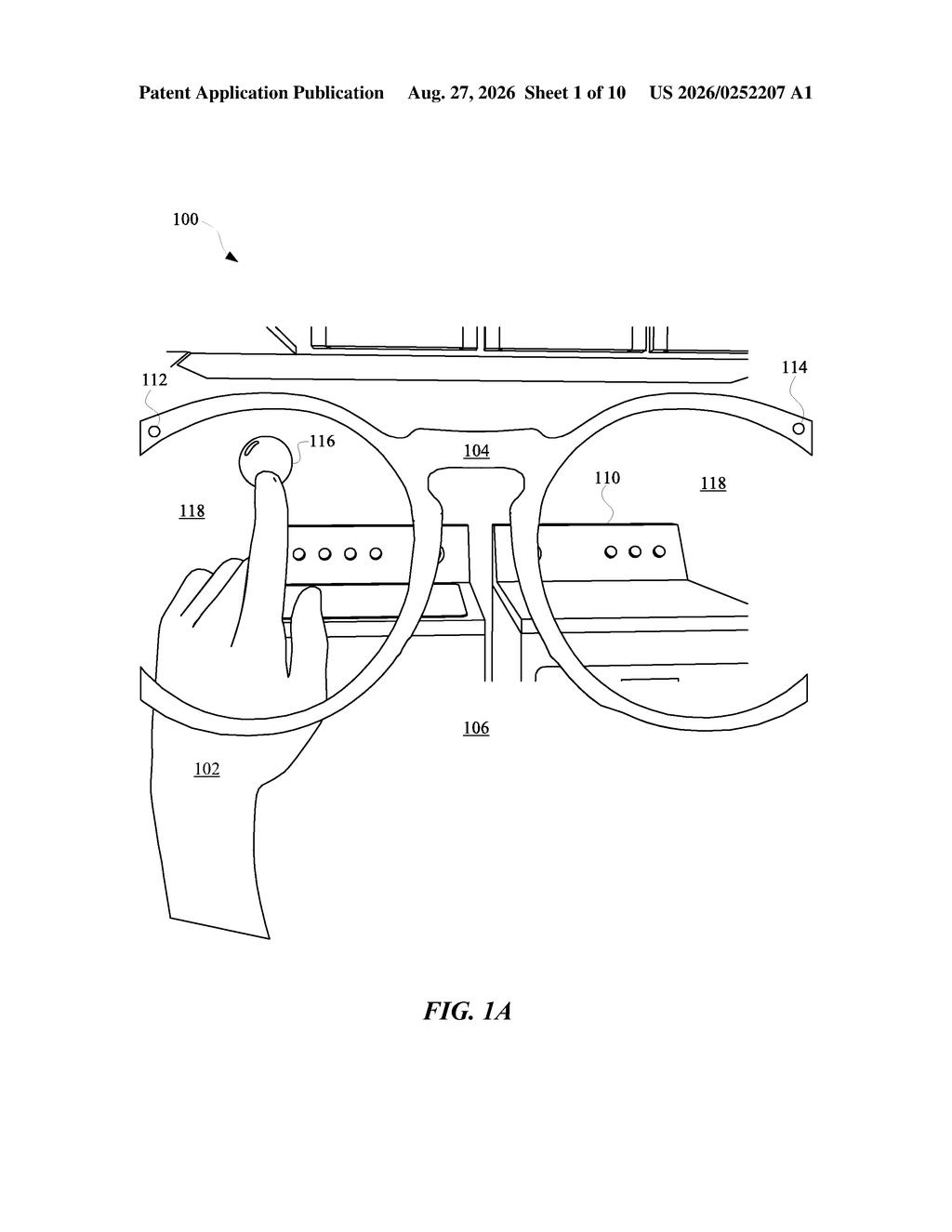
What Google's object-selecting AI interface actually does
Imagine you're staring at a photo on your phone that has three objects in it: a jacket, a lamp, and a plant. You want to ask an AI assistant a question about the jacket specifically, but typing 'the jacket in the middle left' is awkward. Google is working on a better way.
The idea is a special on-screen button or cursor that responds to how you interact with it. Hover near the jacket and it flows toward it like a drop of water on glass. Swipe away from the lamp and it retreats. By the time you tap to ask your AI question, the system already knows exactly which object you meant.
This matters because AI assistants are increasingly being asked to reason about the visual world, your camera view, your screen, maybe eventually your AR glasses. Getting that object selection right is the difference between a useful answer and a confusing one.
… causing, in response to determining the user has expressed an interest in a first object of the one or more objects, the GUI element to dynamically exhibit an attractive fluid-like behavior relative to the first object …
Translation: The on-screen button will physically pull toward items you seem interested in like a magnet.
How the fluid GUI element reads interest and repulsion
The patent describes a graphical user interface (GUI) element that sits on a touchscreen or extended-reality display and behaves like a fluid. Its core job is to track which objects on the screen you care about and which you don't, before you've even asked a question.
Here's how the system reads your intent:
- If you move toward or dwell near an object, the GUI element exhibits attractive fluid-like behavior, it flows or stretches in the direction of that object, visually anchoring to it.
- If you swipe away from or dismiss an object, the element exhibits repulsive fluid-like behavior, it visibly recoils, signaling that object is excluded.
- Once an object of interest is confirmed, the system gathers information about it (shape, label, context) and bundles that data with your separate text or voice request to the AI.
The display can be a standard phone screen or a virtual/augmented reality interface (think smart glasses or a headset), and the objects can be either rendered on-screen or physical things seen through a camera. The fluid animation isn't just decorative, it serves as a live visual receipt confirming to the user which object the AI will factor in.
… a graphical user interface (GUI) element that can be manipulated at an interface to indicate a particular object and/or feature of interest to be considered when providing generative output for a separate user request.
Translation: You can drag a digital tool over items on your screen to tell the AI exactly what you want it to analyze.
What this means for AI assistants on phones and AR headsets
Multimodal AI (AI that handles both images and language at once) is only as good as the context you give it. Right now, pointing an AI at a specific object usually means cropping a screenshot, circling something, or writing a lengthy description. A fluid selection element built into the OS could eliminate that friction entirely, making on-device AI feel much more like a natural conversation about the world around you.
This is squarely a software-side invention, no new chip or sensor is required, which puts it closer to the shippable end of the spectrum than most AR patents. The shortest route to a product is a software update to an existing camera or assistant app. Google's AI assistant products and Android's camera platform already handle object recognition, so the plumbing is largely in place. If you follow plain-English patent summaries covering AI interface patents from Google and its peers, this one fits a clear pattern: the next UI frontier isn't voice or touch alone, it's contextual object selection that combines both.
That makes this Google's 29th filing we've tracked since May on agents that act for you, building on earlier applications like scoring every robot decision and drafting full messages from one command.
The core idea here sits close to shippable because it relies on software behavior layered onto camera and object-recognition tools that already run on modern phones. The main remaining work is making the fluid selection animation feel natural rather than distracting, which is a design challenge more than a technical one.
The document also covers applying this to headsets, where where someone is looking and where their hands are positioned would together signal what they want to ask about. That scenario depends on specialized eye-tracking hardware that most consumers do not own yet, so it represents a longer road even though the patent explicitly claims it.
The shortest path to a product is the phone screen, where someone holds up their camera, presses on an object to signal interest, and gets a relevant AI response without typing a description. That loop requires nothing new to be invented, only tuned.
Get our take in your Top Stories
Liked this breakdown? Add Patentlyze as a preferred source on Google, and our plain-English take shows up more often in your Top Stories the next time Google patent news breaks.
There are more where this came from
We read every patent application Big Tech publishes and send you the ones worth knowing. Plain English, free, every week.
The drawings
10 drawing sheets from US 2026/0252207 A1 · click any drawing to enlarge


Want this weekly breakdown for a company we don't cover? Patentlyze Pro →
Be the first to weigh in