
OpenAI Patents a Chatbot That Knows When You've Changed the Subject
Every time you change the subject mid-conversation with an AI chatbot, it either loses the thread or you have to start over. OpenAI has filed a patent for a system that detects those topic shifts in real time and automatically pulls in the right background information to keep the conversation on track.
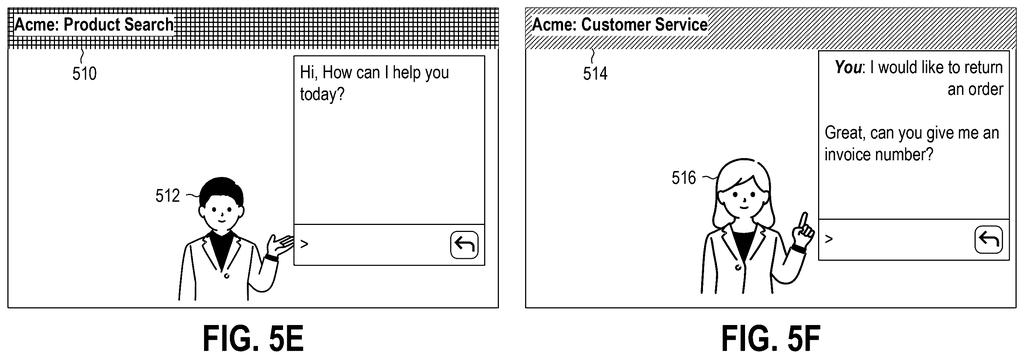
How OpenAI's topic-tracking AI chat system works
Today's AI chatbots are given a set of instructions at the start of a conversation, and they largely stick to that context the whole time, even if you pivot to a completely different topic. That means the AI either fumbles the new subject or you have to restart and re-explain yourself from scratch.
OpenAI's patent describes a system that watches for those moments when you change the subject. When the AI detects that your new message belongs to a different topic area than the one it was set up for, it automatically fetches a fresh set of background instructions relevant to that new topic and uses them to answer you, without you having to do anything.
Think of it as an AI that can reach into a filing cabinet, pull out the right folder for your new question, and answer from there, all inside the same conversation. The goal is a chatbot that stays genuinely useful across an entire session, not just at the start of it.
obtain, from a generative response engine based on a first prompt from a client device and associated with a first state, first information indicating the first prompt corresponds to a second state different from the first state; …
Translation: The system notices when your new message doesn't match the current conversation topic.
How the state-switching engine loads new context on the fly
The patent describes what OpenAI calls a stateful generative response engine. The word "stateful" here means the AI keeps track of which "mode" or topic context it is currently operating in, the way a customer service phone tree knows which department you're in.
Here's how the system works step by step:
- The AI starts a conversation in a defined first state, meaning it has a specific set of system instructions loaded (a "system prompt") that tell it how to behave and what it knows.
- When you send a message, the AI checks whether your message still fits that first state or signals a move to a second state (a different topic area).
- If a topic switch is detected, a background tool (a piece of software that can query external data or databases) retrieves information associated with the new topic.
- That retrieved information is assembled into a new system prompt, which is fed back into the AI so it can answer your question with the right context loaded.
The key innovation is that this detection and context-swapping happens automatically, without the user needing to start a new chat session or manually tell the AI what topic they're moving to. The system effectively orchestrates its own re-briefing between turns in a conversation.
… determining, by the generative response engine using a first system prompt associated with the first state, the first user prompt corresponds to a second state different from than the first state; …
Translation: It uses background instructions to figure out you have switched topics.
What this means for AI assistants handling multi-topic conversations
For anyone who has ever had a chatbot confidently give a wrong answer because it was still operating in the context of your previous question, this addresses a real daily frustration. The failure mode today is that AI systems are typically "briefed" once and then coast on that briefing, which works fine for narrow, single-purpose bots but falls apart the moment a conversation becomes multi-step or multi-topic.
This patent sits squarely in the ongoing effort to make AI assistants feel less like specialized tools and more like general helpers that can follow a conversation wherever it goes. OpenAI's approach of dynamically loading context via background tools, rather than cramming everything into one giant upfront prompt, is a practical architectural answer to a problem that scales badly as AI is embedded in more products. The broader pattern of how AI companies are solving these conversation-management challenges is well documented in Big Tech patent news, where AI context and memory filings have become one of the most active areas of 2025.
That makes this OpenAI's 16th filing we've tracked since May, adding to a run that includes skipping zero calculations in hardware and searching memory without moving data, all part of our OpenAI coverage.
Anyone who has used an AI assistant knows the moment a conversation pivots to a new topic and the whole thing falls apart, suddenly requiring you to re-explain who you are and what you need. That repetition is a small annoyance per conversation, but multiplied across millions of daily users, it represents a meaningful drain on the time people hoped AI would save them.
OpenAI's patent targets that gap directly by having the system automatically detect a topic shift and pull in the right background knowledge for the new subject on demand, rather than loading every possible detail upfront. That matching of effort to need feels appropriately scaled to the problem.
The filing describes the concept at a broad, architectural level, so whether the experience actually feels smooth rather than mechanical is something the document leaves open. But the problem itself is real enough, and costly enough, to justify serious engineering attention.
Get our take in your Top Stories
Liked this breakdown? Add Patentlyze as a preferred source on Google, and our plain-English take shows up more often in your Top Stories the next time OpenAI patent news breaks.
There are more where this came from
We read every patent application Big Tech publishes and send you the ones worth knowing. Plain English, free, every week.
The drawings
11 drawing sheets from US 2026/0252793 A1 · click any drawing to enlarge


Want this weekly breakdown for a company we don't cover? Patentlyze Pro →
Be the first to weigh in