
Nvidia Patent Teaches AI To Spot Objects Without Human-Labeled Training Images
Teaching a computer to recognize objects in photos usually requires thousands of humans to label each image by hand. Nvidia's patent describes a way to skip most of that work by having the AI figure out object shapes on its own first.
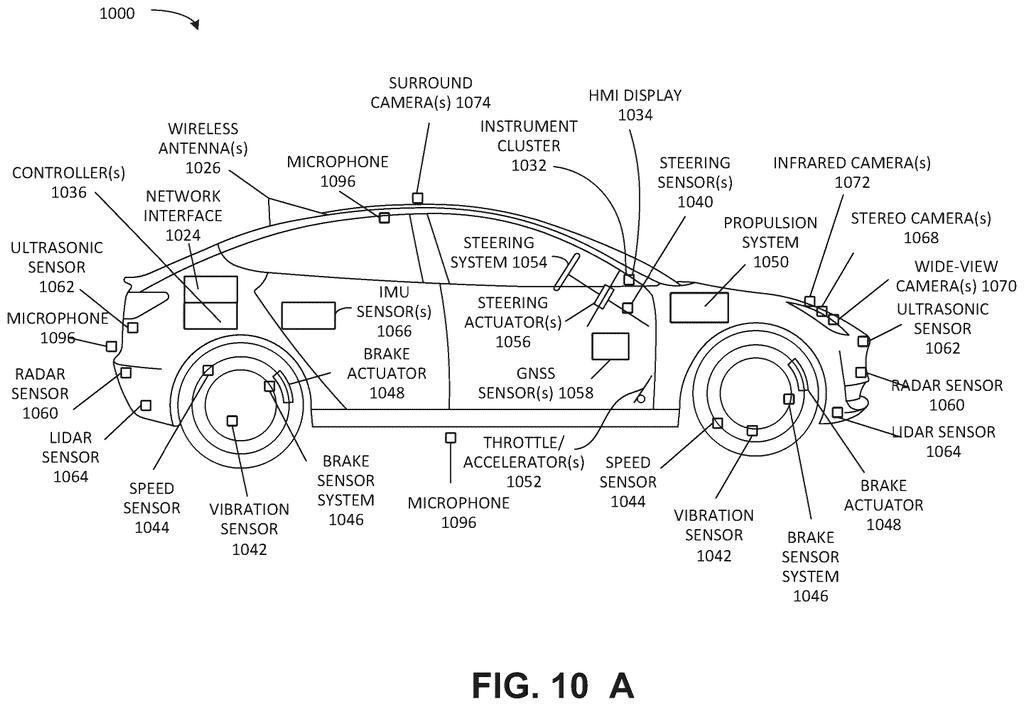
How Nvidia spots objects without anyone labeling the photos
Ever tried to sort a huge pile of photos with no captions or labels? That's roughly the challenge AI researchers face every day.
Right now, training an AI to spot a pedestrian, a stop sign, or a product on a shelf requires enormous amounts of human effort. Someone has to draw boxes around every object in thousands of images and tag each one. Nvidia's patent proposes a shortcut: let the neural network first guess the rough outline, or segmentation, of objects in unlabeled photos, then use those guesses as its own training signal.
The result is an AI that learns to detect objects in images it has never seen labeled, reducing how much expensive human annotation your training pipeline needs. That matters a lot when you're trying to train AI systems on real-world camera feeds, where labeling everything by hand simply doesn't scale.
… one or more neural networks can be trained to detect one or more objects, in one or more unlabeled images, based at least in part upon one or more predicted segmentations of the one or more objects.
Translation: The system learns to identify items in photos without needing humans to manually label them first.
How predicted shapes replace hand-drawn training labels
The patent describes a system where one or more neural networks (software models loosely inspired by how the brain processes information) are trained to detect objects inside images that have no human-provided labels.
The key mechanism is predicted segmentation. Segmentation means drawing a precise outline around every object in an image, like cutting out a shape with scissors. Instead of requiring humans to draw those outlines, the system generates predicted outlines automatically, then uses those predictions as a training target for the object-detection network. It is a form of self-supervised learning, where the model essentially teaches itself by generating its own supervision signal.
The claim structure covers:
- One or more neural networks trained on unlabeled images
- Predicted segmentations used as the training basis, rather than human annotations
- A general apparatus and system framing, meaning this could run on specialized chips, cloud servers, or edge devices
The inventors include researchers with backgrounds in computer vision and deep learning, and the filing lists Anima Anandkumar, a well-known figure in machine-learning research, among the team.
What this means for AI vision in cars and robots
Object detection is the core perception task behind self-driving cars, warehouse robots, medical imaging tools, and augmented-reality headsets. The bottleneck has long been data labeling: you need precise human annotations to train accurate models, and producing those annotations is slow, costly, and hard to scale to new environments. A method that learns from unlabeled images would cut that bottleneck significantly, especially for Nvidia, whose chips power most of the world's AI training infrastructure.
For everyday users, the practical payoff would show up indirectly: faster development cycles for the AI systems in your next car, smarter security cameras, or more accurate medical scans, without years of manual labeling work standing in the way. Nvidia files across a broad front of AI perception research, and tracking new Big Tech patents in computer vision shows how aggressively the company is trying to reduce the human labor cost of building the AI that runs on its hardware.
That makes this Nvidia's 48th filing we've tracked in our self-driving sensing race watchlist since May, following work on ignoring manhole covers and building scenes from lighting data.
The ship-path for this one is long. Self-supervised object detection is an active and competitive research area, and the patent's first independent claims are listed as canceled, which is an early sign that the application is still being negotiated with the patent office. That makes it premature to treat this as a production-ready technique.
What the filing does show is Nvidia's interest in closing the loop between its hardware and the data pipelines that feed AI training. If you can train object-detection models with fewer labeled images, you reduce the time and cost between raw sensor data and a deployable model, which is a real engineering problem for anyone building autonomous systems on Nvidia hardware.
The gap between a research-stage patent and a shippable product here is real. Predicted segmentations used as training labels can introduce errors that compound through training, and making that process reliable enough for safety-critical applications like autonomous driving requires substantial validation work that no patent filing can short-circuit.
Get our take in your Top Stories
Liked this breakdown? Add Patentlyze as a preferred source on Google, and our plain-English take shows up more often in your Top Stories the next time Nvidia patent news breaks.
There are more where this came from
We read every patent application Big Tech publishes and send you the ones worth knowing. Plain English, free, every week.
The drawings
56 drawing sheets from US 2026/0253400 A1 · click any drawing to enlarge


Want this weekly breakdown for a company we don't cover? Patentlyze Pro →
Be the first to weigh in