
Apple Patents a Way to Keep Satellite Voice Calls from Breaking Apart
Satellite phone calls have a reputation for dropping out and cutting up, partly because the chunks of audio data being sent are the wrong size for the connection. Apple has filed a patent for a system that automatically resizes those chunks on the fly to match whatever the satellite link can handle.
What Apple's satellite voice packet fix actually does
When you speak into your phone on a satellite connection, your voice gets converted into small digital packets and shot up to a satellite before reaching the person you're calling. The problem is that satellite links, especially the newer low-orbit kind, don't behave like a standard cell tower. They move, their signal strength shifts, and the amount of data they can carry at any moment changes constantly.
Most phones today send voice packets at a fixed size, which is fine for a stable 4G connection but wasteful or even disruptive on a variable satellite link. Apple's patent describes a chip-level system that watches the current state of the satellite connection and dynamically chops or resizes voice packets before sending them up. If the link is strong, it can send larger pieces. If conditions tighten, it breaks things into smaller segments to keep the call flowing without big gaps.
You'd notice this, if it works, as the difference between a call that stays clear through a spotty signal versus one that sounds like the other person is speaking through a tunnel.
determine dynamic segmentation is to be applied to voice packets being transmitted in an uplink (UL) to a network …
Translation: It figures out when a voice call needs to be chopped into smaller pieces to send over a satellite link.
How the device slices and sizes voice data for satellite upload
The patent describes processing circuitry inside a device (think a phone's modem chip) that handles two decisions in sequence.
First, the system figures out whether dynamic segmentation (the real-time splitting of audio data chunks) should even be applied at this moment. That decision is based on the current network state: what kind of satellite connection is active, how congested the uplink channel is, and what transmission resources are available.
Second, once it decides to segment, it calculates the exact parameters: how big each segment should be, how many segments a single original voice packet gets split into, and how those segments are labeled so the receiving end can reassemble them in order.
The segments are then sent over the Physical Uplink Shared Channel (PUSCH), the radio channel a phone uses to send data upward to a base station or, in this case, a satellite. Satellite uplinks are particularly tricky because the window of time to transmit can be short and irregular as the satellite moves across the sky.
- Decide dynamically whether segmentation is needed
- Calculate the right segment size and count for current conditions
- Package and transmit the segments over the satellite uplink channel
The goal is to fit the voice data into whatever transmission opportunity exists, rather than waiting or dropping data when a standard-sized packet won't fit.
… generate, for transmission via a Physical Uplink Shared Channel (PUSCH), one or more segmented voice packets based on the parameters for the dynamic segmentation …
Translation: It creates those smaller data chunks so your voice does not break apart during transmission.
What this means for iPhone satellite calling quality
Satellite calling is still a rough experience for most people. Apple introduced emergency SOS via satellite on iPhones in 2022, and that service is limited to short text-style messages precisely because voice over satellite is so difficult to do well. A system that adapts packet sizing in real time would be a meaningful step toward satellite voice calls that feel less like a science experiment.
Apple keeps filing on non-terrestrial network voice tells you this isn't a one-off idea. If this approach makes it into future iPhone modems, the practical payoff is calls that stay intelligible in rural areas, at sea, or during emergencies when cell towers are down, without you having to do anything differently.
This is the 410th Apple filing in our Apple coverage since May, a corpus that spans ideas like cell-to-satellite handoff and anticipating device use.
Satellite voice calls fail in a specific, frustrating way: the window to send audio up to a satellite opens and closes unpredictably, and a fixed-size audio chunk either fits or it doesn't. This patent describes a chip-level solution that sizes those chunks dynamically to match whatever window is actually available, without the user touching anything.
The person who notices this is standing somewhere with no cell signal, trying to make a call that actually matters. Right now that call drops or never connects. A device built around this approach would make that call go through cleanly, automatically.
The fix is narrow in scope. Clear audio over a satellite connection also depends on delay compensation, error recovery, and how the network handles the audio once it arrives. This filing solves one real piece of that puzzle, and it's a piece that has blocked satellite voice from working on everyday consumer devices.
There are more where this came from
We read every patent application Big Tech publishes and send you the ones worth knowing. Plain English, free, every week.
The drawings
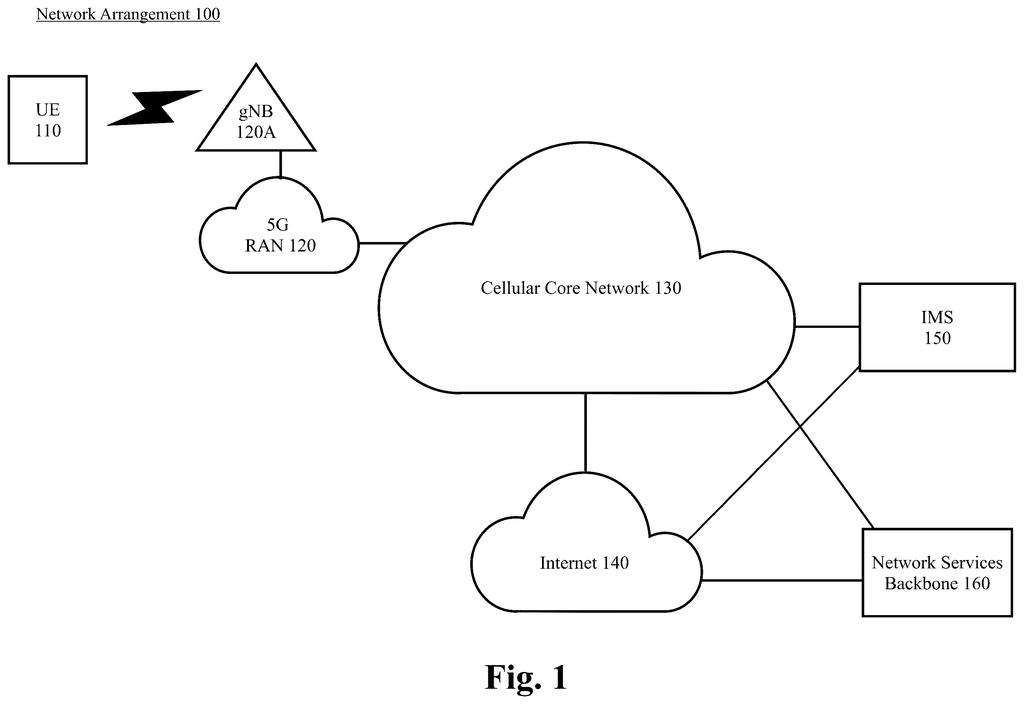
9 drawing sheets from US 2026/0281809 A1 · click any drawing to enlarge


Want this weekly breakdown for a company we don't cover? Patentlyze Pro →