
Samsung Patents a Molded Shell That Protects Phone Screens From the Inside Out
The part of a phone screen most likely to crack is the edge you never see, where the display bends back inside the housing. Samsung's latest patent targets exactly that hidden weak point with a new protective structure.
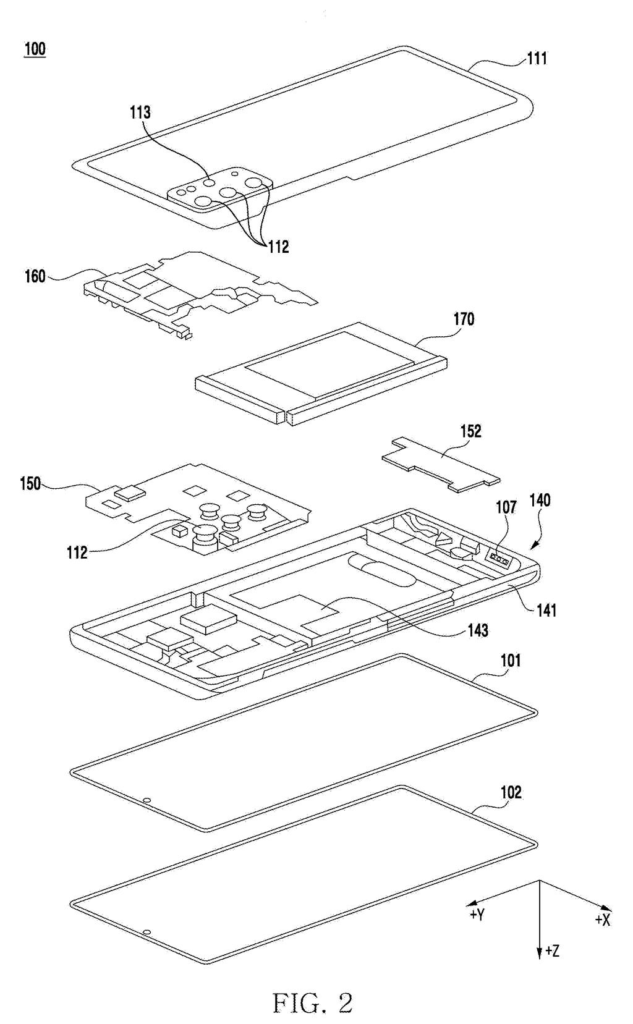
How Samsung's display molding cushions a phone's bent screen edge
Ever dropped a phone and watched the crack start right at the corner? That's no coincidence. The edge of a modern display panel curves inward and gets tucked inside the phone's frame, and that curved section takes enormous stress every time the device flexes, gets squeezed, or hits the ground.
Samsung's patent describes a protective molding, essentially a shaped plastic or resin shell, that wraps around that vulnerable bent edge of the screen. The clever part is a small recessed gap built into the underside of the molding, sitting right over the most delicate section of the bend. Rather than pressing rigidly against the display panel, that gap gives the panel a little room to flex without transferring every knock directly into the glass.
An adhesive layer bonds the molding to the phone's internal frame, but only on either side of that gap, so the structure holds everything in place without pinching the bend itself. It's a small structural detail, but it's aimed at a very real and very expensive failure point in modern thin-framed phones.
a display panel including a display portion and an extension portion, the extension portion including a first extension portion bent from the display portion and a second extension portion extending from the first extension portion …
Translation: The screen wraps around itself inward to fit inside the device body.
How the recessed area and adhesive layer share the load
Modern smartphone displays aren't flat rectangles. The panel extends past the visible screen area, bends sharply inward (the extension portion), and tucks against the phone's internal support frame. That bent section is under constant mechanical stress and is a common origin point for display failures.
Samsung's patent introduces a molding, a formed surround made of resin or similar material, that encases the bent extension of the panel. The molding has two distinct zones:
- First portion: bonded directly to the internal support structure using an adhesive, providing a firm anchor.
- Second portion: features a recessed area (a deliberate hollow or groove) that faces the support structure but does not touch it, sitting directly over the most sharply bent part of the display extension.
The recessed area overlaps the inner segment of the display bend when viewed from above, meaning the panel underneath that groove is never compressed between the molding and the frame. The adhesive only spans the sections flanking that groove, so the bond holds the assembly together while the recess preserves a stress-free zone over the critical bend.
The net effect is a structure that protects the fragile bent display edge from external shocks, holds it precisely in position, and avoids introducing new mechanical stress through over-clamping.
What this means for fragile foldable and edge screens
Display repairs are among the most expensive phone fixes, and a cracked or delaminated edge often makes the entire panel unreadable. The bent portion of the display is particularly hard to protect because traditional rigid mounting presses directly against the curve, concentrating stress rather than distributing it.
For edge-display phones and foldables, where the panel bends more aggressively, this problem is magnified. A molding design that deliberately leaves a gap over the sharpest curve could reduce the rate of stress fractures that start invisibly at the fold and propagate outward over time. Samsung keeps filing on display durability and panel-edge engineering, and this patent fits squarely into that ongoing effort to make thin, curved screens survive the same drops and flexes that older flat panels handled easily.
This is the 67th Samsung filing we've tracked in our foldable phone race since May, adding to work like vibration tuning by open angle and split cover screen windows.
Cracked screen edges are one of the most common and expensive phone failures, and thin-bezel designs have made them more likely by moving the display's vulnerable folded edge closer to the outside of the device. Warranty replacements and out-of-pocket repairs for this specific failure run into significant costs at scale, for manufacturers and consumers alike.
Samsung's answer is to cut a small recess into the mounting frame so that the frame stops transmitting damaging pressure to the display's edge during drops or flex. Removing material in a precise location, rather than adding padding or reinforcement, is a structural choice that addresses how stress actually travels through the assembly.
The patent covers a specific geometry rather than a broad protective concept, which keeps the claim credible and the problem it solves concrete. A narrow patent on a real failure mode is more useful than a sweeping one on a theoretical concern.
There are more where this came from
We read every patent application Big Tech publishes and send you the ones worth knowing. Plain English, free, every week.
The drawings
10 drawing sheets from US 2026/0282252 A1 · click any drawing to enlarge


Want this weekly breakdown for a company we don't cover? Patentlyze Pro →