
Intel Patents a System That Scrubs Personal Speech From Factory Audio Automatically
Factories increasingly use microphones to catch mechanical problems early, but those same mics pick up workers' private conversations. Intel's new patent describes a way to strip that speech out automatically, before anyone ever listens.
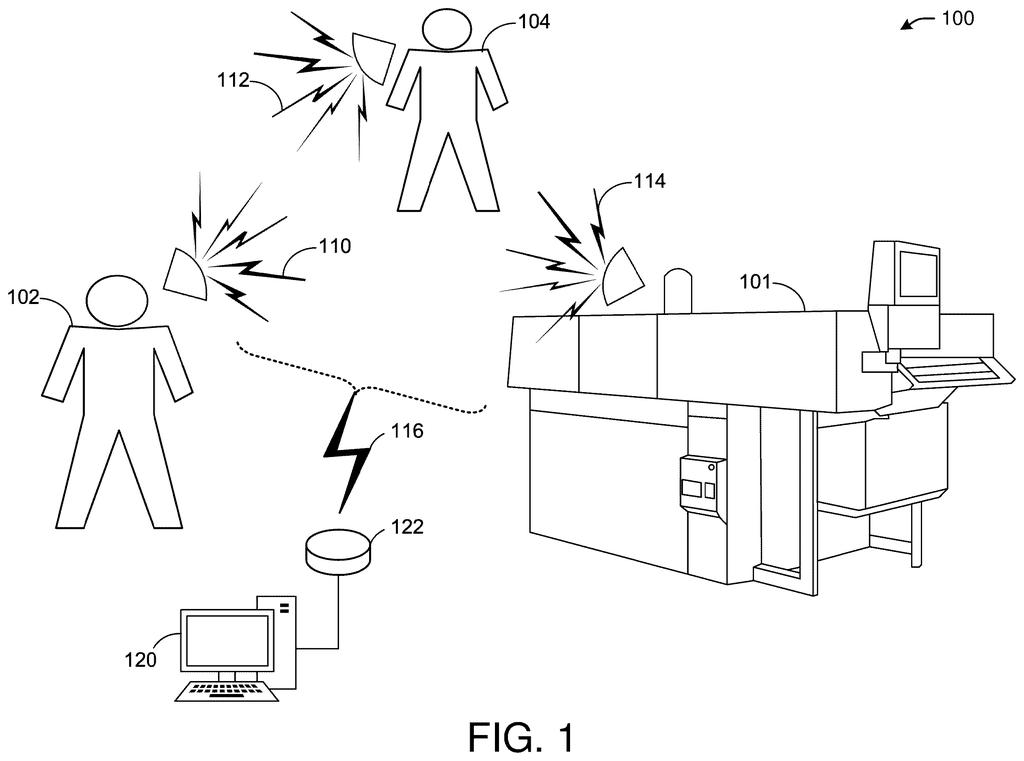
How Intel keeps worker voices out of machine recordings
Imagine a factory floor where microphones listen around the clock for the sounds of a machine failing, a grinding gear or an unusual hum. That makes sense for catching problems early. But those same microphones also catch workers talking, which raises real privacy concerns.
Intel's patent describes a system that sits between the microphone and whoever is monitoring the machine. It listens to the raw audio, finds any segment that contains a human voice, and replaces that portion with something neutral before the audio is used for analysis. The original speech never makes it through.
The result is a monitoring feed that captures what you need, the sounds of the machine, without also capturing what you don't, the private conversations of the people working nearby.
How the system detects and replaces speech segments in audio
The system works in three broad steps. First, it picks up sound from the area around a machine. Second, it runs speech detection on that audio to find any segment where a human voice is present. Third, it applies what the patent calls a segment replacement mechanism to overwrite or substitute that portion of the audio, producing a cleaned output.
The key design choice is that the filtering happens before the audio is handed off for machine monitoring. Whatever replaces the speech segment, whether silence, noise, or a synthesized substitute, the system ensures the final recording used to track machine health contains no identifiable personal speech.
- Sound capture: microphone picks up audio from the machine's vicinity
- Speech detection: an automated process identifies which time segments contain human voices
- Segment replacement: those segments are overwritten so no personal speech reaches downstream analysis
- Filtered output: the cleaned audio is passed on for machine-health monitoring
The patent covers systems, methods, and devices, meaning Intel is staking out the general approach, not just one hardware implementation.
What this means for workplace privacy and industrial monitoring
Workplace audio monitoring is expanding fast, and regulators in the US and Europe are paying close attention to what companies capture. A system that automatically removes personal speech before it can be stored or reviewed could give employers a technically defensible way to run acoustic monitoring without building a secret archive of worker conversations.
For workers, the practical benefit is that the microphone on the factory floor stops being a surveillance risk the moment this kind of filter is in place. For companies, it reduces exposure to privacy laws that restrict audio recording of employees, and Intel keeps filing on edge-processing and on-device filtering suggests this fits a broader push to handle sensitive data locally, without sending raw audio to a server.
That makes this the fourth Intel filing we've tracked since July on our keeping AI private on your device watchlist, after patents on stopping echo wake triggers and blocking power-line snooping.
Factories and warehouses already run microphones near their machines to catch the early sounds of equipment failure, and the savings from that practice are real. The problem is that those microphones do not distinguish between a struggling motor and a private conversation between workers, and in many countries recording employees without consent is not a gray area, it is a legal violation.
Intel's approach attacks the conflict at its root by stripping out human speech before the audio is ever stored or analyzed. That is the right scale of response to a problem that is both legally serious and practically common across manufacturing.
The open question is whether the system can reliably separate a voice from the surrounding industrial noise, since the two often blur together in ways that challenge even careful human listeners. The concept is sound; the difficulty lives in the execution.
There are more where this came from
We read every patent application Big Tech publishes and send you the ones worth knowing. Plain English, free, every week.
The drawings
7 drawing sheets from US 2026/0279354 A1 · click any drawing to enlarge


Want this weekly breakdown for a company we don't cover? Patentlyze Pro →
Be the first to weigh in