
Intel Patents a Tool That Makes AI Software Run More Efficiently on Hardware
Every AI model is a pile of math operations, and the order you run them in makes a huge difference in speed. Intel has patented a system where a second, smaller AI decides the best order for you.
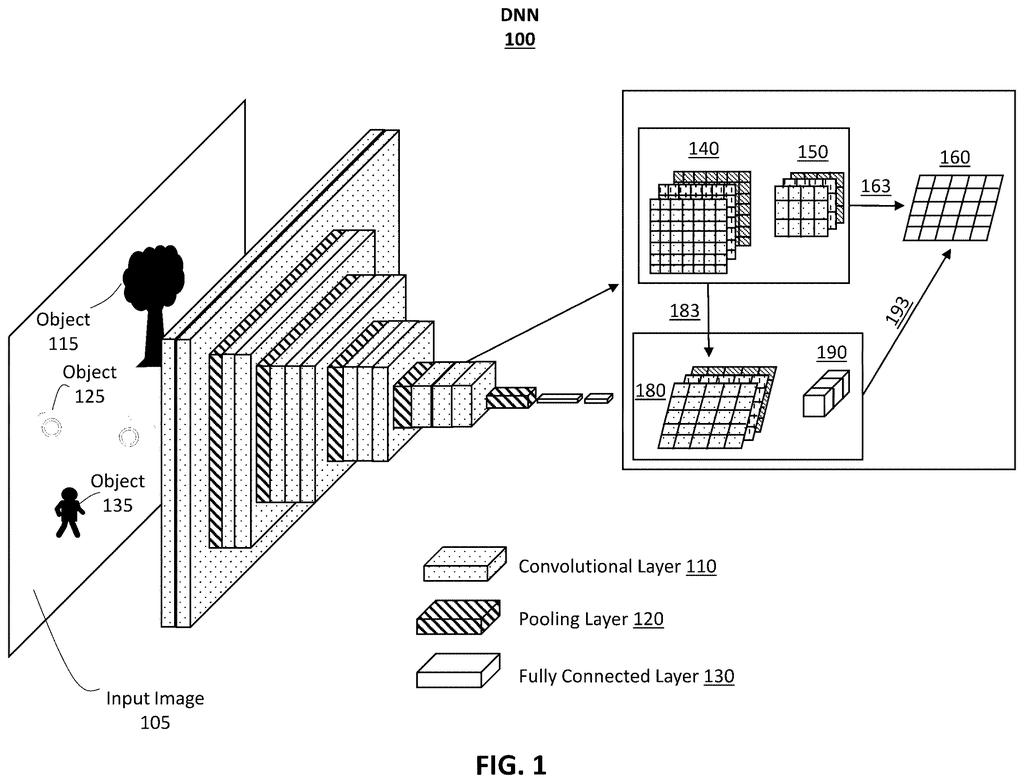
How Intel's compiler picks faster paths through AI math
You're building an AI model and you've just told your software to train it. Behind the scenes, the computer has to figure out the most efficient order to crunch through billions of calculations, because the same math done in a different sequence can run twice as fast or twice as slow on the same chip.
Intel's patent describes a compiler (the layer of software that translates your AI code into chip instructions) that uses a trained AI model to make those sequencing decisions automatically. Instead of a human engineer manually tuning the order of operations, the compiler tries many possible arrangements, feeds them into a small AI, and lets that AI pick the best ones.
The system then links all those individual choices together into one combined plan, checking which path through the choices produces the best overall result. The goal is faster AI training and inference without anyone having to hand-tune the low-level details.
… generating a combined schedule of the deep learning model, the combined schedule including a first schedule selected from the one or more first schedules and a second schedule selected from the one or more second schedules; and optimizing the first data structure and the second data structure based on the combined schedule.
Translation: It combines the chosen steps to make the AI run more efficiently on hardware.
How the scheduler scores and combines loop transformation paths
At its core, the patent describes an automated system for finding the best loop transformation schedule for a deep learning model. A "loop" here is a repeating block of math (say, multiplying every row of a giant matrix), and a "transformation" is a rearrangement of that loop, such as splitting it into smaller chunks or reordering which pieces run first, to better match the chip's memory and processing layout.
The compiler identifies individual tensor operations (discrete math steps in the model, like a matrix multiplication or a convolution) and generates a large set of candidate schedules for each one. A trained model (a separate, pre-trained AI) then acts as a filter, narrowing down the candidate list to the most promising options for each operation.
Once schedules are shortlisted for every operation, the compiler builds a graph connecting them: each edge links a schedule for an operation that produces data to a schedule for the next operation that consumes that data. Edges are assigned weights based on how well neighboring schedules work together.
- The compiler walks this weighted graph to find the best end-to-end path.
- That path becomes the combined schedule used to compile the whole model.
- The result is optimized loop code tuned to run efficiently on the target hardware.
Each edge connects a schedule for a producing tensor operation to a schedule for a consuming tensor operation. The compiler may determine a weight for each edge and select a path based on the weights of the edges.
Translation: The compiler maps out the best sequence of operations to process the AI data.
What this means for companies training AI models on Intel chips
Training and running AI models is expensive, and a significant chunk of that cost comes from how inefficiently compilers translate high-level model code into chip instructions. A compiler that automatically finds better loop orderings could meaningfully cut the time and energy it takes to train a model or run inference, without requiring hardware upgrades or manual tuning from engineers.
Intel's steady investment in AI compiler tooling makes sense given the pressure the company faces from GPU-dominated AI infrastructure. If Intel can show that its chips run AI workloads faster with smarter compilation, that is a real selling point for data centers considering alternatives to Nvidia hardware. For end users, the benefit is indirect but real: cheaper, faster AI services built on more efficient infrastructure.
This is the 37th Intel filing we've tracked in AI chip wars since May, adding to work like one for car screen tasks and one shaping models around chips.
This patent is a software-only invention. There is no new chip required, no new memory architecture, no new interconnect. That makes the path to shipping it unusually short: Intel could fold this into its existing compiler stack (like oneAPI or its XNN tooling) without waiting on hardware teams.
The real question is whether the trained model doing the schedule-picking is accurate enough to beat hand-tuned schedules in practice. The patent describes the concept clearly but says little about how that internal AI was trained or how often it gets the answer right. A compiler that occasionally picks a slow path is worse than no automation at all.
Still, the direction is sound. The biggest barrier to Intel competing in AI workloads is not always raw compute but whether developers get good performance without a lot of manual work. A compiler that handles the tedious scheduling problem automatically lowers that barrier, and that is the kind of infrastructure improvement that compounds over time.
There are more where this came from
We read every patent application Big Tech publishes and send you the ones worth knowing. Plain English, free, every week.
The drawings
12 drawing sheets from US 2026/0267687 A1 · click any drawing to enlarge


Want this weekly breakdown for a company we don't cover? Patentlyze Pro →