
Microsoft Patents an AI That Assembles Graphic Designs Layer by Layer
Arranging a poster or banner from scratch means deciding where every text block, image, and logo goes, and that judgment call is exactly what Microsoft wants to hand over to an AI. A new patent describes a system that takes a pile of mixed design elements and figures out the layout automatically, one layer at a time.
How Microsoft's AI handles the layout work for you
Every time a marketing team needs a new banner ad, a social post, or a product flyer, someone has to sit down and decide where every piece goes: headline at the top, product photo in the middle, logo in the corner. That placement work is tedious, and for non-designers it can feel impossible.
Microsoft's patent describes an AI system that takes your raw ingredients, things like images, text, and logos, and arranges them into a finished design without you having to drag and drop each piece manually. You hand the system your elements and it figures out where they should go, how big they should be, and how everything stacks on top of each other.
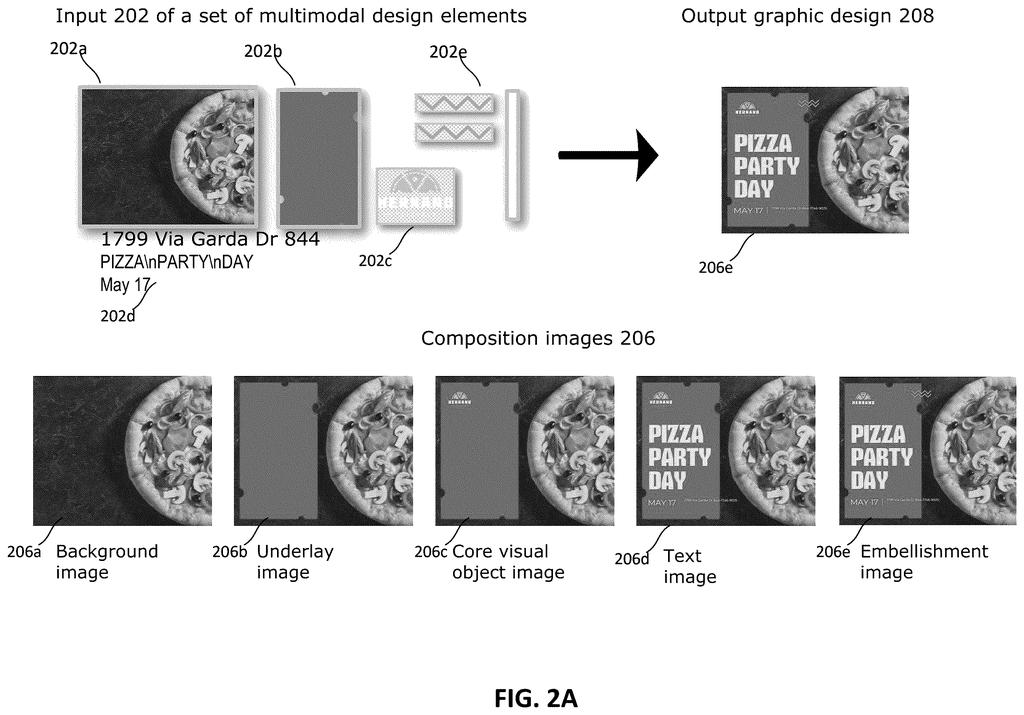
The key idea is that the AI works in layers, the same way professional design software does. It places the background elements first, then builds upward, checking what it has already placed before deciding where the next set of elements lands. The result is a complete, composed image ready to review.
… applying a first generative model to categorize each of the multimodal design elements based on content attributes of the multimodal design elements in a plurality of layers that are set in a predetermined order …
Translation: The system uses an AI model to sort different design pieces into an organized stack of layers.
How two AI models split the design job between them
The system uses two AI models working in sequence.
Model one acts as a sorter. It looks at the content of every design element you provide, whether that is a photograph, a block of text, or a logo, and assigns each one to a layer. Layers are set in a fixed order (background first, foreground elements later), so this sorting step determines which pieces get placed early and which get placed on top.
Model two handles the actual layout work. It processes the layers in that predetermined order:
- For the first layer, a vision encoder reads the visual and text properties of each element and converts them into numerical representations called embeddings (think of these as compact summaries the AI can do math on).
- A projector then reshapes those embeddings so they match the format expected by the AI's main reasoning engine, called the backbone.
- The backbone predicts the exact position and size for each element, and the system renders an image with everything placed.
- For every subsequent layer, the same process repeats, but the encoder also reads the image that has already been built, so the AI can see what is already there before deciding where new elements go.
Each layer's output becomes the starting point for the next, building up a final composition image that combines all layers.
… applying a second generative model to sequentially process the layers until rendering a final composition image, by: processing the initial layer into an initial image, and for each of the pre-defined layers: encoding content attributes of each design element of the layer and a precedent image into combined embeddings …
Translation: A second AI model builds the final design step by step, combining elements layer by layer.
What this means for designers and design tools
For anyone who has wrestled with design tools without a background in design, automatic layout is a meaningful time-saver. The system described here is not just picking random positions; it is reasoning about the content of each element and what is already on the canvas before placing the next piece, which should produce more coherent results than a purely random arrangement.
Microsoft's interest in AI-assisted creative tools shows up across several product lines, and this patent fits squarely into that direction. If this approach made it into something like Microsoft Designer or PowerPoint's Designer feature, it could raise the floor for what non-designers can produce on their own, without them ever seeing the layer-by-layer machinery underneath.
That makes this Microsoft's 55th filing in Language AI we've tracked since May, a group that includes one turning text into animation code and one compressing browsing history for recommendations.
Claim 1 is written broadly. It covers any system that sorts design elements into layers with one AI model and then positions them sequentially with a second, checking the already-rendered image before each new layer. That scope is wide enough to cover a lot of layout tools that use a similar build-up approach, not just one specific implementation.
The layer-by-layer rendering loop is the core technical move, and it is a reasonable one. By feeding the already-placed image back into the encoder at each step, the system avoids the classic AI layout problem where elements get stacked awkwardly because the model planned them all at once without seeing how they actually look together. That feedback loop is the part of the claim worth watching.
Whether this claim survives examination depends heavily on what prior art exists in automated layout and multimodal composition AI, a busy research area. The patent describes real engineering, but the claim boundaries are drawn wide enough that the USPTO will likely push back on at least some of them.
There are more where this came from
We read every patent application Big Tech publishes and send you the ones worth knowing. Plain English, free, every week.
The drawings
12 drawing sheets from US 2026/0278871 A1 · click any drawing to enlarge


Want this weekly breakdown for a company we don't cover? Patentlyze Pro →