
Microsoft Patents an AI That Assembles Drug Molecules One Atom at a Time
Building a new drug molecule usually means searching through an almost unimaginably large space of possible chemical shapes. Microsoft is patenting an AI approach that sidesteps that exhaustive search by constructing molecules piece by piece, one atom at a time, in three dimensions.
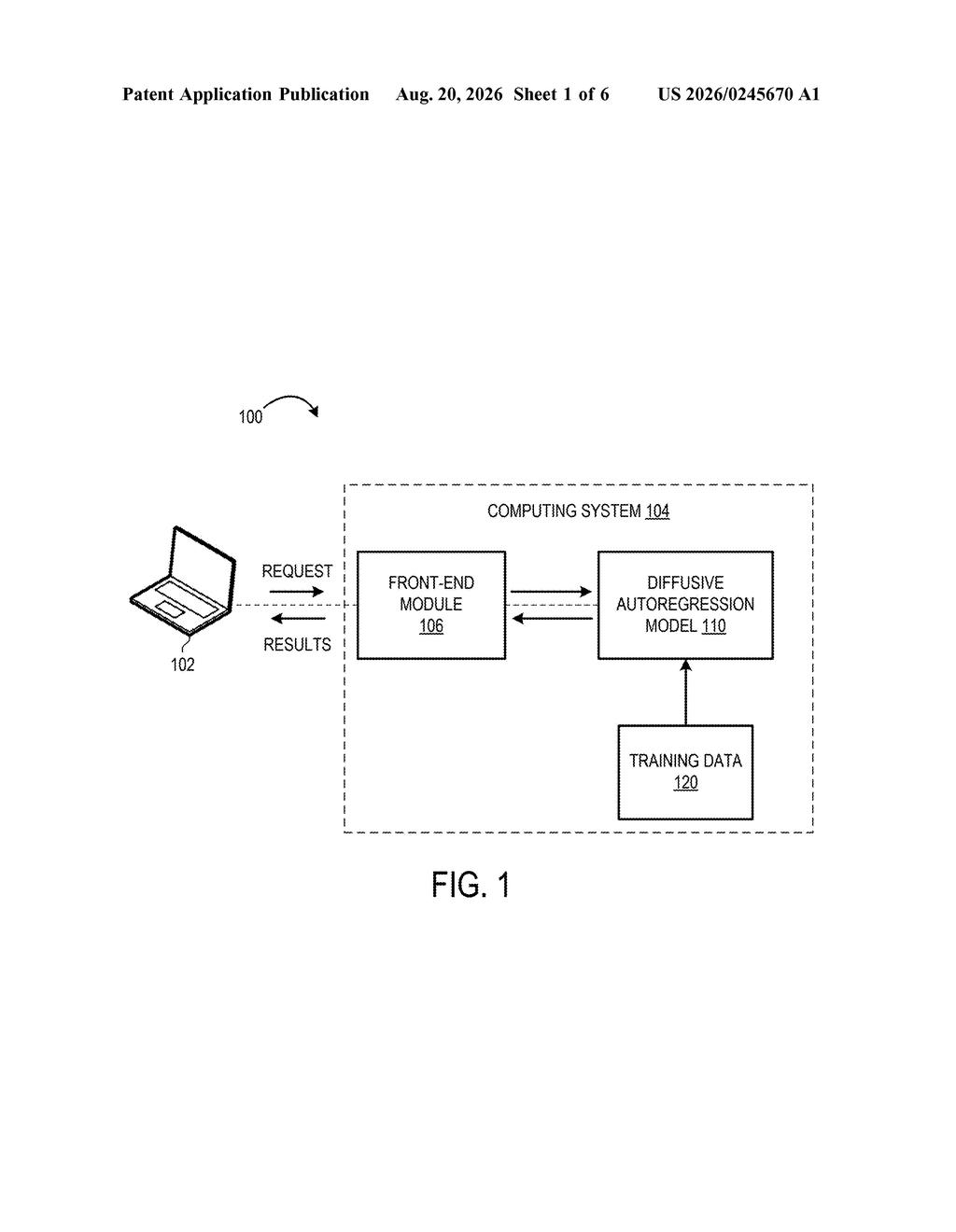
How Microsoft's atom-by-atom molecule builder works
Ever tried to assemble furniture when the instructions only show you the finished product? Designing a new drug molecule is a bit like that: chemists know the general shape they want, but figuring out exactly where every atom goes is brutally hard.
Microsoft's patent describes a system that builds candidate molecules the way a careful craftsperson might: one atom at a time. First, one AI model decides what kind of atom comes next (carbon, oxygen, nitrogen, and so on). Then a second AI model figures out exactly where in 3D space that atom should sit. The system repeats those two steps over and over until the molecule is complete.
The goal is to produce realistic 3D chemical structures that could eventually be tested as drugs or materials, without a human chemist having to manually propose every candidate. The AI does the heavy lifting of exploring chemical space so researchers can focus on the most promising results.
… inputting 3-dimensional (3D) structure data for a chemical object into a trained autoregression transformer model; b) receiving output from the trained autoregression transformer model, the output comprising encoding for a discrete atom type of a predicted next atom to be added to the molecule …
Translation: The AI analyzes the current molecule and decides which specific type of atom should be attached next.
Inside the two-model pipeline that places each atom
The system chains two separate AI models together in a loop.
Step 1: The autoregression transformer (think of it like a text-prediction model, but predicting atoms instead of words) looks at the molecule built so far and decides what type of atom should come next. It outputs a discrete label: carbon, nitrogen, oxygen, etc.
Step 2: The diffusion model (a type of AI that works by gradually refining noisy guesses into precise answers, the same family of models that generates images from text) takes both the current molecule structure and that atom-type label, then pinpoints the exact 3D coordinates where the new atom should be placed.
Those two steps iterate until a stopping criterion is met, for example when the molecule reaches a target size or a predicted "end" token appears. The final output is a complete set of 3D coordinates and atom types describing a candidate chemical structure.
- Splitting "what atom" from "where to place it" lets each model specialize at its own task.
- Using diffusion for positioning handles the continuous, geometry-sensitive problem of placing atoms in space.
- The autoregressive loop mirrors how language models generate text, giving the system a natural stopping mechanism.
… inputting the 3D structure data for the chemical object and the discrete atom type into a trained diffusion model, d) receiving a position of the predicted next atom from the trained diffusion model, and e) updating the 3D structure data to include the position of the predicted next atom.
Translation: A second AI model calculates the exact coordinates for the new atom and adds it to the digital blueprint.
What this means for AI-driven drug discovery
Drug discovery pipelines spend enormous time and money synthesizing molecules that turn out not to work. AI-generated 3D structures could help researchers pre-screen candidates computationally, narrowing the field before anything gets made in a lab. A system that produces geometrically valid, physically plausible 3D shapes is more useful than one that only generates flat chemical diagrams, because the 3D shape of a molecule largely determines how it interacts with biological targets.
Microsoft has been expanding its presence in scientific AI, and a molecule-generation tool fits neatly into that push. Whether this specific method proves more accurate than alternatives (flow matching, graph-based models, and others are active research directions) is an open question. For readers who follow AI's growing role in science, this filing sits alongside the broader wave of interesting tech patents pushing computation deeper into drug discovery and materials science.
Microsoft's 325th application in every Microsoft filing we track since May joins a run that includes one-tap device pairing and AI that learns by watching.
The biggest design choice here is splitting the work between two separate programs. That split has a real downside: if the first program guesses a plausible but wrong atom type, the second program then places it in the wrong spot, and that error ripples through every step that follows.
This fragility is the price of dividing the job. For a research setting, where the goal is learning rather than guaranteed results, the approach is worth trying. But it would need strong real-world results before anyone should rely on it to design actual products.
There are more where this came from
We read every patent application Big Tech publishes and send you the ones worth knowing. Plain English, free, every week.
The drawings
6 drawing sheets from US 2026/0245670 A1 · click any drawing to enlarge


Want this weekly breakdown for a company we don't cover? Patentlyze Pro →
Be the first to weigh in