
Nvidia Patents an AI System That Watches Your Game and Files Its Own Bug Reports
Every game studio has people whose entire job is to play games looking for things that break. Nvidia just filed a patent for an AI that does that watching automatically, then writes up everything it found.
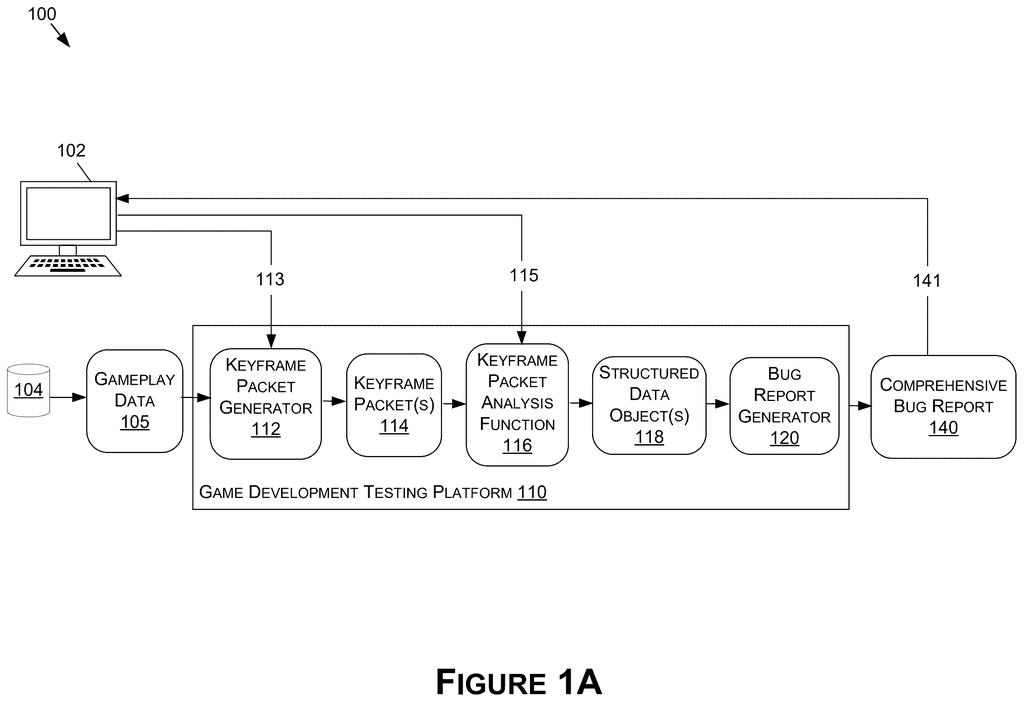
How Nvidia's AI catches game bugs by watching footage
Every time a game ships with a glitch, a character falling through the floor or a texture loading as a gray blob, someone on the quality assurance team had to sit through hours of footage to catch it. Or, more often, they didn't catch it, and players found it first.
Nvidia's patent describes a system where AI watches gameplay video instead. It skims through the footage, pulls out the frames that actually matter (skipping the repetitive ones), and then runs those frames through an AI model that knows what bugs look like. That model generates a structured list of problems it spotted, and a second AI turns that list into a readable bug report, similar to what a human tester would write.
The system can also listen to audio, so a sound that cuts out unexpectedly or a piece of dialogue that fires at the wrong moment would count as a potential bug too. The finished report can plug directly into the bug-tracking software studios already use.
… apply the prompt and at least one segment of the plurality of keyframes to a first language model, wherein the first language model evaluates the at least one segment of the plurality of keyframes to detect instances of the one or more target anomalies based at least on the prompt and the at least one segment of the plurality of keyframes …
Translation: An AI model reviews video clips to spot specific glitches.
How the system picks frames and runs them through AI models
The system works in four broad steps:
- Keyframe extraction: Rather than feeding every frame of a gameplay recording into an AI (which would be slow and expensive), the system picks out keyframes, frames that are meaningfully different from the ones around them. It does this by computing an embedding vector (a numerical fingerprint of what's on screen) for each frame, then measuring how different each frame is from its neighbors. Only the frames that cross a dissimilarity threshold get kept.
- Keyframe chunking: The selected frames are grouped into packets, short sequences that give the AI enough context to understand what was happening at that moment in the game.
- VLM evaluation: A Visual Language Model (an AI that can look at images and reason about them in natural language, similar to how GPT-4o describes a photo) receives each packet alongside a text prompt describing what bugs to look for. It outputs a structured data object, essentially a machine-readable checklist of anomalies it detected, with details like what frame they appeared on and what the problem looked like.
- Report generation: A separate Large Language Model consolidates those per-packet checklists into one coherent bug report, annotated with the relevant footage timestamps, and formatted for integration with standard bug-tracking systems.
Audio is an optional input at the VLM stage, allowing the system to flag sound-based bugs alongside visual ones.
The VLM outputs a structured data object listing detected bugs, which may be consolidated into a comprehensive bug report by a Large Language Model (LLM).
Translation: The AI compiles the problems it finds into a single bug report.
What this means for game studios and their QA teams
Quality assurance in game development is notoriously labor-intensive. Studios employ large QA teams to play through builds repeatedly looking for problems, and games still ship with bugs that human testers missed. An automated system that watches recordings and produces structured, actionable reports could meaningfully cut that cost and compress the time between a bug appearing and a developer knowing about it.
For players, the downstream effect is simpler: fewer launch-day glitches and faster patches when something does slip through. Nvidia's bet on AI-assisted game development stretches well beyond this filing, but the practical pitch here is concrete. Studios already run automated test suites for code; this extends that logic to the visual and audio experience of actually playing the game.
Nvidia's seventh filing we've tracked since July in our agents that act for you watchlist follows giving software a database briefing and flying drones via VR.
Claim 1, as written, covers any system that pulls significant moments from a video, feeds those moments plus a plain-language description into an AI model to find problems, and then uses a second AI model to combine the findings into one report. Nothing in that language limits the protection to video games. Factory safety inspections, film effects reviews, and medical training video audits could all fall inside those boundaries.
That breadth has real consequences. Any startup building an AI-powered review tool for video content, in any industry, could face a licensing conversation before shipping a single product.
The central question patent examiners will press is whether combining two AI steps in a video review pipeline counts as a meaningful invention, or simply a predictable use of tools that already existed. The answer determines whether this claim holds in its current sweeping form or gets trimmed considerably.
There are more where this came from
We read every patent application Big Tech publishes and send you the ones worth knowing. Plain English, free, every week.
The drawings
11 drawing sheets from US 2026/0279046 A1 · click any drawing to enlarge


Want this weekly breakdown for a company we don't cover? Patentlyze Pro →