
Nvidia Patents a System for Flying Drones Through a VR Headset
Nvidia has patented a way to hand off vehicle control to a remote operator wearing a VR headset, with the drone itself double-checking every move before it acts on an instruction.
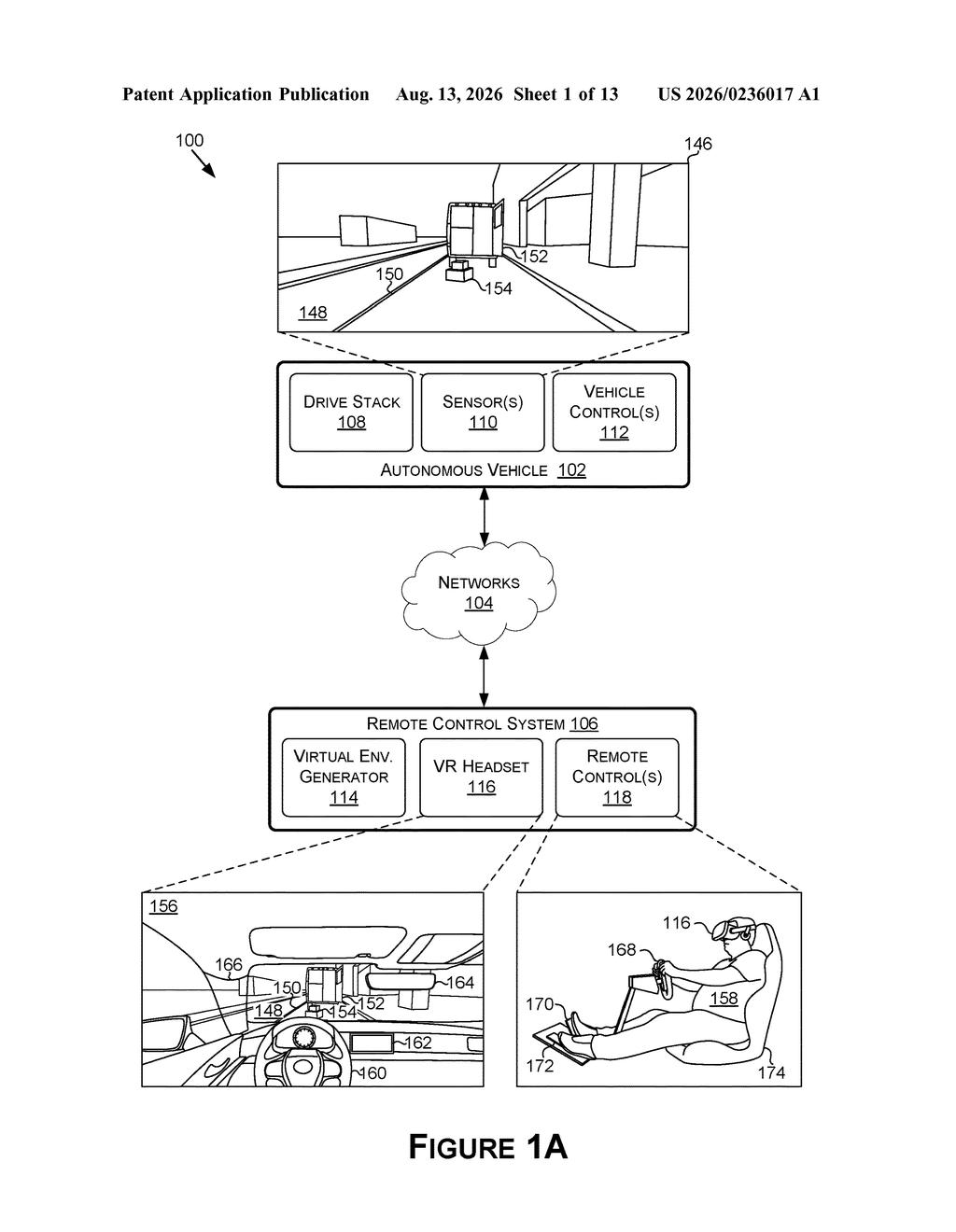
How Nvidia's drone-to-VR remote control actually works
You're sitting in a room wearing a VR headset, and in front of you is a live, three-dimensional view from a drone flying somewhere else entirely. You tilt or gesture, and the drone moves. That's the core idea in this Nvidia patent.
What makes it different from a typical drone remote is that you don't fly the drone directly. You suggest where it should go, and the drone's own onboard system decides the safest way to get there. The vehicle is, in effect, a co-pilot that won't let you crash it.
The patent covers aerial vehicles specifically, but the abstract describes the broader concept applying to any vehicle. The VR headset stitches together real sensor feeds from the drone into a surrounding virtual scene, so the operator gets a spatial sense of the environment rather than a flat camera view.
… causing generation, at the remote control system, of an immersive virtual environment based at least in part on the sensor data, the immersive virtual environment including a virtual representation of the aerial vehicle within a virtual representation of at least a portion of the environment …
Translation: The system builds a virtual world for the pilot that shows both the drone and its surroundings in real time.
How the drone and operator split up the flying duties
The system works in two halves: a remote control station and the vehicle itself.
On the operator side, sensor data from the drone (cameras, likely lidar or radar) is encoded and streamed to the remote system, which renders an immersive virtual environment (a live 3D reconstruction of the drone's surroundings). The operator, wearing a VR headset, sees a virtual copy of the drone sitting inside a virtual copy of the real world around it. When the operator interacts with that scene, their gestures or inputs are translated into suggested motions for the vehicle.
On the vehicle side, those suggestions don't go straight to the motors. The drone receives the suggested motion data and uses it to determine an actual trajectory in three-dimensional space, meaning it calculates a real flight path that achieves what the operator wants while staying safe. Only then does it move.
This split is important:
- The operator handles high-level intent ("go left and descend a bit")
- The vehicle handles low-level execution (exact motor commands, obstacle avoidance, stability)
- The VR layer gives the operator spatial awareness that a flat video feed can't match
The patent names Jen-Hsun Huang (Nvidia's CEO) as a co-inventor, which is unusual and signals this is considered a strategically important direction.
The encoded sensor data may be transmitted to the control system for display on a virtual reality headset of the control system. Control data may be received by the vehicle and from the control system that may be representative of a control input(s) from the control system …
Translation: The drone sends video to the pilot's VR headset, and the pilot sends flight commands back to the drone.
What this means for drone operators and autonomous vehicles
Drone operators today work with flat video feeds and physical joysticks, a setup that strips away the depth perception a pilot in the cockpit would have. A VR-based system could make remote control feel more intuitive, especially for complex maneuvers in tight spaces like building inspections, search-and-rescue, or last-mile delivery. The onboard trajectory check also acts as a safety buffer, which matters for any scenario where a lag spike or operator mistake could send a vehicle into a crowd or a building.
For Nvidia, this sits neatly on top of its existing work in autonomous vehicle computing. The company already sells the Drive platform for self-driving cars; a drone remote-ops system would draw on the same sensor-processing and AI infrastructure. Readers tracking new Big Tech patents in autonomous vehicles and robotics will recognize this as part of a broader industry push to keep humans meaningfully in the loop without requiring them to manage every micro-decision the machine makes.
The design's central tradeoff is latency. Streaming encoded 3D sensor data to a VR headset and then sending control inputs back to a moving vehicle introduces round-trip delay, and the patent's answer to that problem is to push trajectory-planning onto the vehicle itself so a lag spike doesn't translate directly into a crash. That's a sensible split, but it also means the operator is always reacting to a slightly stale picture of the world, and the drone is always interpreting a slightly stale version of operator intent. For slow-moving inspection drones that cost is probably acceptable. For fast-moving vehicles in dense environments, the gap between what the operator sees and what the vehicle is actually doing could become the most dangerous part of the system.
Get our take in your Top Stories
Liked this breakdown? Add Patentlyze as a preferred source on Google, and our plain-English take shows up more often in your Top Stories the next time Nvidia patent news breaks.
There are more where this came from
We read every patent application Big Tech publishes and send you the ones worth knowing. Plain English, free, every week.
The drawings
13 drawing sheets from US 2026/0236017 A1 · click any drawing to enlarge


Show the other 5 sheets


Want this weekly breakdown for a company we don't cover? Patentlyze Pro →
Be the first to weigh in