
Sony Patents a Way to Compress Spatial Audio by Filling In the Gaps
Sony has filed a patent for a system that transmits only a fraction of the audio data needed for full 3D sound, then mathematically fills in the rest on the receiving device.
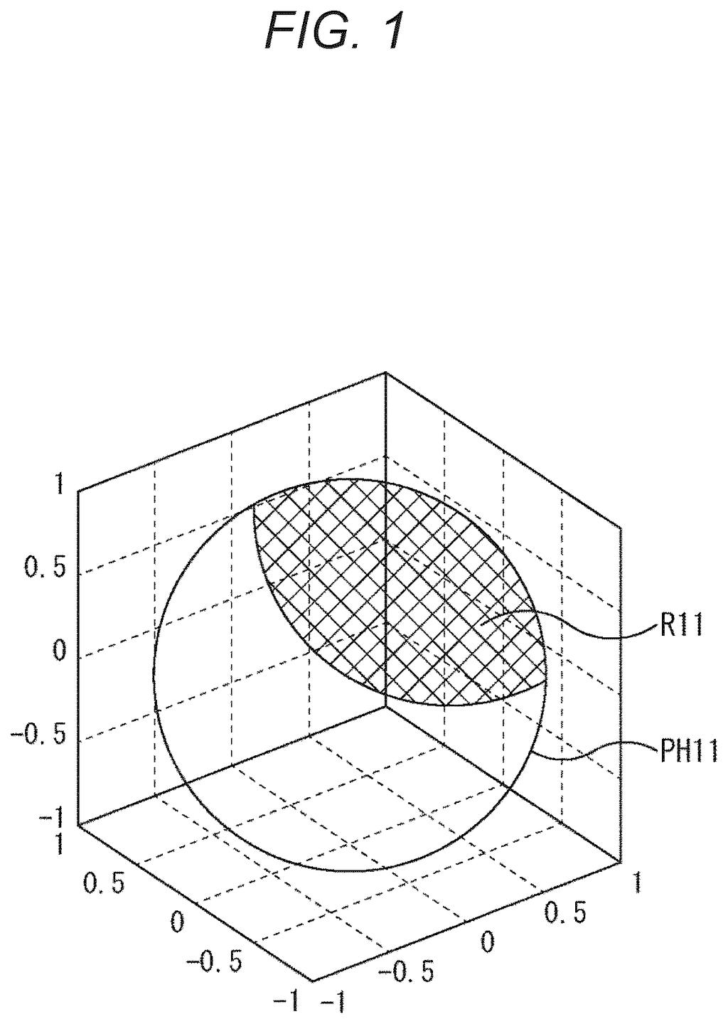
What Sony's spherical audio compression actually does
You're watching a VR movie and the audio tracks every tiny movement of your head, placing sounds precisely above, below, left, and right. That kind of spatial audio requires an enormous amount of data describing sound at hundreds of points surrounding you like a bubble.
Sony's approach here is to send only some of those data points rather than all of them, along with a small map telling the receiving device which points were actually recorded. The device then uses math to estimate the sound values at every other point on the sphere, rebuilding the full picture from the partial one.
The result is a smaller file or stream that still produces full 360-degree spatial audio on playback. Think of it like sending every third pixel of an image and having the TV intelligently guess the ones in between, except for sound moving around your head.
… acquires target data at a recording data point among a plurality of data points arranged on a spherical surface, and recording point restoration information for specifying the data point serving as the recording data point …
Translation: It collects audio data mapped out across a sphere along with instructions on where those specific points are located.
How the system reconstructs missing audio points on a sphere
The patent describes a system for handling spatial audio data arranged on a spherical surface, meaning sound information mapped to hundreds of positions all around a listener in three dimensions.
Instead of transmitting data for every position on that sphere, the system designates a subset of those positions as recording data points. Only the audio values at those positions are actually sent. Alongside them, the system transmits a small piece of recording point restoration information, essentially a lookup table or index that tells the receiving device exactly which points on the sphere were included and which were skipped.
On the receiving end, a calculation unit reads that index, identifies which positions have real data, and then interpolates (calculates estimated values by averaging or extrapolating between known points) the audio data for every other position on the sphere. The full spherical audio field is reconstructed from the partial data.
The patent covers the apparatus, the method, and the software program implementing it, suggesting Sony sees this as applicable across hardware devices and software platforms alike.
… calculates the target data at a position different from the recording data point on the basis of the target data at the recording data point …
Translation: It fills in missing audio gaps at unrecorded locations by using the data from the points that were actually recorded.
What this means for 3D audio streaming and VR sound
For anyone who uses spatial audio in VR headsets, high-end headphones, or immersive speaker systems, the practical benefit is less bandwidth needed to deliver the same 360-degree sound experience. Streaming spatial audio at high quality is currently data-heavy, which limits quality on slower connections or inflates file sizes for content creators.
This filing sits in territory relevant to several Sony filings on spatial audio and immersive media this year, suggesting the company is working on the plumbing that would make spatial audio more practical at scale. Whether that points toward future PlayStation VR content, Sony's WH headphone line, or broadcast tools is an open question the patent doesn't answer.
Sony's 23rd filing we've tracked in the AR glasses race since July adds to a run that includes a depth fix for AR graphics and a room-mapping audio system.
Sony is solving a real shipping bottleneck here: 3D audio that wraps sound convincingly around your head requires enormous amounts of measurement data, and sending all of it is slow and expensive. This patent describes a way to store only a fraction of those measurements and mathematically fill in the rest.
The path to a product is short because nothing here requires new physical components. It is essentially a smarter file format and a calculation method, which means it could arrive as a software update to existing headphones or audio apps rather than waiting for new hardware to launch.
The narrowness of the idea is an asset. A focused solution to one specific data problem is easier to build, test, and defend than a broad platform claim, and that makes it more likely to show up in a real product sooner rather than later.
There are more where this came from
We read every patent application Big Tech publishes and send you the ones worth knowing. Plain English, free, every week.
The drawings
14 drawing sheets from US 2026/0279362 A1 · click any drawing to enlarge


Want this weekly breakdown for a company we don't cover? Patentlyze Pro →