
IBM Patents a System That Rewrites Your AI Prompts Before the Model Ever Sees Them
Getting useful answers out of an AI often depends on how well you phrase the question, and most people aren't great at it. IBM has filed a patent for a system that rewrites your prompt before the AI even reads it, pulling from a library of prompts that are already known to work.
What IBM's automatic prompt-improvement system actually does
You're typing a question into an AI tool at work, but the answer keeps coming back vague or off-target. You tweak the wording, try again, and still don't quite get what you need. The problem usually isn't the AI itself, it's the prompt you wrote.
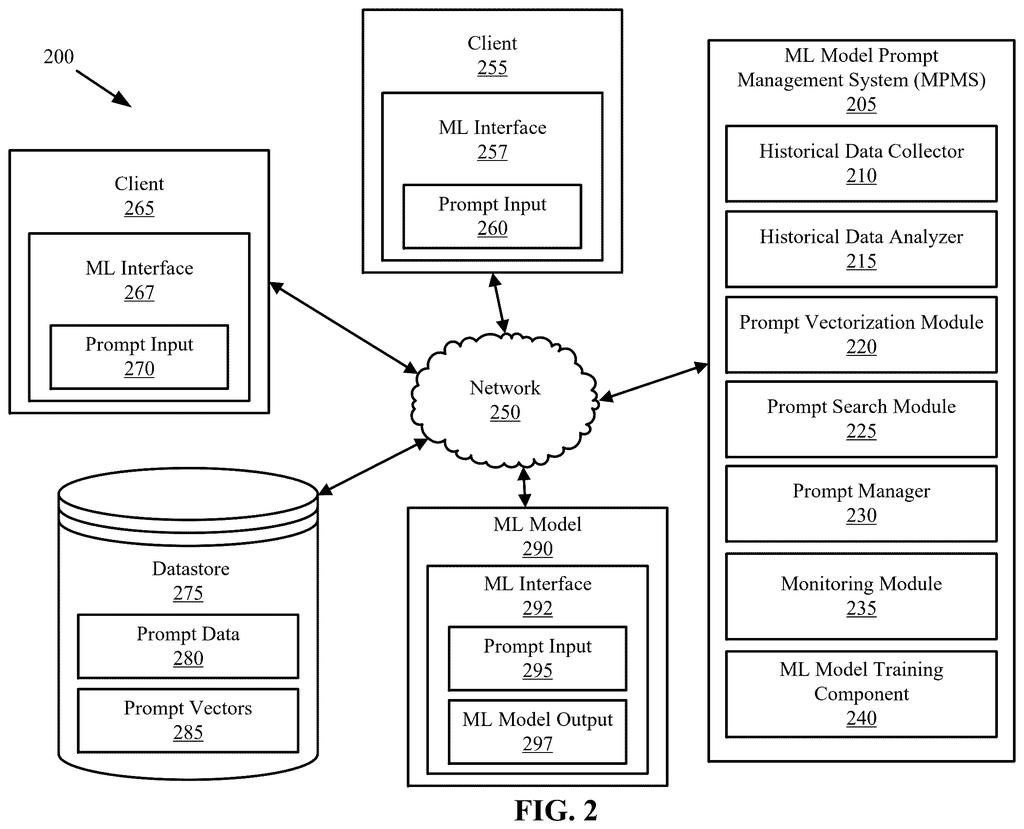
IBM's patent describes a system that steps in between you and the AI. When you submit a question, the system converts your wording into a kind of mathematical fingerprint, then searches a library of pre-approved, high-quality prompts to find the closest match. Your original question then gets updated using that better-phrased version before it ever reaches the AI.
The result is that the AI model receives a cleaner, more precise instruction than the one you typed, without you having to become a so-called "prompt engineer." Think of it as autocorrect, but for the intent behind your question, not just the spelling.
embedding a first prompt to generate a first prompt vector; performing a similarity search against a plurality of stored prompt vectors using the first prompt vector; selecting a matching prompt vector from the plurality of stored prompt vectors, the matching prompt vector corresponding to a second prompt; …
Translation: The system turns your original prompt into math and compares it against a library of other prompts to find a strong match.
How the similarity search finds and applies a better prompt
The system works in four steps, and all of them happen automatically in the background.
- Embedding: Your original prompt is converted into a "prompt vector," a numerical representation that captures its meaning. This is the same basic idea behind how search engines understand that "car" and "automobile" mean the same thing.
- Similarity search: That vector is compared against a stored library of prompt vectors. The system finds the closest match, a "matching prompt vector," which corresponds to a second, pre-written prompt that has already been vetted or optimized.
- Updating: The system uses the matched prompt to revise your original input, merging or replacing it to produce an improved version.
- Inference: The updated prompt is handed to the AI model, which generates its response based on the improved input rather than your raw original.
The patent is model-agnostic, meaning the system sits in front of whatever large language model (AI text generator) an organization is running. The library of stored prompts is presumably curated by the organization deploying the tool, giving IT teams control over what "good" looks like for their specific use case.
The first prompt can be updated using the second prompt. The updated first prompt can be provided to a machine learning (ML) model, where the ML model generates an output based on the updated first prompt.
Translation: Your prompt gets rewritten using the better version before the AI model ever looks at it.
What this means for people who rely on AI tools at work
For anyone using an AI assistant at work, this kind of system could mean fewer frustrating back-and-forth attempts to get a useful answer. You type something reasonable, and the tool handles the precision work behind the scenes, routing the request through a version of your question that the AI is more likely to handle well.
IBM keeps filing on enterprise AI infrastructure, and this patent fits squarely into that pattern. For companies deploying AI tools to large workforces, the bigger value is consistency: every employee, regardless of how experienced they are with AI, gets the benefit of the best prompt the organization has collectively figured out. That's a real operational advantage, even if it's invisible to the individual user.
IBM's 35th filing we've tracked in Language AI since May follows one on teaching itself to write cleaner code and one on plain-English version search.
When you type a vague or half-formed question into a workplace AI tool, something like this fixes it before the AI ever sees it. The tool matches your question against a library of questions that have already worked well, rewrites yours to be clearer and more precise, and sends the improved version along. You get a better answer without doing anything differently.
You would notice this as a tool that holds up even when you are tired, rushed, or unsure how to phrase something. The AI seems reliably useful rather than frustratingly literal.
The real risk is invisible by design: if the library of proven questions is outdated or wrong for your situation, the tool silently steers the AI off course and you have no way to know. This matters less as a technical concern and more as an organizational one. The people maintaining that library have to treat it as a serious, ongoing responsibility, because the whole payoff depends on it.
There are more where this came from
We read every patent application Big Tech publishes and send you the ones worth knowing. Plain English, free, every week.
The drawings
6 drawing sheets from US 2026/0277911 A1 · click any drawing to enlarge


Want this weekly breakdown for a company we don't cover? Patentlyze Pro →
Be the first to weigh in