
IBM Patents a System That Rewrites Your AI Prompts Using Company Knowledge
When you ask a business AI tool a question, your wording is rarely precise enough to get a useful answer. IBM's new patent describes a system that rewrites your question before the AI ever sees it, loading it up with the right company terms and rules so the answer is actually useful.
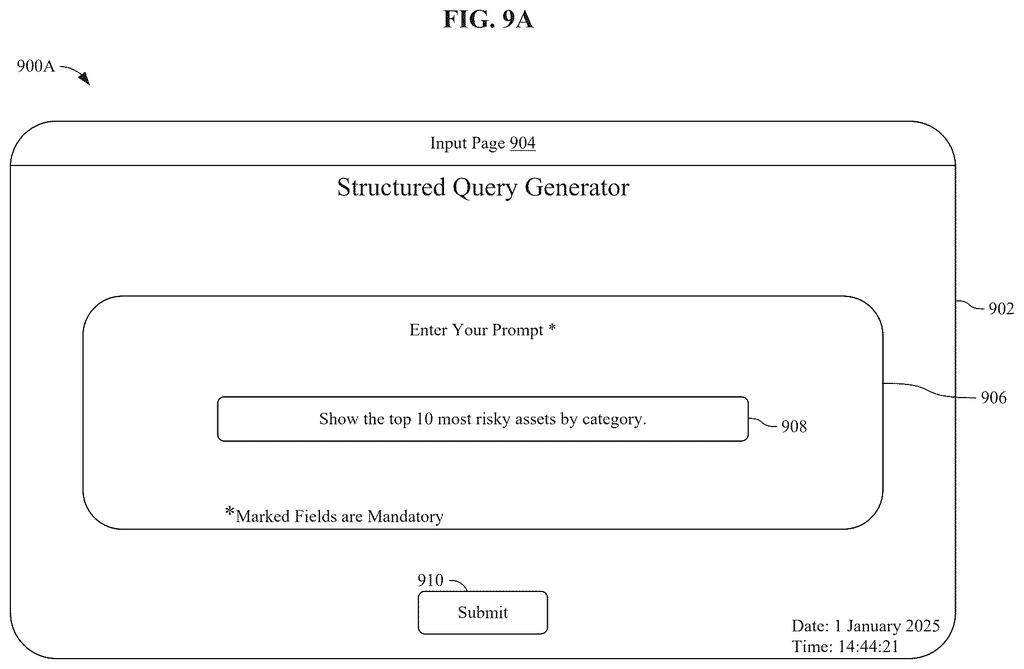
What IBM's automatic prompt-expanding system actually does
Imagine you're a customer service agent and you type "what's our refund policy for enterprise clients?" into your company's AI assistant. Your question is short, a little vague, and missing all the internal context that would help the AI give a sharp answer.
IBM's patented system intercepts that question before the AI sees it. It checks a knowledge base, which is a library of past questions, business rules, and industry-specific terms, and figures out which of those are relevant to what you asked. It then hands all of that to a language model, which uses it to build a much richer, more detailed version of your original question. That extended prompt is what gets sent along.
The idea is that you, the employee, don't need to be a prompt-engineering expert. The system does the translation work between casual human language and the precise vocabulary that makes AI tools perform at their best.
… determining, by the computer, a first set of keywords based on the user prompt and a knowledge base, wherein the first set of keywords comprises at least one of a set of domain-specific terms, a set of business logic rules, or context-specific information associated with the user prompt …
Translation: The system extracts relevant business rules and terminology based on what you asked.
How IBM's system pulls keywords and rewrites the query
The patent describes a computer-implemented method with five distinct steps:
- Receive a user prompt: A person types a natural-language question into a device connected to the system.
- Pull a keyword set: The system queries a knowledge base that stores historical user prompts and business rules, then extracts a set of domain-specific terms, logic rules, or contextual details relevant to that question.
- Apply a language model: A language model (think of it as an AI that understands and generates text) is fed both the original question and the extracted keyword set together.
- Generate an extended prompt: The model produces a new, expanded version of the original question, one that incorporates the business context the system retrieved.
- Output the result: The extended prompt is passed on, presumably to a downstream AI or workflow, rather than the original thin query.
The key technical distinction here is that the expansion isn't purely rule-based or purely generative. It sits in between: structured business knowledge shapes what the language model emphasizes when it rewrites the query. That hybrid approach is what separates this from simply appending a boilerplate system prompt.
The language model is applied to the user prompt and the first set of keywords. The extended prompt based on the application of the language model is generated.
Translation: An AI takes your original question and combines it with company rules to build a better prompt.
What this means for employees using AI at work
For anyone using an AI assistant inside a company, the most common frustration is getting generic answers that don't reflect how your organization actually works. This system tries to fix that gap automatically, without requiring you to learn how to write better prompts or remember which internal terms the AI responds to best. The improvement happens before you even hit send.
IBM's continued push into enterprise AI tooling fits a pattern of embedding AI deeper into business workflows rather than selling it as a standalone product. Whether this surfaces in IBM's watsonx platform or another product, the practical bet is that employees stay productive without needing to become AI power users.
IBM's fifth filing we've tracked since July in our AI assistants that remember you watchlist builds on earlier work like one that predicts your clicks and one helping staff aid disabled customers.
The concrete payoff here is real: most AI tools deployed inside companies underperform not because the model is weak but because employees don't know how to frame questions in ways the model handles well. A system that bridges that gap at the infrastructure level, before the query even reaches the AI, would mean you get a better answer on your first try instead of after three rounds of rephrasing.
That said, the quality of the extended prompt depends entirely on how good the knowledge base is. If the business rules stored there are stale, incomplete, or badly organized, the system will expand your vague question into a confidently wrong one. The patent describes the mechanism, not the maintenance burden, and that burden is significant.
This filing reads as solid infrastructure work rather than a headline product. The people who would notice the difference are the ones who currently spend twenty minutes rewording AI queries to get something useful at work.
Get our take in your Top Stories
Liked this breakdown? Add Patentlyze as a preferred source on Google, and our plain-English take shows up more often in your Top Stories the next time IBM patent news breaks.
There are more where this came from
We read every patent application Big Tech publishes and send you the ones worth knowing. Plain English, free, every week.
The drawings
12 drawing sheets from US 2026/0260133 A1 · click any drawing to enlarge


Show the other 4 sheets


Want this weekly breakdown for a company we don't cover? Patentlyze Pro →
Be the first to weigh in