
IBM Patents Technology That Links Brain Signals Directly to Search and Retrieval
IBM has patented a system that monitors your brain activity in real time, pairs it with data about what's happening around you, and stores the whole bundle so you can search it later like a filing cabinet for your memories.
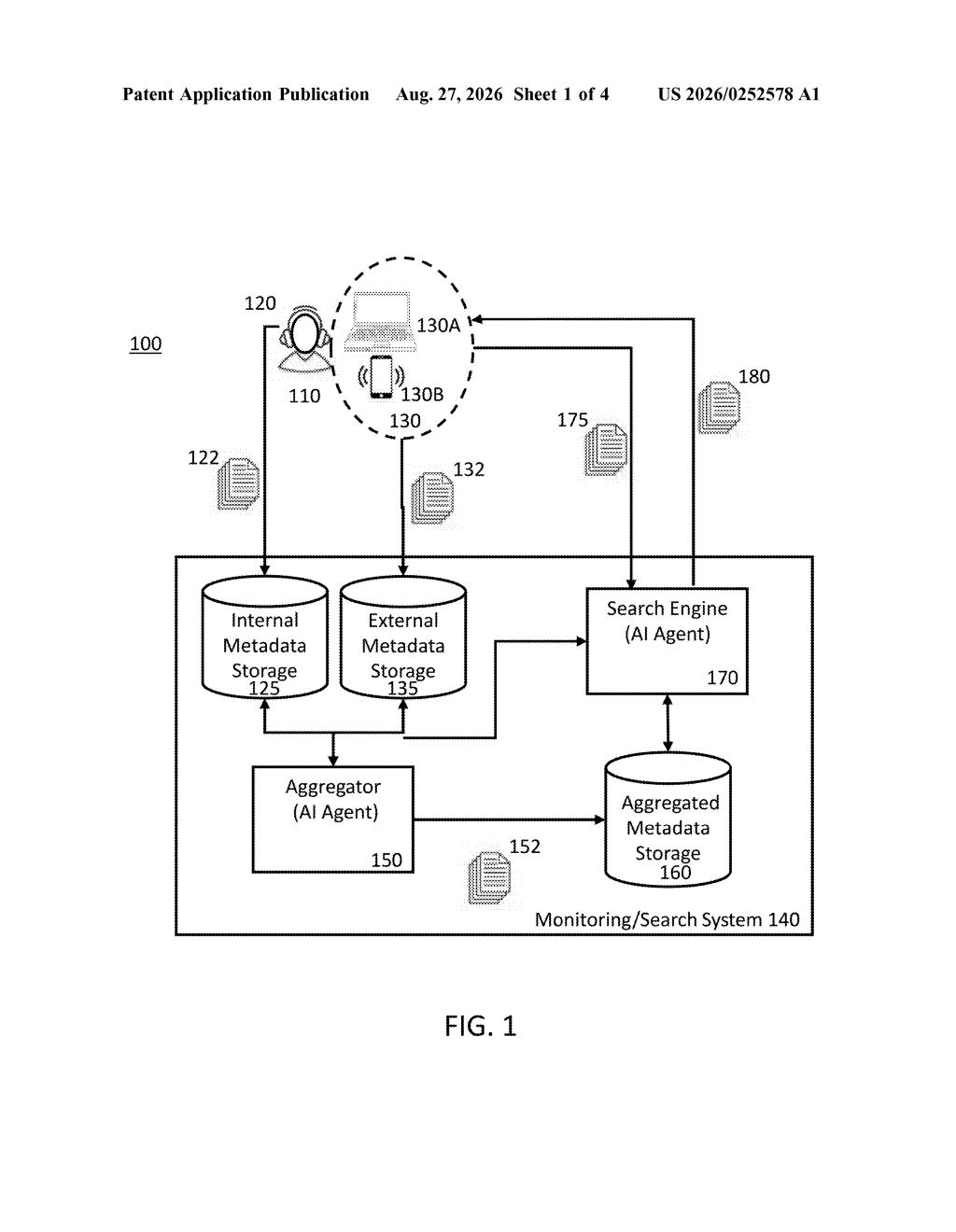
How IBM's brain-signal search system would actually work
Ever tried to find one email in a ten-year archive, knowing you remember reading it on a rainy afternoon in a coffee shop? IBM is working on a system that would solve that problem before it starts.
The idea is to attach a neural computing interface (think: a wearable or implant that reads electrical signals from your brain) to a person while they go about their day. At the same time, sensors on their device record what is happening around them: where they are, what they are doing, what the environment looks like. The system then bundles your brain's reaction to a moment together with those outside details and saves it all as one searchable record.
Later, when you try to find something, you type a regular search query. If your search touches on a moment that the system captured, it can pull up both what was happening around you and the corresponding brain-state data from that instant, linking your inner experience to the outer event automatically.
monitoring, via a neural computing interface connected to a user, a plurality of brain cells of the user; capturing, based on the monitoring, internal metadata of the user, wherein the internal metadata is neural biometric metadata associated with a first action of the user …
Translation: The system uses a brain interface to track your neural activity and turn your thoughts into digital data.
How the aggregator links neural data to external context
The patent describes a biometric data storage and retrieval system built around three moving parts working at the same time.
First, a neural computing interface connected to the user monitors a group of brain cells continuously. What it captures is called internal metadata: not the full content of a thought, but a tagged record of the brain's state tied to a specific action the user is performing. Think of it as a timestamp with a neural fingerprint attached.
Second, a standard computing device uses a set of sensors to record external metadata in parallel: environmental data (location, ambient conditions, surroundings) and contextual data (what the user is physically doing at that moment). The simultaneous capture is important: the two streams are meant to describe the same moment from the inside and the outside at once.
An aggregator (a piece of software that combines data streams) then merges the two into a single aggregated metadata record and saves it to a dedicated store. When the user later submits a search query, the system's search engine checks whether any search term matches external metadata that was recorded alongside a specific neural state. If it finds a link, it returns the paired internal-plus-external record as the search result.
- Neural interface reads brain-cell activity during an action
- Device sensors record environment and behavior at the same moment
- Aggregator pairs and stores both streams together
- Search engine matches queries to the combined records
The aggregator aggregates the internal metadata and the external metadata into an aggregation of metadata, and the aggregator stores, within an aggregated metadata store, the aggregation of metadata. The internal metadata is neural biometric metadata associated with a particular action of the user.
Translation: The software combines your brain signals with data about your surroundings to create a searchable record of your life.
What a searchable brain archive means for privacy and tech
For everyday users, the appeal is obvious: a system that remembers not just what happened but how your brain registered it, then lets you retrieve that moment with a plain text search. That is a significant leap beyond today's photo libraries, calendar logs, or wearable health trackers, which capture only one dimension of an experience at a time.
The harder question is what this kind of filing signals about where neural interface technology is heading commercially. IBM is not the only company thinking about brain-computer interfaces, but a patent this focused on search rather than control or medical use is a different kind of bet, one about ambient memory capture as a daily computing layer. Readers following IBM's broader moves in AI and personal data can find plain-English patent summaries covering this area and adjacent filings across the industry.
This is the 28th Language AI filing from IBM we've tracked since May, a company whose recent applications include pitting AI models against each other and translating legacy code automatically.
Forgetting is expensive. People spend real time reconstructing decisions, hunting for half-remembered ideas, and rebuilding context that dissolved the moment a meeting ended. A system that automatically captures and searches both what someone was doing and what their brain was registering at that moment attacks a cost most knowledge workers accept as unavoidable.
Whether the approach matches that ambition is a harder question. It assumes users wear a functioning brain-reading device throughout their day, a category of hardware that does not yet exist in a reliable or socially normal form, which means the solution requires a larger prior leap than the problem does.
The privacy stakes are also enormous and entirely unaddressed here. A searchable archive pairing brain states with location and behavior would be among the most sensitive personal records ever assembled, and the patent treats that consequence as someone else's concern.
Get our take in your Top Stories
Liked this breakdown? Add Patentlyze as a preferred source on Google, and our plain-English take shows up more often in your Top Stories the next time IBM patent news breaks.
There are more where this came from
We read every patent application Big Tech publishes and send you the ones worth knowing. Plain English, free, every week.
The drawings
4 drawing sheets from US 2026/0252578 A1 · click any drawing to enlarge


Want this weekly breakdown for a company we don't cover? Patentlyze Pro →
Be the first to weigh in