
Sony Patents a System That Renders Different Video Streams for Different Viewers at Once
Two people watching the same game stream could soon see two completely different versions of it, each tailored to them, from a single rendering process. Sony has filed a patent describing exactly that.
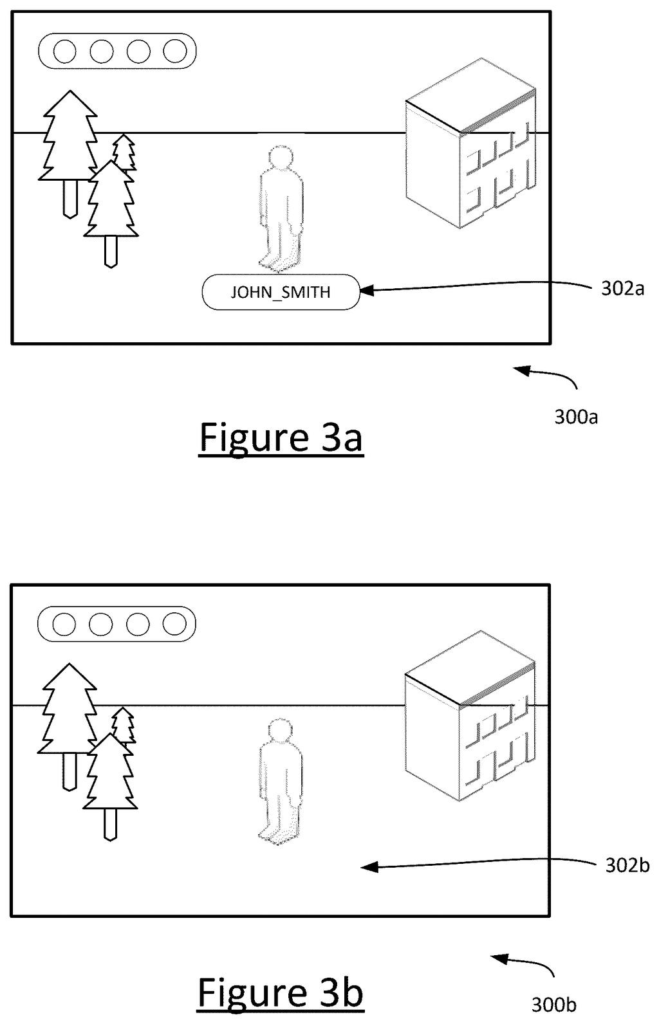
What Sony's per-viewer video rendering actually does
A single TV screen sits in a living room while two people, one colorblind and one not, try to enjoy the same game together. Right now, the image is identical for both, and one of them might be missing information the other takes for granted.
Sony's patent describes a rendering system that solves this by producing two separate video streams from the same underlying pipeline. The system identifies characteristics of each viewer, such as a visual accessibility need or a display preference, and adjusts specific parts of the image generation process for each person before sending them their individual stream.
In practice, one viewer might see enhanced contrast or recolored elements while another sees the default output, all generated efficiently from the same base. The key idea is that most of the rendering work happens once, and only the parts that need to differ are changed per person.
… generating a rendering pipeline comprising a plurality of rendering tasks; determining a first rendering task of the plurality of rendering tasks that is to be rendered differently based at least in part on one or more characteristics of a user …
Translation: The system sets up tasks and spots which one needs to change based on who is watching.
How the rendering pipeline splits and adapts per user
The patent describes a rendering pipeline (a sequence of steps a computer uses to turn game data into a finished image) that can branch at specific points to produce different outputs for different users.
The system starts by generating a shared pipeline made up of multiple rendering tasks, each responsible for a portion of the final image. It then identifies which of those tasks need to change based on a user's characteristics. A "characteristic" here is broad: it could mean a declared accessibility preference, a display type, a brightness setting, or something the system detects automatically.
Once it knows which tasks need to vary, it:
- Produces a first video stream for the first user, using their specific rendering parameters
- Amends those targeted tasks for a second user whose characteristics differ
- Produces a second video stream from the amended pipeline
The claim is written broadly enough to cover any user characteristic driving the difference, not just accessibility cases. That means the same mechanism could in principle apply to display resolution differences, HDR capability, or other per-viewer variables. The efficiency argument is that the shared portions of the pipeline only run once.
… amending the first rendering task based on a characteristic of a second user, wherein the characteristic of the second user is different to that of the first user, and producing a second video stream output to be displayed to the second user …
Translation: It alters the graphics task for a second viewer so they get a completely different video feed.
What this means for shared gaming and streaming sessions
For shared gaming sessions, whether co-op on the same console or remote play over a network, this could mean each participant gets a stream tuned to their own needs without requiring a separate rendering job from scratch. That matters most for accessibility: a colorblind player and a sighted player could share a session without either compromising their experience.
The broader question is where this runs. If the pipeline lives on a cloud gaming server, the pattern in Sony's streaming and accessibility filings suggests the company sees server-side rendering as the place to do this heavy lifting, pushing tailored streams to thin clients. If it lives on a console, the hardware headroom needed to render multiple output paths simultaneously is the real constraint, and that gap is what determines how quickly something like this reaches players.
Sony's 13th filing we've tracked since July in our GPU rendering race watchlist follows the console cloud split and the device cloud split, adding another angle on sharing graphics work between local hardware and the cloud.
The core idea here is sound and the accessibility framing is the most compelling version of it. Rendering one scene differently for a colorblind viewer versus a standard viewer, without doubling the total workload, is a real problem worth solving.
The path from this patent to a shipping feature is not short. The claim is written at a high level of abstraction, covering any two users with any differing characteristic. That breadth is useful for patent coverage but it also means the hard engineering work, deciding which tasks to split, how much memory and GPU time a second output path costs, and how to synchronize streams, is entirely outside the document. You would need concrete implementation work on top of this before anything reaches a player.
The most direct route to a product is probably a cloud gaming context, where Sony controls the server hardware and can allocate rendering resources per session. On a local console, the cost of a second output path is a tougher sell. Either way, this reads as an early-stage claim securing territory around an idea, not a description of something nearly ready to ship.
There are more where this came from
We read every patent application Big Tech publishes and send you the ones worth knowing. Plain English, free, every week.
The drawings
12 drawing sheets from US 2026/0278749 A1 · click any drawing to enlarge


Want this weekly breakdown for a company we don't cover? Patentlyze Pro →