
Nvidia Patents a Fix for Terrain Clipping Around High-Detail 3D Objects
When a simulator renders a detailed building on top of a generic terrain grid, the two can visually clash or overlap in ugly ways. Nvidia's new patent describes a method to automatically hide the terrain patches that would otherwise poke through high-detail objects.
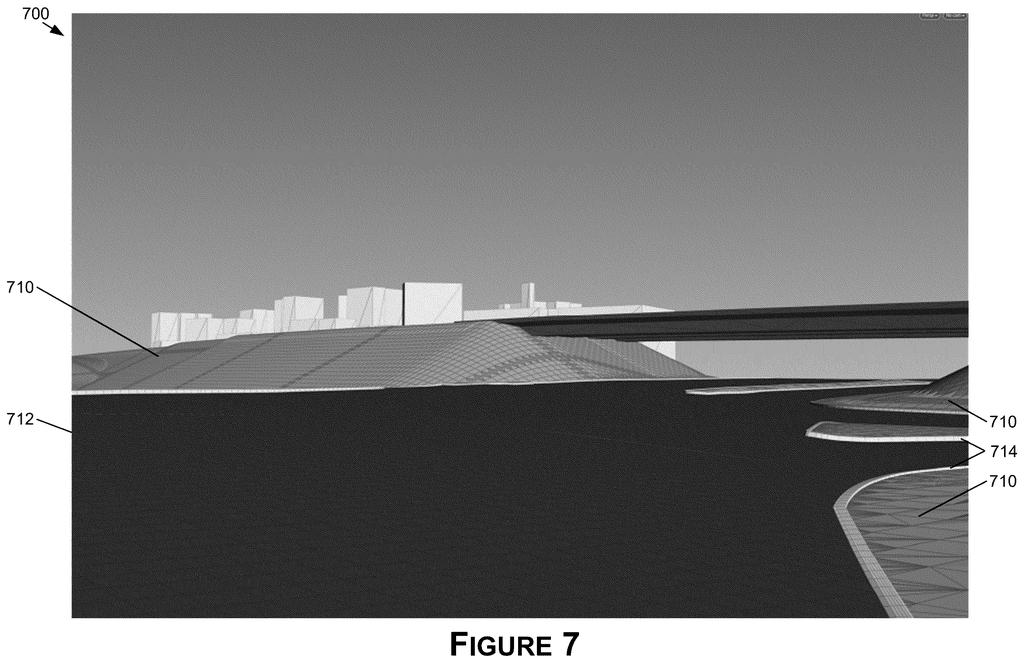
How Nvidia's terrain tile system handles detail mismatches
Imagine a 3D simulation of a city where the ground is made of thousands of identical repeating tiles, like bathroom floor tiles but for virtual earth. That works fine until you drop a highly detailed, custom-built object, like a precise scan of a building or a road intersection, right on top. Suddenly the generic ground tiles and the detailed object fight for the same space, causing visual glitches.
Nvidia's patent describes a system that automatically detects which of those repeating ground tiles are sitting too close to a high-detail feature. It then hides those conflicting tiles only during the rendering step, so the detailed object can display cleanly without anything poking through it.
The system also adjusts how far away it looks for conflicts depending on how detailed the tiles are in a given area. Coarser tiles get a wider buffer zone; finer tiles get a tighter one. The result is a cleaner, more believable simulated environment without artists having to manually fix every overlap.
How the system identifies and hides conflicting mesh polygons
The patent describes a rendering pipeline step for simulation environments (think autonomous vehicle test worlds or robotics training grounds) that uses a data structure called an instanced mesh tile. These are repeating 3D patches that collectively represent a large terrain surface. They are efficient because the same mesh geometry is reused across thousands of positions rather than authored individually.
The problem arises when high-resolution features, such as photogrammetry-captured buildings, precise road markings, or custom-authored landmarks, are placed on top of that tiled terrain. The tiles underneath can visually intersect or "z-fight" with the detailed geometry.
The system works in three steps:
- It checks which tile polygons fall within a threshold distance of any high-detail feature.
- It adjusts that threshold based on the tile's own level of detail: low-detail tiles get a larger buffer zone, high-detail tiles get a smaller one.
- It updates rendering parameters for the affected polygons so they are omitted from the render pass, hiding them without permanently deleting the underlying data.
Critically, the tile data itself is not destroyed. The system only toggles a parameter that tells the renderer to skip those polygons, which makes the operation fast and reversible.
What this means for simulation and autonomous vehicle testing
Nvidia's simulation platforms, particularly Omniverse and its autonomous vehicle training suite, depend on generating large, visually consistent virtual worlds at scale. When terrain tiles and detailed assets collide, engineers historically have had to resolve conflicts by hand or accept visual artifacts. This patent describes an automatic, parameter-based solution that scales with the size of the scene and the variety of detail levels in it.
For the people actually using these simulation systems, whether they are training self-driving car models or building digital twins of real-world locations, this kind of fix means cleaner training data. A simulator that renders terrain incorrectly can introduce errors into the perception models trained on that data. Getting the ground to look right is less glamorous than headline AI features, but it is the kind of foundational work that determines whether simulation results transfer to the real world.
This is unglamorous but genuinely useful infrastructure work. Terrain-tile popping and z-fighting are real, well-known problems in large-scale 3D simulation, and an automatic, level-of-detail-aware solution is meaningfully better than the status quo of manual cleanup. It won't headline a product launch, but it's exactly the kind of patent that improves simulation fidelity across Nvidia's entire platform.
There are more where this came from
We read every patent application Big Tech publishes and send you the ones worth knowing. Plain English, free, every week.
The drawings
30 drawing sheets from US 2026/0212603 A1 · click any drawing to enlarge


Want this weekly breakdown for a company we don't cover? Patentlyze Pro →