
Nvidia Patents a Tool That Measures How Well AI Programs Perform Regardless of Origin
Companies building AI agents today are drowning in incompatible tools, and comparing their performance is a mess. Nvidia's new patent describes a system that wraps any AI agent workflow in a common format so you can measure and compare them side by side.
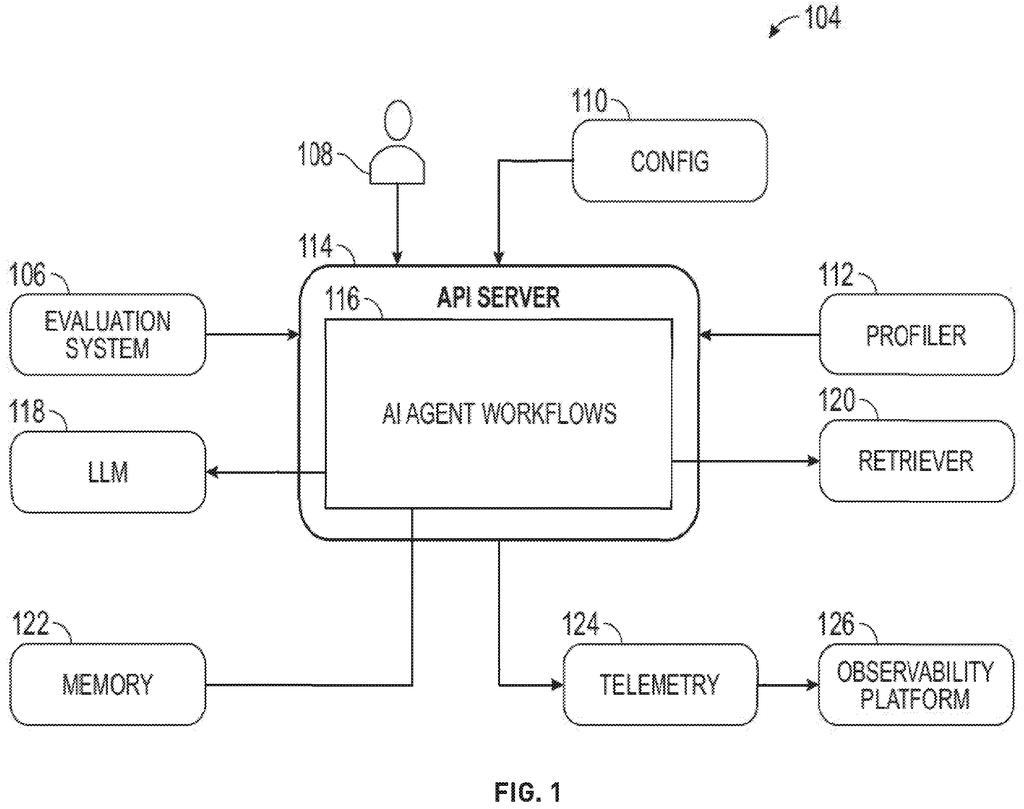
What Nvidia's AI agent benchmarking system actually does
Imagine you run an IT team and you've got three different AI assistants doing tasks inside your company, each built by a different vendor using a different toolkit. Comparing how well they perform is nearly impossible because they each speak a different technical language.
Nvidia's patent describes a system that acts as a universal translator for these AI agents. It wraps each one in a common format, watches what happens when they run, and produces a standard performance report you can actually compare across all of them.
Based on those reports, the system can also automatically adjust how each agent is deployed, essentially tuning the setup to make things run better without anyone manually digging through logs.
How the system standardizes workflows from different frameworks
The patent covers an AI agent system that accepts workflows built with multiple, different AI agent frameworks (think LangChain, AutoGen, or similar tools that let developers build automated AI pipelines). The core challenge those frameworks create is fragmentation: each has its own format, its own way of logging events, and its own performance language.
To fix that, the system wraps individual functions inside each workflow with standardized schemas and descriptions, meaning it puts a common envelope around whatever the framework originally produced. That process is called providing framework-agnostic abstractions, a way of saying the system doesn't care what tool built the agent.
Once wrapped, the system collects instrumentation data during execution. Instrumentation here means structured logs of what the agent actually did at each step, how long it took, and where things went wrong or slow.
From those logs it generates performance efficiency metrics and then uses them to adjust the deployment configuration, the settings that control how the agent runs in production. In plain terms: it watches the agent, scores it, and changes its operating settings to improve the outcome.
What this means for teams building and deploying AI agents
For teams that build AI-powered software, managing a mix of agent frameworks is already a day-to-day headache. A tool that normalizes performance data across all of them could meaningfully cut the time spent debugging why one agent runs slower than another, or whether a new version is actually better.
Nvidia keeps filing on AI agent infrastructure, and this patent fits a pattern of making agents more practical to deploy at scale, not just more capable in theory. If granted with the breadth described in claim 1, it could give Nvidia a significant position in the tooling layer where AI agents actually get monitored and managed.
Nvidia's 19th filing we've tracked since May in our AI assistant and agent coverage adds to a set that includes one on routing tasks to workers and one on briefing agents about databases.
Claim 1 is broad. It covers any system that receives workflows from different frameworks, wraps them in standardized descriptions, collects execution data, and adjusts deployment settings from that data. That description could apply to a wide range of existing and future agent-monitoring tools, which means this claim, if granted as written, has real blocking potential in the agent-operations space.
The practical question is whether the standardized-wrapping step is novel enough to survive examination. Concepts like instrumentation and performance-based configuration tuning are well established in software engineering. The specific combination applied to multi-framework AI agents is newer territory, which is where Nvidia's argument for patentability will likely land.
For anyone building agent-monitoring or agent-orchestration products today, this filing is worth understanding. A broad grant here could force competitors to route around Nvidia's approach or license it.
There are more where this came from
We read every patent application Big Tech publishes and send you the ones worth knowing. Plain English, free, every week.
The drawings
11 drawing sheets from US 2026/0278412 A1 · click any drawing to enlarge


Want this weekly breakdown for a company we don't cover? Patentlyze Pro →
Be the first to weigh in