
Nvidia Patents a System That Automatically Diagnoses When an AI App Gets Worse
When an AI application starts giving worse answers, figuring out exactly why can take days of manual detective work. Nvidia has filed a patent for a system that catches those quality drops automatically and traces them back to a root cause without human intervention.
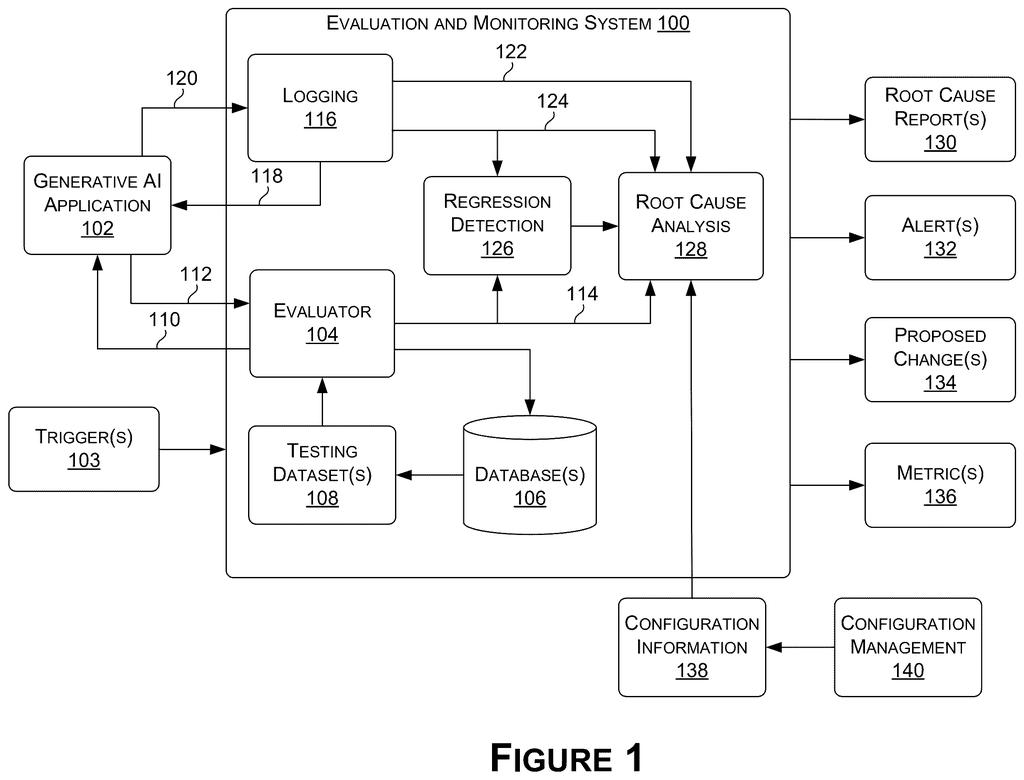
What Nvidia's AI self-diagnosis system actually does
Right now, when an AI-powered product suddenly starts behaving badly, the people who built it have to sift through mountains of logs and test results by hand to figure out what broke. That process is slow, error-prone, and often leaves real users stuck with a degraded experience for longer than anyone would like.
Nvidia's patent describes a system designed to watch an AI application continuously, measure how well it is performing, and automatically flag when something goes wrong. More importantly, it tries to tell engineers which part of the application caused the problem, not just that a problem exists.
Think of it like a car's onboard diagnostic system. Instead of the engine light just turning on, the system tells you it's the oxygen sensor in cylinder three. For AI products, that kind of specific, automatic diagnosis could cut the time between "something is wrong" and "we've fixed it" from days to hours.
… detect a regression for the generative AI application based at least on at least one of the one or more quality metrics for the generative AI application or the one or more logs for the one or more components of the generative AI application; …
Translation: It automatically spots when an AI app starts performing worse using metrics and system logs.
How the system detects regressions and traces their cause
The system works by running structured evaluations of a generative AI application (any AI that produces text, images, or other content) and tracking two things at once: quality metrics and detailed logs.
Quality metrics measure how good the AI's outputs are during a test run. These could include accuracy scores, relevance ratings, or other benchmarks depending on the application. Logs capture a step-by-step record of what each internal component of the AI did during that same run, including how data moved through the system and how long each step took.
When the system detects a regression (meaning the AI's quality has dropped compared to a previous baseline), it feeds both the quality metrics and the logs into a diagnostic model. That model produces a "root cause" output: a specific explanation pointing to which component or change triggered the decline.
- Trigger an evaluation automatically on a schedule or after a code change
- Collect quality scores and detailed execution logs simultaneously
- Detect when scores drop below an acceptable threshold
- Use a model to identify the likely source of the problem
- Kick off corrective actions based on that diagnosis
The last step, performing operations to address the regression, suggests the system could also attempt fixes automatically, not just report the problem.
Indication(s) of a root cause of a regression for the generative AI application may be generated using model(s) based at least on the quality metric(s) for the generative AI application and the log(s) for the component(s) of the generative AI application.
Translation: Other models analyze the logs and metrics to figure out exactly why the AI performance dropped.
What this means for companies shipping AI-powered products
For any company shipping an AI-powered product, the gap between "it broke" and "we know why" is expensive. Every hour an AI assistant, search tool, or recommendation engine performs poorly costs user trust and, often, revenue. A system that closes that gap automatically has real commercial value.
This is also an infrastructure problem that gets harder as AI applications grow more complex. Modern AI products chain together many components: retrieval systems, multiple models, guardrails, re-rankers. When quality drops, the cause could be hiding in any one of them. Nvidia keeps filing on AI infrastructure and deployment tooling, and this patent fits squarely in that work: making it easier to operate AI reliably at scale, not just build it in the first place.
Nvidia's sixth filing we've tracked in the AI guardrails race since July follows earlier applications like one on screening training data and one on locking down AI likenesses.
The core idea here is a software wrapper that watches an AI application while it runs, scores its outputs, logs what every internal step did, and then uses a separate model to point at what went wrong when quality drops. No new chip, no exotic hardware, no novel model architecture required. An engineering team could build toward this today.
The honest caveat is that finding the root cause of a problem in a complex AI system is one of the oldest hard puzzles in software, and adding another AI model to do the diagnosing does not guarantee clean answers. The document describes the goal more than it proves the solution.
Even so, a tool that narrows a list of fifty possible culprits down to five is worth building, because that alone saves days of engineering time. The practical value does not depend on perfection, and that makes this a grounded bet rather than a speculative one.
There are more where this came from
We read every patent application Big Tech publishes and send you the ones worth knowing. Plain English, free, every week.
The drawings
9 drawing sheets from US 2026/0278401 A1 · click any drawing to enlarge


Want this weekly breakdown for a company we don't cover? Patentlyze Pro →
Be the first to weigh in