
Nvidia Patents a Way to Focus AI Object Tracking on the Parts of Video That Actually Matter
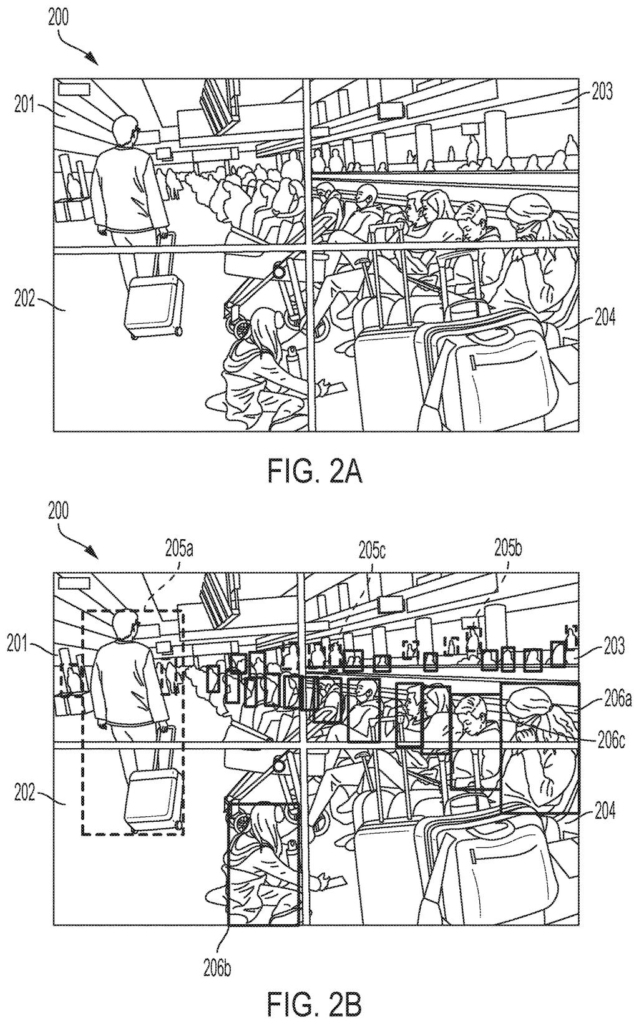
Most AI video systems scan every pixel of every frame at the same rate, whether the action is in the corner or the center. Nvidia's new patent describes a smarter approach: let the user point to the interesting part of the screen, and the AI concentrates its effort there.
How Nvidia's selective video tracking would work for you
Ever watched a security camera feed and wondered why the system missed something happening in one corner while fixating on an empty hallway? That is the problem Nvidia is trying to address here.
The patent describes a system where a user can select specific regions of a video frame, and the AI tracking system then devotes more of its processing effort to those areas. Think of it like a spotlight: instead of scanning the whole stage at the same level of attention, the system turns up the intensity wherever you point.
The practical upside is that the AI can track objects in your chosen region more frequently and accurately, without necessarily burning extra processing power on parts of the frame you do not care about. That trade-off, trading coverage breadth for depth in a chosen zone, is the core idea.
How the system adjusts neural network scan rates by region
The patent describes a pipeline in which one or more neural networks (software systems trained to recognize and follow objects in video) scan incoming video frames to identify and track objects. The key variable is the rate at which those networks run their analysis on different parts of the image.
Normally, a tracking system applies a fixed scan rate across the whole frame. This invention ties the scan rate to user-selected portions of a video frame: regions the user has explicitly flagged as important. When a region is selected, the neural network identifies and tracks objects within it more frequently, effectively raising the temporal resolution (how often the system checks) for that zone.
The patent does not restrict this to a single use case. The adjustment mechanism could apply to:
- A single neural network changing how often it processes a sub-region
- Multiple networks dividing labor, with higher-frequency networks assigned to selected zones
- Dynamic updates if the user changes the selected region mid-stream
The underlying insight is that compute is finite. By concentrating neural network inference (running the AI model) on user-flagged areas, the system can deliver better tracking where it counts without demanding more hardware.
What focused AI tracking could mean for video and surveillance tools
For anyone who has ever managed video surveillance, sports analytics, or live broadcast production, missed tracking in a crowded frame is a real headache. A system that lets an operator point to a zone and say "watch this" could reduce both errors and processing overhead at the same time.
On the broader technology side, Nvidia's steady investment in video AI suggests this kind of work feeds into its GPU and platform roadmap for inference workloads. Whether it surfaces as a developer API, a feature inside existing Nvidia video tools, or something else entirely is not clear from the patent. But the principle, trading uniform coverage for user-directed precision, is applicable anywhere AI is watching video in real time.
That makes this Nvidia's 52nd filing in our AI vision coverage we've tracked since May, adding to earlier applications on rebuilding hidden object parts and spotting objects behind others.
From a shipping standpoint, this idea lives almost entirely in software. The patent describes adjusting how often a neural network scans a particular region of a video frame, which only requires a capable graphics processor and a software layer sitting on top of it.
The shortest route to a product runs through three practical problems: giving users a clean way to draw or select regions on screen, weaving that selection into an existing video pipeline, and making the rate-adjustment logic behave reliably when scenes change. None of those demand new hardware, but none are trivial either.
The patent's independent claims are all canceled, which weakens any read on its legal scope. As a technical idea it is focused and practical, but it moves a product line forward in small steps rather than large ones.
There are more where this came from
We read every patent application Big Tech publishes and send you the ones worth knowing. Plain English, free, every week.
The drawings
56 drawing sheets from US 2026/0268690 A1 · click any drawing to enlarge


Want this weekly breakdown for a company we don't cover? Patentlyze Pro →