
Google Patents a System That Lets AI Build Its Own Image-Processing Structures
Training an AI to see things clearly is hard enough. Google has filed a patent for a system that lets the AI figure out, on its own, how to wire up the part of its brain responsible for spotting objects at different sizes.
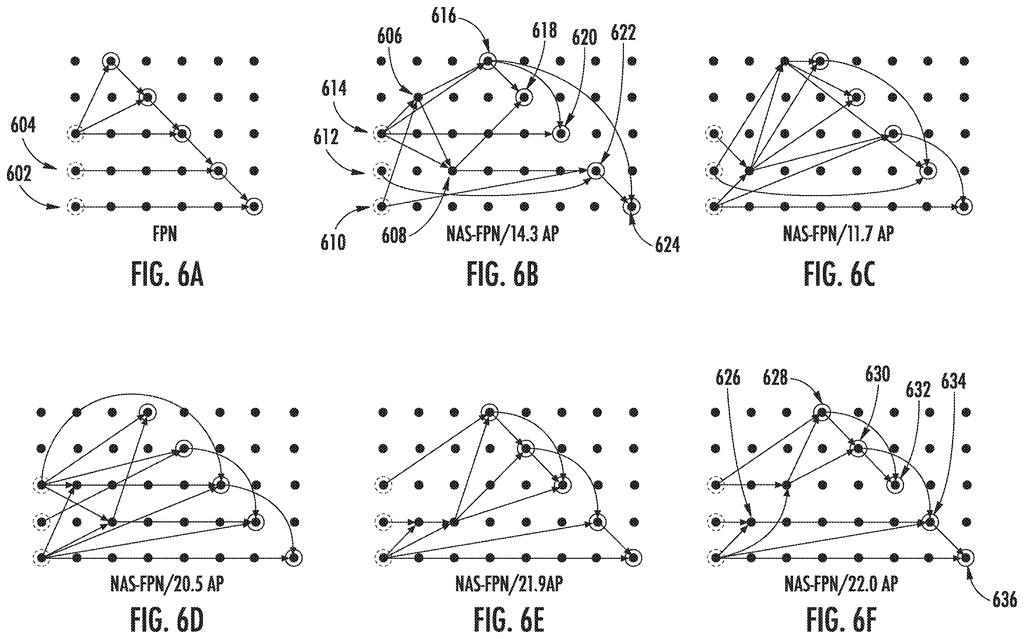
How Google's AI teaches itself to see at every scale
Imagine you're trying to teach a camera to spot everything from a distant mountain to a nearby coffee cup in the same photo. The tricky part isn't just recognizing shapes, it's handling the enormous difference in scale between things that are far away (which look small) and things that are close (which look large).
Google's patent tackles that problem by automating a part of AI development that engineers usually do by hand: designing the layer inside a vision model that blends information across different zoom levels. Instead of engineers spending weeks testing different configurations, a second AI, called a controller model, generates candidate designs, runs them, checks how well they perform, and keeps improving.
The result is a system that can, in theory, find better designs than a human team would, faster. That matters for anything that relies on computer vision: self-driving cars, medical imaging, photo search, and security cameras all depend on AI that can reliably see both the big picture and the fine details at the same time.
… a controller model configured to generate new architectures for a pyramid layer that receives a plurality of input feature representations output by a backbone model and, in response, outputs a plurality of output feature representations …
Translation: An AI controller creates new structures for combining image data at different scales.
How the controller model builds and tests new layer designs
The patent describes a two-part machine-learning architecture. The first part is a backbone model, a standard neural network that processes an image and produces a set of feature representations at multiple resolutions (think of these as different levels of zoom: a coarse overview, a medium view, and a fine-grained detail view).
The second part is called a pyramid layer. This layer takes those multi-resolution feature maps and blends them together. The novel piece in this patent is how the pyramid layer combines information: it takes a feature at one resolution, mixes it with a feature at a different resolution, and produces a third feature at yet another resolution. That three-way combination is what the patent specifically protects.
But the deeper invention is the controller model, which is essentially an AI that designs other AIs. It runs through many iterations:
- Generate a new architecture (a blueprint) for the pyramid layer
- Build a full vision model using that blueprint
- Measure how well the model performs on a task like object detection
- Feed those results back to improve the next blueprint
This loop is a form of neural architecture search (automated trial-and-error for AI design), applied specifically to the tricky problem of merging multi-scale visual information.
What this means for cameras and object-detection systems
Object detection at multiple scales is one of the oldest unsolved headaches in computer vision. Humans handle scale naturally; AI models have to be carefully engineered to do it well. The hand-designed approach is slow, expensive, and rarely optimal, because the number of possible layer configurations is enormous.
If this kind of automated design works reliably, it could accelerate how quickly Google (and others using similar research) improve vision systems for products like Google Photos, Google Lens, and Pixel camera software. It could also benefit safety-critical uses like pedestrian detection in self-driving systems, where missing a small but important object in a scene has real consequences for your safety on the road.
Google's 37th filing in the AI vision patents we cover since May follows earlier work on recognizing and describing images and video AI object focus.
The problem this patent attacks is real and has been expensive for the field for years. Getting AI to reliably detect objects across wildly different scales, from a faraway road sign to a nearby child, requires careful architectural choices that researchers have spent enormous effort on by hand. Automating that search is a serious technical goal, not an incremental paperwork filing.
That said, neural architecture search as a general idea has been around for a while, and the specific question is whether Google's framing of the pyramid layer combination (first resolution plus second resolution yields a third, different resolution) represents a meaningfully new constraint or is closer to organizing existing ideas into a patent-friendly claim.
The practical stakes are high enough to make this worth following. a growing pile of Google computer-vision filings reflects how much the company depends on image understanding across its products. A faster, more automated path to better vision models would have compounding effects across Search, Maps, Photos, and hardware.
There are more where this came from
We read every patent application Big Tech publishes and send you the ones worth knowing. Plain English, free, every week.
The drawings
11 drawing sheets from US 2026/0278329 A1 · click any drawing to enlarge


Want this weekly breakdown for a company we don't cover? Patentlyze Pro →
Be the first to weigh in