
Apple Patents a System That Tracks Who Looked at Your Health Records
Every time a doctor or hospital staff member pulls up your health records, that access could leave a cryptographically verifiable paper trail. Apple has patented a system to make that happen without exposing the raw data itself.
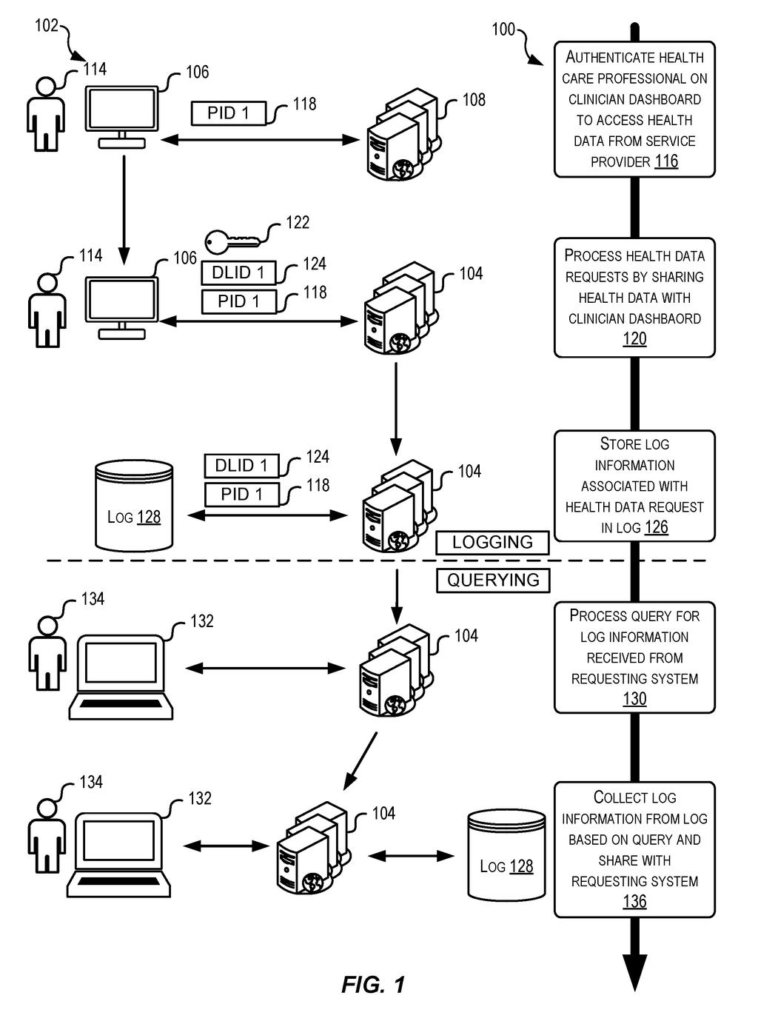
What Apple's health-record audit trail actually does
You're a patient whose health records live in a digital system, and a nurse at a clinic you've never visited just pulled them up. Did anyone tell you? Probably not. Apple's new patent describes a system designed to fix exactly that gap.
The core idea is an audit log that records each time someone requests access to a chunk of your health data. The system uses encrypted data blocks, so the records of who accessed what can be tracked and shared without the raw medical details being exposed in the log itself. Think of it like a sign-in sheet that proves someone entered a room, without the sheet itself containing the contents of the room.
The result is a list, tied to your patient identity, of every healthcare worker who touched your records and when. That list can be reviewed by you or authorized parties, giving patients a clearer picture of who has been inside their information.
… generating a transaction record based at least in part on the node information and the accessing information, the transaction record identifying (i) the unique data identifier, (ii) a user identifier associated with a user of a health institution who requested the health data, and (iii) metadata associated with the request …
Translation: The system creates a permanent receipt that logs exactly who requested the health data and when.
How the encrypted node and transaction record fit together
The patent describes a multi-step process involving three players: a patient, a service provider (the company storing health data), and a health institution user (like a doctor or administrator).
When a healthcare worker requests your records, they send a query that includes a unique data identifier pointing to a specific encrypted node (a discrete block of data) inside a larger data structure the service provider maintains. The service provider returns both the encrypted node and a piece of access information confirming the request happened.
The requesting system then assembles a transaction record from those two pieces. That record captures:
- The unique identifier of the data block that was accessed
- An identifier for the healthcare worker who made the request
- Metadata about the request (timing, context, and similar details)
Finally, the system compares that transaction record against a mapping table that links user identifiers (the healthcare workers) to patient identifiers. The output is a complete list of which records belonging to a specific patient were accessed by which users. Crucially, the audit trail is built from encrypted references, so the log itself does not need to contain your raw medical data to function as a verifiable record.
Records associated with a patient and accessed by a user (e.g., medical professional) can be logged and shared to track access.
Translation: This allows patient record lookups to be monitored and reviewed.
What this means for patient privacy in digital health
For patients, the practical value is accountability. Today, most people have no easy way to know who has looked at their medical records unless they specifically request an access log from a provider, and those logs are rarely surfaced proactively. A system like this could make that information routine rather than something you have to hunt for.
Several Apple filings on health data privacy this year point toward a larger push to position Apple's health infrastructure as trustworthy to both patients and the healthcare institutions that handle their data. Whether that ambition reaches a consumer product is a separate question, but the patent signals that Apple is thinking seriously about the audit side of health data, not just the collection side.
Apple's 14th filing we've tracked since July in our on-device AI privacy work follows ideas like locking photos before apps see them and keeping data off shared devices.
The trade this design makes is to separate what was accessed from the fact that it was accessed . Keeping those two things in different systems adds a layer of privacy, but it also adds complexity. If the mapping table that links worker IDs to patient IDs is ever compromised or goes out of sync, the audit trail becomes unreliable or, worse, misleading.
There's also a real question about who controls the transaction records once they're generated. The patent describes generating them on the requesting system's side, which means the health institution, not the patient, is the one assembling the log. A patient who wants to inspect their own access history would still need to ask for it rather than having direct access themselves.
That said, the underlying problem this addresses is real and largely unsolved in everyday healthcare. Any system that makes access logging automatic and cryptographically traceable is doing meaningful work, even if the implementation still hands a lot of control to institutions rather than individuals.
There are more where this came from
We read every patent application Big Tech publishes and send you the ones worth knowing. Plain English, free, every week.
The drawings
22 drawing sheets from US 2026/0278157 A1 · click any drawing to enlarge


Want this weekly breakdown for a company we don't cover? Patentlyze Pro →