
Apple Patents a Way to Toss Video Between Screens With a Live Animation
Point your iPhone at a screen showing a video, make a gesture, and watch the video animate its way to a different screen across the room. That is the core idea behind a newly filed Apple patent.
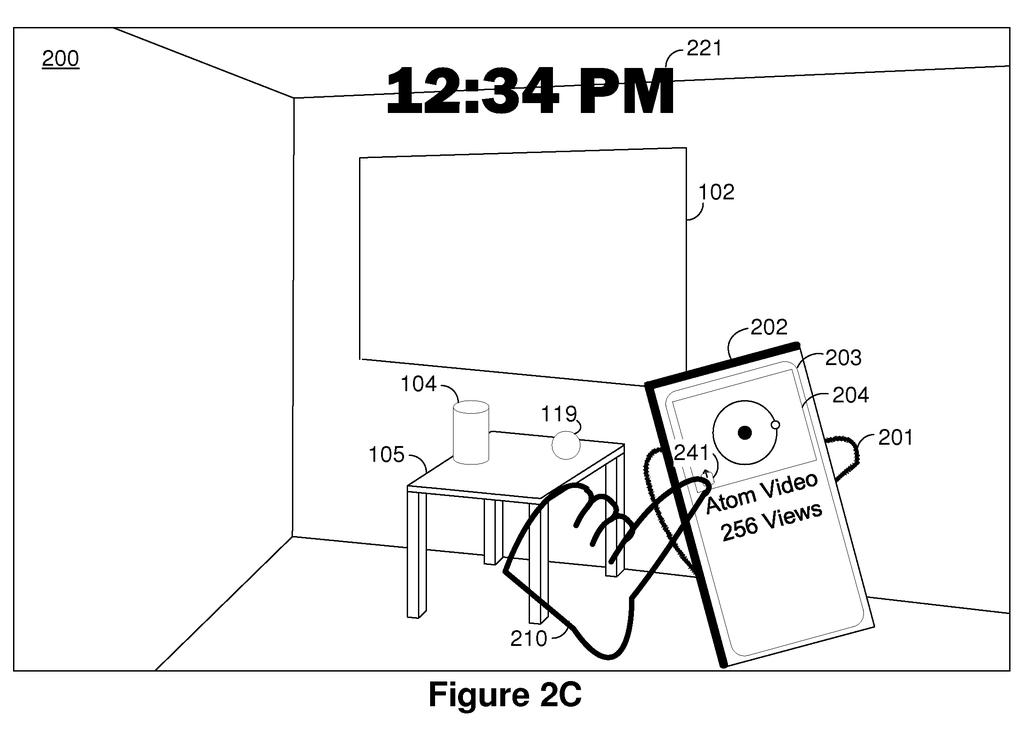
What Apple's screen-to-screen video handoff actually does
Ever tried to move something you're watching on one TV to a different screen in the house? Right now that usually means hunting through an app, finding the same video again, and scrubbing back to where you were.
Apple's patent describes a much more physical version of that handoff. You hold up your phone, point it at a screen that's playing a video, make some kind of gesture or tap, and the phone shows you an animation of the video visually traveling across the room to a second screen, which then picks up and plays it. The animation is the key detail: instead of the video just blinking off one screen and on another, you see it move.
The system uses the phone's camera to spot the first screen and understand where it sits in the room. A second device, probably something like an Apple TV or another display, receives instructions to start playing. Your phone acts as the remote control and the visual stage for the whole handoff moment.
detecting a second device in a field-of-view of the image sensor, wherein the second device is displaying, on a second display of the second device, content at a first location in the physical environment …
Translation: Your camera spots another screen playing something nearby.
How the camera, trigger, and third device work together
The patent describes three devices working together. The first device (likely a phone or tablet) has a camera pointed at the room. It uses that camera to detect a second device displaying content on its screen, and it notes where that screen sits in physical space, what the patent calls "a first location in the physical environment."
When the user performs a transfer user input (a gesture, tap, or similar trigger aimed at that first screen's location), the first device sends instructions to a third device, telling it to display the same content at a different physical location, "a second location."
The abstract adds a detail the claim leaves implicit: the first device's own display shows a transfer animation, a moving image of the video traveling from the old screen's position to the new one. That animation bridges the gap between "content disappeared" and "content arrived" so the transition feels intentional rather than glitchy.
The claim is deliberately device-agnostic. It does not specify iPhones, Apple TVs, or any Apple product by name. It covers any three-device arrangement where the middle device has a camera, detects content on one screen, and routes it to another screen in response to a directed input.
… displaying, on the first display, a transfer animation of the video content being moved from the first location to the second location …
Translation: You see a live animation of the video gliding over to the new screen.
What this means for Apple's multi-device living room
For anyone with more than one screen at home, this addresses a genuinely frustrating gap. AirPlay already lets you send video to other screens, but it requires you to navigate menus. This patent describes something more direct: point, gesture, done. The animation is not decorative; it gives your brain confirmation that the handoff worked and where the content went.
Apple's track record in multi-device continuity patents is long, and this filing fits squarely into that pattern. If this approach ships, it would make screen-switching feel less like operating a network and more like physically handing something to someone across the room.
Apple's 24th filing we've tracked since May on device-to-device handoff builds on earlier applications covering a split screen across two devices and a shared control permission system.
Claim 1 does not mention a specific gesture, a specific animation, or any particular brand of hardware. It covers any device with a camera that spots video playing on a nearby screen, receives a directed input aimed at that screen, and sends instructions to route that video somewhere else. That three-device chain, described at that level of generality, touches a wide range of everyday handoff situations.
If granted, a claim that broad could give Apple legal standing over a significant slice of how multi-screen video routing works in practice, not just one implementation of it.
The animation in the patent title and abstract, the visual flourish most people would actually notice, appears only in the narrower dependent claims, not in claim 1. The core legal protection is about the camera-detect-then-route mechanism, so the patent's real reach is quieter and more structural than the consumer-facing feature suggests.
There are more where this came from
We read every patent application Big Tech publishes and send you the ones worth knowing. Plain English, free, every week.
Want this weekly breakdown for a company we don't cover? Patentlyze Pro →