
Apple Patents a Secure Way to Move Digital IDs and Cards Between Devices
Switching to a new iPhone is easy until you realize your digital driver's license, transit pass, or payment cards are stuck on the old one. Apple's new patent tackles exactly that handoff problem.
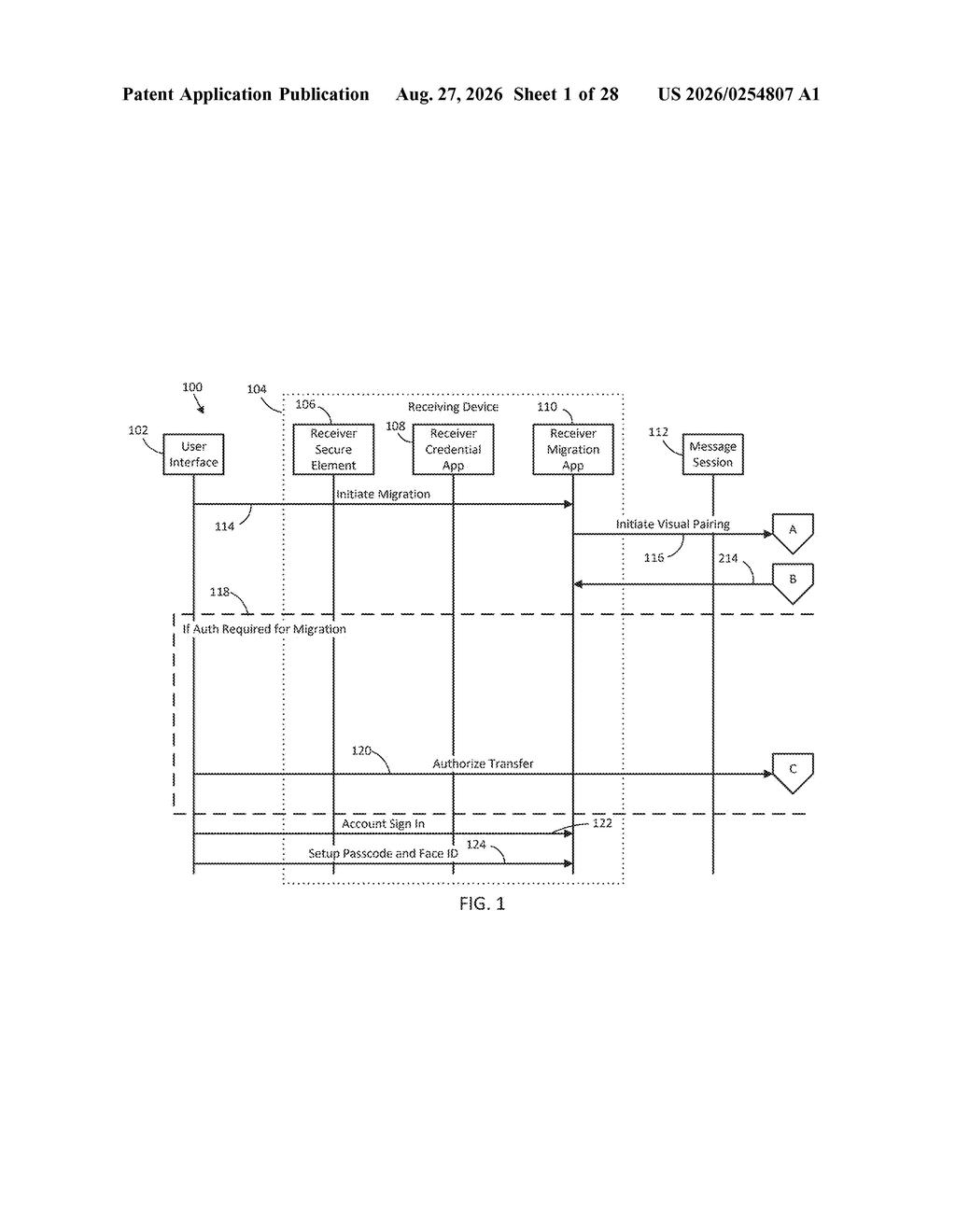
What Apple's credential migration system actually does
Right now, digital credentials stored on your phone, things like your state ID in Apple Wallet, your building access badge, or your transit card, are locked to the specific hardware they were set up on. If you get a new phone, you often have to re-enroll from scratch, sometimes going through a government website or standing in line again.
Apple's patent describes a system where your new device can formally request those credentials from your old device. The old device checks whether the transfer is allowed, and if it is, it packages up the credential information and sends it along. The new device then contacts Apple's servers to finalize the handoff. The whole process is handled by a dedicated security chip inside both phones, so the credential never travels as plain readable data.
The key idea is that you, the user, shouldn't have to prove your identity all over again just because you bought a new phone. The devices and servers work it out between themselves, with the security chip acting as a tamper-resistant notary on each end.
… signing, by a secure element of the first device, a migration token corresponding to the one or more credentials; providing, by the first device to the second device, a migration request that includes the signed migration token …
Translation: The receiving device uses its secure hardware to sign a special token and asks the other device to transfer the data.
How the secure element signs and verifies the transfer
The patent describes a credential migration protocol built around the secure element, a small, locked chip inside Apple devices that stores sensitive data like payment card numbers and digital IDs. Nothing stored there can be read by the main operating system or any app; it operates as its own isolated vault.
Here is how the process works step by step:
- Your new device notices you want to move a credential from your old device and generates a migration token, essentially a signed request that proves the new device's secure element is legitimate.
- That signed token goes to the old device, which uses it to verify the new device is a real, trusted Apple product.
- The old device assembles provisioning information, the data needed to recreate or transfer the credential, and sends it back.
- The new device forwards that provisioning information to Apple's servers, which complete the credential transfer and deliver it to the new device's secure element.
The patent also involves certificate authority security domains, which is a way of saying each secure element has a cryptographic identity issued by a trusted authority (think of it like a hardware passport). That identity is used to verify both devices before any data moves.
The system is designed so that authentication checks happen at every step, and the credential issuer (a state DMV, a transit authority, a bank) can set rules about whether migration is allowed at all for their specific credential.
… utilizing certificate authority security domains of secure elements to bind the one or more credentials to the secure elements for migration.
Translation: It uses high security certificates to securely lock the digital cards to the new device.
What this means for switching iPhones or Apple Watches
For everyday iPhone users, this is the kind of infrastructure work that makes digital wallets actually trustworthy as replacements for physical cards. If moving to a new phone means re-enrolling your state ID, most people will not bother. A smooth, secure transfer process is what makes the whole ecosystem feel dependable rather than fragile.
Apple has been steadily expanding the list of credentials it hosts in Wallet, from transit cards to hotel room keys to government IDs, and each new credential type makes the migration problem more costly to ignore. This patent is part of a broader effort to make that infrastructure solid, and it sits alongside other interesting tech patents covering how device security chips and digital identity systems are evolving across the industry.
This is the 17th Apple filing we've tracked since May on device-to-device handoff, following applications like one moving phone plans between devices and one borrowing cameras for AR.
Every digital card you've added to your phone has to be re-enrolled from scratch when you upgrade. That means contacting agencies, waiting for verification, and often giving up and reaching back for your physical wallet, which defeats the purpose entirely.
The failure point is specific and predictable: people don't abandon digital IDs because they stop working, they abandon them because switching phones breaks everything at once. A system that lets each issuing authority, your bank, your DMV, your transit agency, decide whether its own credential can transfer keeps those institutions in control, which is the only way they'll agree to participate. That's what makes the problem worth solving this way.
When upgrading your phone stops being a reason to drag your physical cards back out of the drawer, digital credentials stop feeling like a convenience feature and start functioning like real infrastructure.
Get our take in your Top Stories
Liked this breakdown? Add Patentlyze as a preferred source on Google, and our plain-English take shows up more often in your Top Stories the next time Apple patent news breaks.
There are more where this came from
We read every patent application Big Tech publishes and send you the ones worth knowing. Plain English, free, every week.
The drawings
28 drawing sheets from US 2026/0254807 A1 · click any drawing to enlarge


Show the other 20 sheets


Want this weekly breakdown for a company we don't cover? Patentlyze Pro →
Be the first to weigh in