
Samsung Patents a Display That Switches Between Public and Private Viewing Angles
Samsung has filed a patent for a display that contains two physically distinct types of pixels, one set visible to everyone nearby, and one set visible only to the person holding the device, letting the screen switch between a wide, shareable view and a narrow, private one without any clip-on filter.
How Samsung's dual-angle screen keeps your display private
A stranger glances at your phone screen on the subway and reads your messages. That moment is what this Samsung patent is trying to eliminate, without making you carry a stick-on privacy filter.
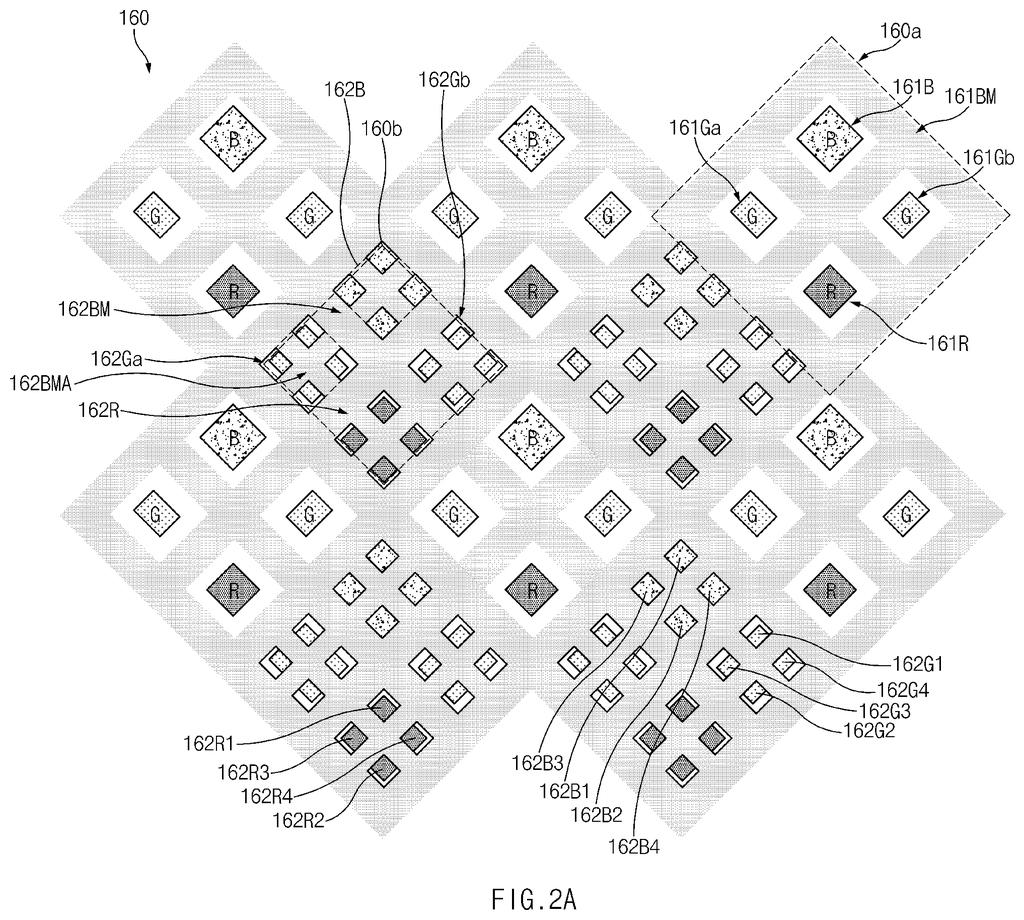
The idea is to build two types of pixels directly into the display panel. The first type behaves like a normal screen pixel: light spreads out wide so anyone beside you can see it. The second type is physically surrounded by tiny shield walls that funnel light into a narrow cone, visible only to you looking straight at the screen. Your phone's software then decides which set of pixels to activate depending on whether you want a shared view or a private one.
The switch between modes is handled entirely by the hardware already inside the screen, so there's no extra attachment needed. You'd just toggle a setting, and the display physically changes how it sends light toward the world.
… a shield layer disposed above the pixel definition member such that the second pixel is observable at the second viewing angle narrower than the first viewing angle …
Translation: A physical blocker is placed over certain pixels to narrow the viewing angle.
How the shield layers narrow the second pixel's light cone
The patent describes a display panel containing two interleaved populations of pixels arranged in groups across the screen.
First-type pixels (wide-angle) behave like conventional display pixels: their sub-pixels emit light that spreads broadly, making the image visible across a wide field of view. Second-type pixels (narrow-angle) sit adjacent to the first type and are built with an additional physical structure around them:
- A pixel definition member, a raised barrier that separates each sub-pixel from its neighbors
- A shield layer placed above that barrier, which cuts off light traveling at steep angles
- An additional shield member sandwiched between the shield layer and the barrier, tightening the light cone further
The processor manages the two sets using what the patent calls different turn-on ratios, meaning, within any group of pixels, it can vary how many first-type versus second-type pixels are lit at once. Critically, the ratio used in one group differs from the ratio in a neighboring group, which helps maintain uniform overall brightness even though the two pixel types have different light efficiencies.
In Mode 1 (public), the wide-angle pixels carry the image. In Mode 2 (private), the narrow-angle pixels take over, and the physical shields ensure that only a viewer looking nearly straight at the screen can see the content.
… perform a control such that turn-on ratios of the first type pixels and the second type pixels in, a plurality of groups, a first group are different from turn-on ratios of those of, among the plurality of groups, a second group that is different from the first group …
Translation: The processor varies how brightly different pixel groups light up across the screen.
What this means for phone privacy screens going forward
For everyday users, this could mean a phone or tablet that offers genuine on-device privacy without a stick-on filter, which typically degrades color accuracy and brightness. The solution is baked into the panel itself, so switching modes wouldn't require accessories or noticeably dim the display.
Samsung keeps filing on display-panel hardware at a time when privacy screens are mostly an aftermarket accessory business. If this technology reaches production panels, it would shift privacy from a user-attached workaround into a baseline display feature, which has implications for both consumer phones and enterprise devices where screen privacy is a compliance requirement.
Samsung's 105th filing we've tracked in Samsung's display technology work since May builds on earlier ideas like a molded waterproof frame and a two-step touch detection method.
Samsung's patent describes a screen built with two physically different types of pixels woven into the panel itself, which means the glass has to be manufactured differently before any device can exist. There is no software update that gets you there.
That puts a real product years away, gated by whether display factories will retool production lines and whether the added cost eventually shrinks enough for a phone most people would buy.
The problem being solved, a stranger on the bus reading your screen as easily as you can, is one people actually have. A screen that limits side-angle viewing without a stick-on filter would remove a daily annoyance. This document shows Samsung has thought carefully about how to manage brightness across those pixel groups, which is real technical work, but careful thinking and a panel coming off an assembly line are separated by a long road of engineering this filing does not shorten.
There are more where this came from
We read every patent application Big Tech publishes and send you the ones worth knowing. Plain English, free, every week.
The drawings
31 drawing sheets from US 2026/0279244 A1 · click any drawing to enlarge


Want this weekly breakdown for a company we don't cover? Patentlyze Pro →