
Nvidia Patents a System That Lets AI Assistants Organize and Run Their Own Tasks
Every time you ask an AI assistant to do something complicated, someone or something has to figure out which tools to call and in what order. Nvidia's new patent hands that job to the AI itself.
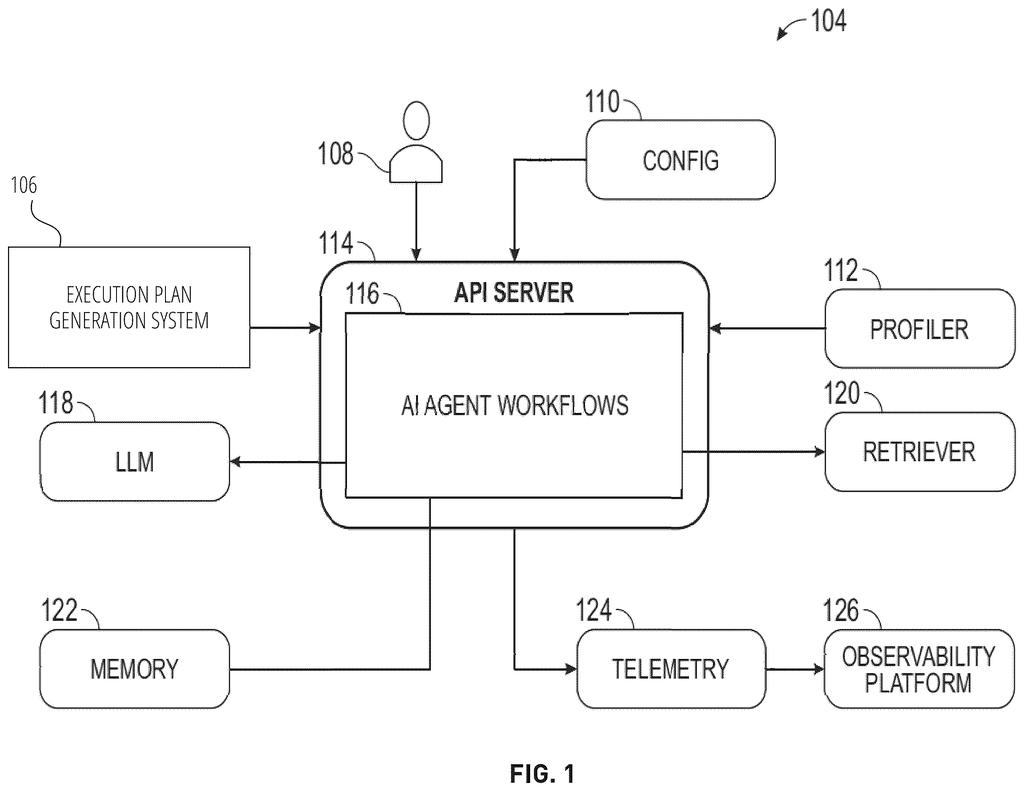
What Nvidia's self-planning AI agent system actually does
Every time you ask an AI assistant to research a topic, book a flight, and draft a summary email all at once, something has to decide which sub-task runs first, which tool handles it, and how the results connect. Right now, developers typically hard-code those rules by hand, which means the AI can only do what it was explicitly programmed to do.
Nvidia's patent describes a system where a reasoning model reads a menu of available AI tools and their descriptions, then writes its own step-by-step game plan for tackling your request. The individual AI agents then carry out that plan, each doing its part without needing a human engineer to pre-wire every possible scenario.
The practical upshot: an AI system built this way could handle requests it has never specifically been trained for, because the planner figures out how to combine existing tools on the fly rather than matching your request to a fixed script.
… instructing, by the AI agent system, a reasoning model to generate an execution plan for a user request based at least on the one or more function descriptions of the at least one available function for the one or more AI agent workflows; …
Translation: The system tells an AI reasoning engine to build a step-by-step plan for handling a user request.
How the reasoning model generates and hands off the plan
The system has three main moving parts.
- Function descriptions: Each available AI workflow registers itself by submitting a short description of what it can do, much like a restaurant listing its menu items. The planning layer reads these descriptions rather than knowing in advance what each tool does.
- Reasoning model: A dedicated AI model (one designed to think through multi-step problems, similar to OpenAI's o-series or a chain-of-thought model) takes the user's request and those menu descriptions, then produces an execution plan: an ordered sequence of which workflows to invoke and how to pass results between them.
- Execution: The AI agent system dispatches each workflow according to the plan, coordinating the handoffs until the full request is fulfilled.
The key design choice is that the planner is task-agnostic, meaning it does not need to know every possible request ahead of time. Because it reasons from the tool descriptions rather than from pre-built rules, a new workflow can be added to the system simply by registering its description, and the planner will start incorporating it automatically.
The claim covers the processor-level implementation, meaning Nvidia is patenting the hardware-and-software combination that performs these three operations, not just an abstract idea about AI coordination.
An artificial intelligence (AI) agent system controls the processing of user requests by receiving function descriptions for various AI agent workflows, instructing a reasoning model to generate an execution plan based on the request and workflows, and then causing the workflows to process the request according to the generated plan.
Translation: An AI system manages user requests by using a reasoning model to create an execution plan for its workflows.
What this means for people using AI assistants daily
For you as an end user, the immediate payoff is an AI assistant that can take on genuinely open-ended tasks without constantly running into the wall of 'I can't do that.' Because the planning step is separate from the individual tools, developers can expand what the system handles just by plugging in new agents, rather than rewriting the whole thing.
Nvidia's bet on agentic AI infrastructure shows up clearly here. This patent sits at the coordination layer, which is the piece that determines whether a multi-agent system feels capable or frustrating. Getting that layer right means fewer broken workflows and fewer moments where a complex request simply stalls mid-task.
Nvidia's 12th filing we've tracked since July in our AI agents acting for you watch follows one on live server guidance and one on a central agent inbox.
The frustrating moment this solves is familiar: you need AI to help with something that crosses a few different tools or tasks, and instead of getting help, you end up spending your time figuring out how to connect everything yourself. Nvidia's system hands that coordination job to the AI, which reads your actual request and builds its own plan for how to handle it.
That matters most on the days when your request is slightly unusual, because those are exactly the days a rigid system falls apart and leaves you worse off than if you had done it manually. A system that adapts its approach to fit what you actually asked means fewer moments where you hit a wall and have to start over.
How well this works depends on how gracefully it handles messy, real-world requests rather than tidy ones. But solving it would make AI assistance feel meaningfully more reliable for ordinary people doing ordinary work.
There are more where this came from
We read every patent application Big Tech publishes and send you the ones worth knowing. Plain English, free, every week.
The drawings
11 drawing sheets from US 2026/0277667 A1 · click any drawing to enlarge


Want this weekly breakdown for a company we don't cover? Patentlyze Pro →