
Nvidia Patents a Central Hub for AI Agents That Need to Ask You Something
AI agents are great at working autonomously, until they need to ask you something. Nvidia has patented a way to make that handoff clean regardless of whether you're typing, talking, or clicking.
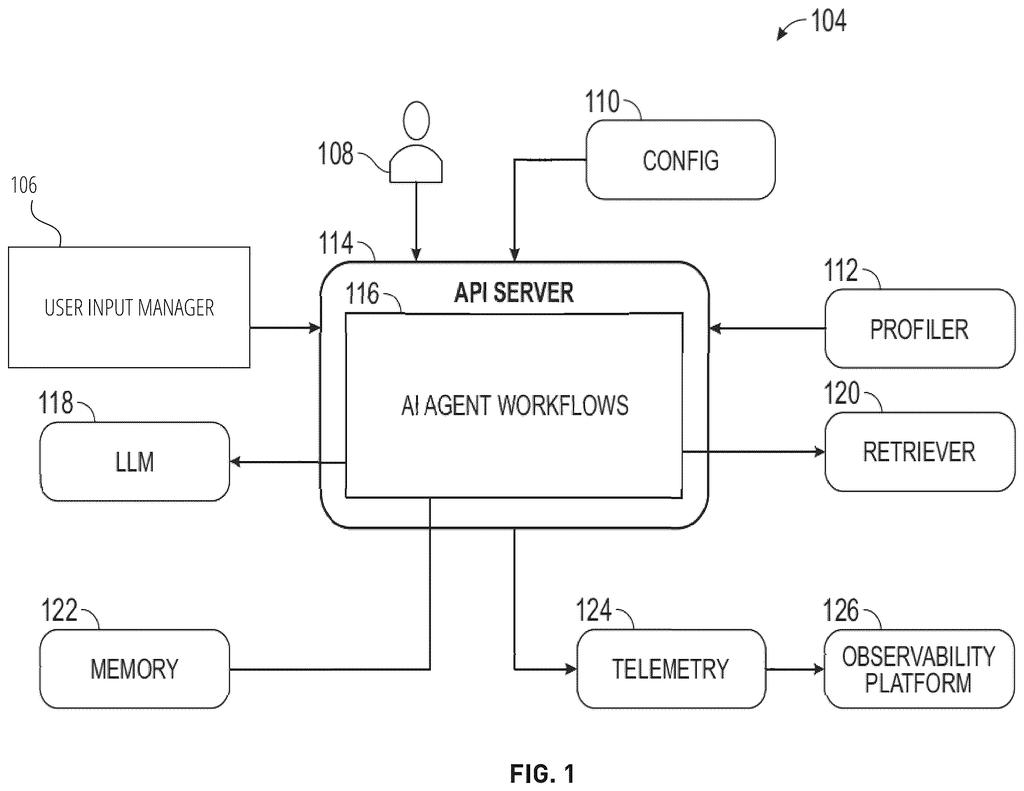
What Nvidia's AI agent input manager actually does
An AI agent works through a task in the background. Partway through, it hits a fork in the road and needs your input before it can continue. Today, how that question reaches you depends entirely on which app or interface the agent was built for, which gets complicated fast.
Nvidia's patent describes a central coordinator called a user input manager. When any AI workflow running on the system needs to ask you something, it sends that request to this manager. The manager figures out which interface you're currently using, whether that's a chat window, a voice assistant, or something else entirely, and forwards the question to the right place. Your answer comes back the same way, and the agent picks up where it left off.
The goal is to let the same underlying AI agent work across many different interfaces without rebuilding the question-and-answer logic for each one. The agent doesn't need to know how you prefer to communicate. The manager handles that translation automatically.
receiving, by a user input manager of an artificial intelligence (AI) agent system, a request for user input from one or more AI agent workflows during execution of the one or more AI agent workflows …
Translation: The system catches when an AI workflow gets stuck and needs human help.
How the callback handler routes requests to the right interface
The patent describes an AI agent system where multiple automated workflows can run at the same time. Each workflow may reach a point mid-execution where it needs input from a human to continue.
At the center of the design is a user input manager: a piece of software that sits between the running workflows and the interfaces a user might be interacting with. When a workflow sends a request for user input, the manager looks up a registered callback handler (essentially a pre-registered address that says "when you need to reach the user, send it here") tied to a specific user interface front-end.
Each front-end represents a different interaction modality (the form that communication takes, such as text chat, voice, a graphical form, or even an API endpoint). The front-end receives the question, collects the response in the format appropriate to that modality, and returns it to the manager. The manager then routes the answer back to whichever workflow asked for it.
- Workflows don't need to know which interface is active
- Multiple front-ends can be registered at once
- The manager selects the right one based on the registered callback
- The workflow resumes automatically once the answer arrives
The user input manager then routes the response to the original workflows, allowing the AI agent system to continue execution with the user's input.
Translation: After you reply, your answer goes back to the correct AI process so it can keep working.
What this means for AI agents in real products
For people building AI agents, having to rewrite the "pause and ask the user" logic for every new interface is wasted work. This patent describes a design that standardizes that step so the same agent can work in a text window, a voice interface, or a future interface type without modification.
For end users, the benefit is less visible but real: an AI assistant that asks you a clarifying question should feel natural in whatever context you're in. If you're using a voice interface, it should ask out loud. If you're in a chat window, it should type. Nvidia's run of AI agent infrastructure filings suggests the company is building the internal plumbing that makes enterprise-grade AI agents portable and modular, not just functional in a single demo environment.
Nvidia's tenth filing we've tracked in our AI agents acting for you watchlist since July builds on earlier applications like one that writes GPU test code and one that reads plain-language resource plans.
Adding a middleman between an AI agent and the person it's talking to means one more thing that can break. If the routing layer points to the wrong destination, the agent asks its question into the void, or worse, asks it somewhere the user will never see.
That cost is real, but it looks worth paying. An AI assistant deployed across a phone call, a website, and an internal company tool would otherwise require three separate codebases handling the same basic problem of asking humans for information.
This is infrastructure work, not a new idea about intelligence. The bet is that getting the plumbing right once is cheaper than getting it wrong repeatedly.
There are more where this came from
We read every patent application Big Tech publishes and send you the ones worth knowing. Plain English, free, every week.
The drawings
10 drawing sheets from US 2026/0277912 A1 · click any drawing to enlarge


Want this weekly breakdown for a company we don't cover? Patentlyze Pro →