
Samsung Patents a Radar Method That Tells One Movement Apart From Another
Radar can already tell something is moving, but telling a hand wave from a raised arm is harder. Samsung's new patent describes a way to compare a target's motion signature against stored templates and pick the closest match.
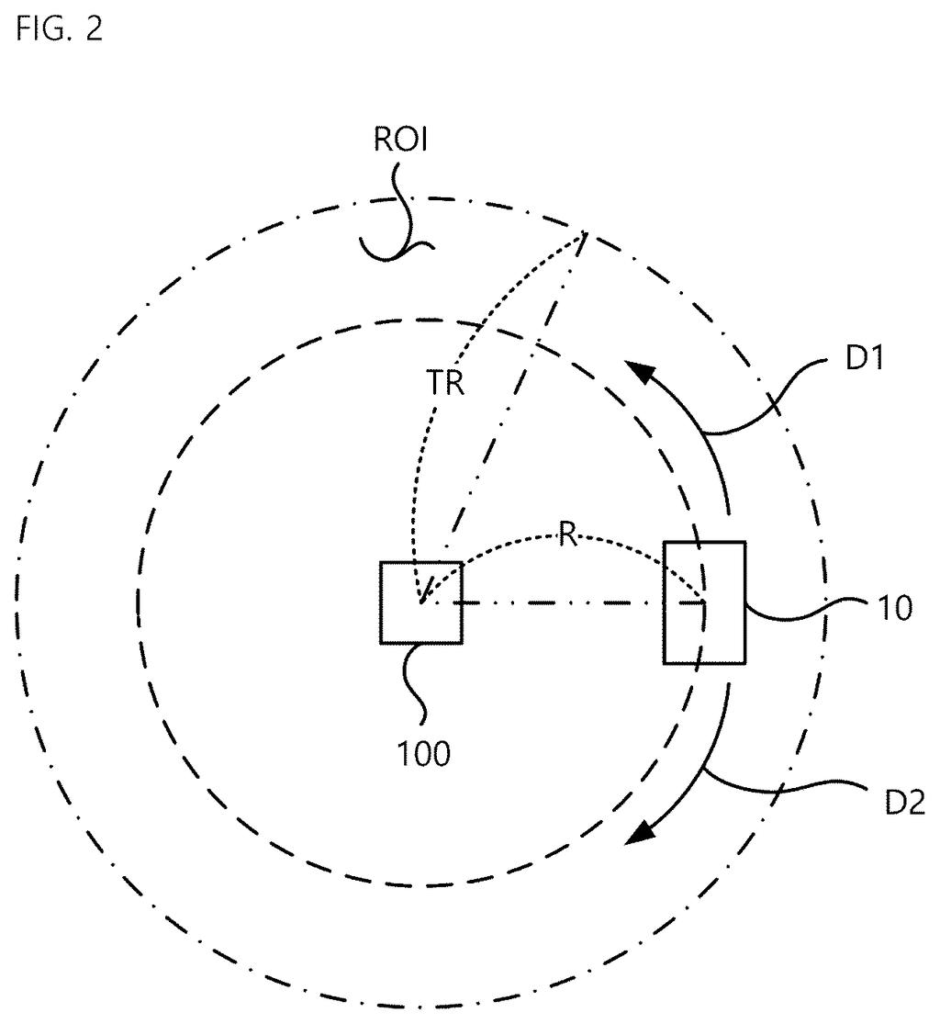
What Samsung's radar motion-sorting system actually does
Every time a device tries to figure out what you're doing in front of it, it has to turn a blur of radio waves into a clear answer. That's surprisingly hard when two different gestures produce similar signals.
Samsung's patent describes a radar system that looks at how much energy an object reflects across different speeds, then compares that energy pattern against two pre-stored profiles, one for each motion type. Whichever stored profile matches more closely wins, and the device logs that as the detected movement.
The approach lets a single radar antenna sort between two gestures without a camera, without needing strong lighting, and without sending any image data off the device. That last part has obvious appeal for products where privacy or low power use matter more than visual accuracy.
… obtain a Doppler velocity of the target object and power of a tone signal obtained in an operation of detecting the target object during a measurement time; obtain a power distribution of the tone signal according to the Doppler velocity; …
Translation: The device measures how fast an object is moving and tracks the signal strength over a set time period.
How the processor matches signal patterns to known movements
The system uses a technique called Doppler radar, which works by measuring how the frequency of a reflected radio signal shifts when an object moves toward or away from the antenna. Faster movement produces a larger frequency shift; slower movement produces a smaller one.
During a measurement window, the radar collects a tone signal (a steady-frequency pulse used specifically for detection) and records how much signal power shows up at each Doppler velocity value. That produces a power distribution, essentially a fingerprint of how energy is spread across speeds.
The processor then calculates two correlation values (a statistical measure of how closely two patterns resemble each other). It compares the live fingerprint against a first reference distribution tied to one known motion and a second reference distribution tied to another. If the first correlation value is higher, the device calls the motion the first type; if the second is higher, it picks the second type.
- No camera or image processing required
- Works in darkness, through thin materials, and at short range
- Decision is made on-device by the local processor
- Only two reference distributions are compared in claim 1, though the spec likely allows more
… calculate a first correlation value between the power distribution and a first reference distribution corresponding to first motion of the target object, and a second correlation value between the power distribution and a second reference distribution corresponding to second motion of the target object, …
Translation: It compares the movement data against two different stored patterns to see which one matches better.
What this means for gesture and presence detection in devices
For devices that need to detect presence or gesture without a camera, radar is an increasingly attractive option. It works in the dark, it doesn't capture recognizable images, and it can work through fabric or packaging. The challenge has always been precision: knowing that something moved is easy; knowing what kind of movement it was is harder.
This patent's approach is narrow by design. Claim 1 covers the specific act of building a per-velocity power fingerprint and running a correlation race between two reference profiles. If granted as written, that could cover a meaningful slice of template-matching radar gesture recognition, which is the direction Samsung's radar sensing work is heading in wearables and smart home devices.
Samsung's 22nd filing in the sensor patents we cover since May adds to earlier work like one improving GPS accuracy and one detecting device wear.
Claim 1 requires a precise chain: measure how fast a target moves, build a picture of signal strength sorted by speed, then compare that picture against exactly two preset motion templates to find the better match. Every link in that chain must be present for the claim to apply, making this a narrow grant rather than broad ownership of radar-based gesture detection.
That narrowness has real consequences. A product comparing against three templates, or skipping the speed-sorted signal picture entirely, likely falls outside this claim's reach entirely.
The recipe is well-suited to small devices that recognize gestures without a camera, because comparing against two templates is computationally light. If granted, this claim blocks others from shipping that precise approach, and in any product where low-power gesture sensing matters, that is meaningful ground to hold.
There are more where this came from
We read every patent application Big Tech publishes and send you the ones worth knowing. Plain English, free, every week.
The drawings
16 drawing sheets from US 2026/0276805 A1 · click any drawing to enlarge


Want this weekly breakdown for a company we don't cover? Patentlyze Pro →