
Google Patents a System That Connects Nearby Devices Only When Needed
Most wireless devices waste energy broadcasting their presence nonstop, hoping something nearby will connect. Google has filed a patent for a system where a device only starts advertising itself when a second device actually asks for it.
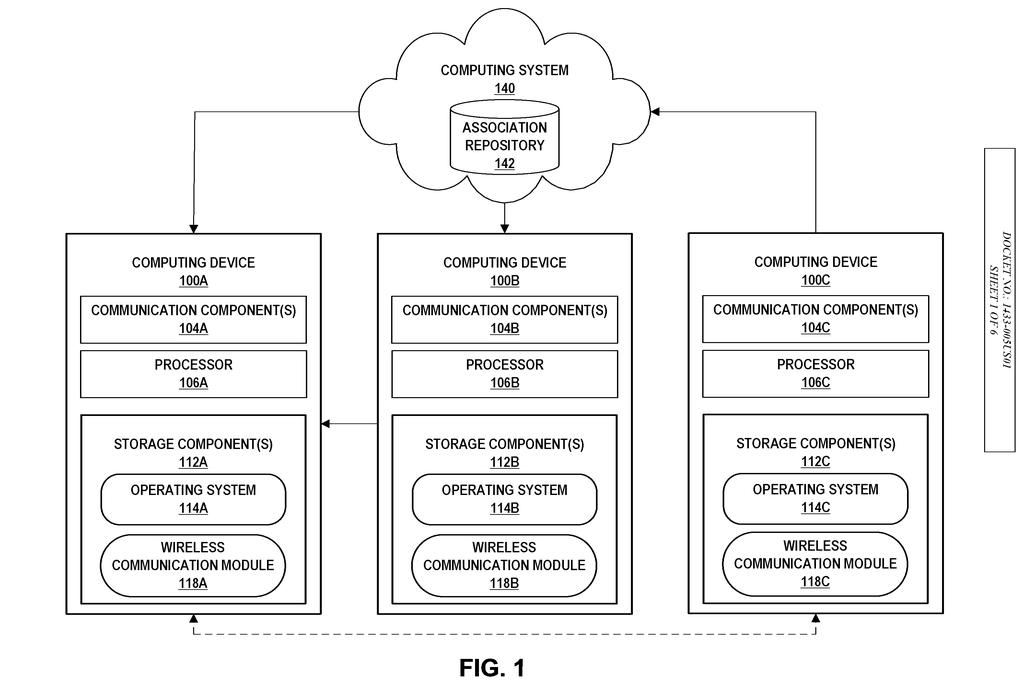
How Google's on-demand pairing discovery actually works
You're trying to connect your phone to a new device, like a speaker or a smart display, and instead of it showing up instantly, you wait while it cycles through a slow discovery process. That lag happens partly because many devices don't broadcast their availability all the time, and when they do, they burn extra battery doing it.
Google's patent describes a middleman approach. A cloud service (or similar go-between system) sits between your phone and the target device. When your phone asks to find something, that go-between sends a direct instruction to the target device, telling it to start broadcasting a pairing signal right then and there.
The result is that the target device doesn't need to shout into the void constantly. It only speaks up when something is actually listening. That's a meaningful shift from how most Bluetooth and similar pairing systems work today.
… broadcasting, by the first computing device, one or more advertisement messages, the one or more advertisement messages enabling wireless communication channel initialization between the second computing device and the first computing device.
Translation: The first device starts sending signals so the two devices can connect.
How the intermediary triggers the broadcast on request
The patent covers a three-party system: a second computing device (say, your phone), a computing system in the middle (a cloud server or coordination service), and a first computing device (the gadget you want to pair with).
Here's the sequence the patent describes:
- Your phone sends a "discoverability request" to the cloud-based computing system, essentially saying "find me something to connect to."
- That computing system then contacts the target device directly and tells it to start broadcasting advertisement messages (the short wireless signals devices use to announce themselves for pairing).
- The target device starts broadcasting, your phone picks up the signal, and a wireless communication channel opens between them.
The key technical idea is that the broadcast is triggered on demand rather than continuous. Instead of a device perpetually advertising itself (which drains battery and adds wireless congestion), it only activates that broadcast when the coordination layer confirms someone is actually looking. The patent covers both the receiving of the trigger instruction and the act of broadcasting in response to it.
What this means for Bluetooth pairing speed and battery life
For you as a user, the most direct payoff is faster, more reliable pairing. If a device only broadcasts when your phone is actively searching, there's less noise on the wireless band and less chance the signal gets lost in the crowd of other broadcasting gadgets nearby. Discovery becomes a direct conversation rather than a shouting match.
Google's interest in wireless coordination infrastructure shows up across its device ecosystem, from Pixel phones to Nest speakers to Chromecast dongles. A system like this could make first-time setup across those products feel less like a chore. The battery angle also matters for smaller devices like earbuds or sensors that need to conserve every milliwatt.
Google's 740th filing we've tracked since May joins a growing body of applications that includes a fingertip blood pressure sensor and Waymo's predictive gear shifting.
This patent solves a real and annoying problem. Anyone who has waited for a Bluetooth device to appear in a pairing menu, refreshed the list twice, and wondered why modern technology can't just find the thing has experienced exactly what this filing is trying to fix.
The intermediary approach is clever because it offloads the timing problem to a system that has more context: the cloud coordinator knows a device is searching, so it can wake the target up at the right moment. That's a better use of information than having every device broadcast on a schedule and hope for the best.
That said, this is infrastructure work, not a feature anyone will see announced at a product launch. If it ships inside a Google device, users will just notice that pairing got easier. The filing is specific and technically coherent, which puts it a step above routine housekeeping patents, but its real value depends entirely on how broadly it gets implemented.
There are more where this came from
We read every patent application Big Tech publishes and send you the ones worth knowing. Plain English, free, every week.
The drawings
6 drawing sheets from US 2026/0292661 A1 · click any drawing to enlarge


Want this weekly breakdown for a company we don't cover? Patentlyze Pro →
Be the first to weigh in