
Google Patents an AI Assistant That Takes Photos When the Moment Is Right
Instead of tapping the shutter yourself, you could one day tell Google Assistant to take a photo whenever a specific thing appears in frame, and it will watch and wait until it does.
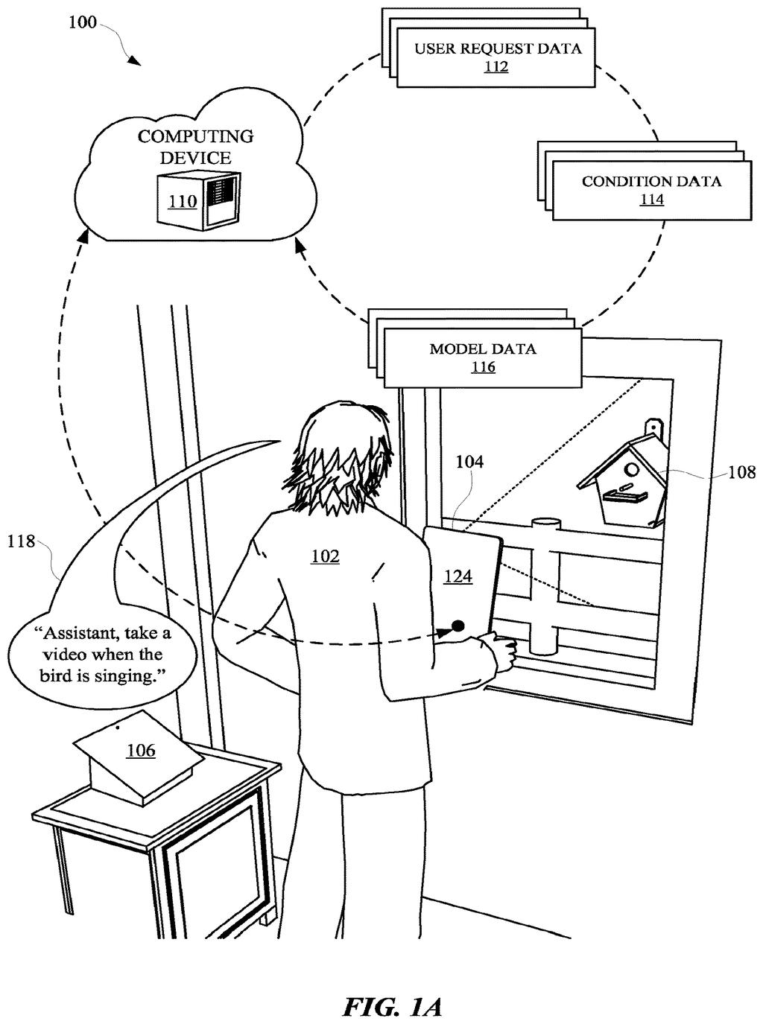
How Google's voice-triggered camera assistant works
You're trying to photograph a bird at the feeder, but every time you look away it flies in and out before you can tap the button. Google's patent describes a system that lets you tell your phone's AI assistant what to look for, and the camera handles the rest.
You might say something like, "Take a photo when the bird lands on the perch," and the assistant monitors the camera's view in the background. When it spots the right moment, it automatically adjusts the zoom, locks focus, and saves the shot. No constant screen-watching required.
The system can also respond to audio cues or connect to information already on your screen. If you're, say, looking at a contact's profile and want a photo to match, the assistant can use that context as part of its trigger. It's conditional photography: you set the rule, the AI executes it.
Implementations set forth herein relate to an automated assistant that can control a camera according to one or more conditions specified by a user.
Translation: Google has patented a digital helper that operates a camera based on rules you set.
How the assistant watches, waits, and decides when to shoot
The patent describes a pipeline with three main stages: instruction intake, continuous monitoring, and triggered capture.
Instruction intake: The user gives a natural-language command (spoken or typed) to the automated assistant. The assistant parses this into one or more conditions, such as detecting a specific object, scene, sound, or relationship between what the camera sees and what another app is showing on screen.
Continuous monitoring: The assistant runs machine learning models (software trained to recognize patterns) against a rolling buffer of image and audio data held in temporary storage. This means the system is always looking, but not permanently saving everything it sees, which limits storage use and raises fewer privacy flags.
Triggered capture: When the model determines a condition is met, the system automatically adjusts the camera's focal point (what the lens sharpens on) and zoom level, then captures the image and writes both the new shot and relevant frames from the buffer to permanent storage.
The claim also covers audio triggers, so "take a photo when someone laughs" or "save a clip when that song starts" would fall inside the same architecture.
… causing, in response to determining that one or more of the conditions are detected in the image data and/or the audio data, additional image data to be captured after adjusting a focal point and/or a zoom setting of the camera; …
Translation: Once the system spots the right trigger, it automatically adjusts the zoom and focus to take the picture.
What this means for hands-free photography on Android
For everyday users, this could mean far fewer missed moments. Wildlife photos, sports action, a baby's first steps: the assistant keeps watch so you don't have to hold the phone up indefinitely.
The broader angle is that this filing ties the camera directly into the assistant layer of the operating system. Once your camera can act on contextual data from other apps (a name in your contacts, a recipe on screen, a calendar event), Google's run of ambient-computing filings starts to look like a consistent architecture: the assistant as a background agent that coordinates hardware on your behalf, not just a voice interface you ping with questions.
Google's 40th filing we've tracked since May in our AI agents that act for you watchlist follows one on network monitoring and one on tap-free app control.
Claim 1 covers a specific chain: a user speaks a condition out loud, the assistant watches a live camera feed, checks that feed against the spoken condition, adjusts the camera, and saves the result. Every link in that chain must be present, which keeps the claim from swallowing every "smart camera" idea on the market.
That said, the chain describes how a huge category of real products would naturally work. Any app that lets someone say "take a photo when my dog sits still" and then handles everything automatically falls inside this claim, whether it runs on a phone, glasses, or a doorbell camera.
The claim also explicitly covers conditions built from data outside the camera, like whatever else is open on the screen at that moment. That reach pulls social, fitness, and navigation apps into scope the moment they add a viewfinder, which means this patent matters well beyond photography.
There are more where this came from
We read every patent application Big Tech publishes and send you the ones worth knowing. Plain English, free, every week.
The drawings
6 drawing sheets from US 2026/0292332 A1 · click any drawing to enlarge


Want this weekly breakdown for a company we don't cover? Patentlyze Pro →
Be the first to weigh in