
Sony Patents an AI Co-Pilot That Compensates for Disabled Gamers' Controller Limits
What if your PlayStation could sense that your left hand isn't working at full strength and pick up the slack? That's exactly what Sony is working toward with this AI-assisted controller patent.
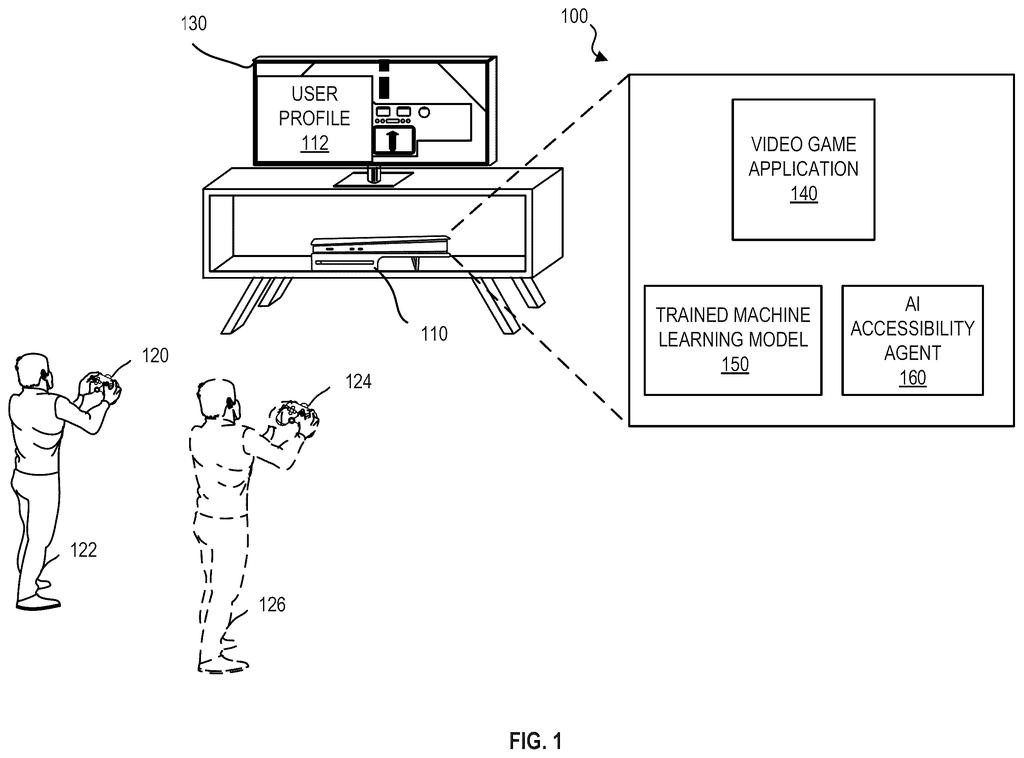
How Sony's AI helps when your hands can't keep up
Ever tried to play a video game with an injured hand, or watched someone you love give up on gaming because the controller just didn't work for their body? Sony is filing a patent for a system that would recognize when a player has a physical limitation and use AI to fill in the missing inputs automatically.
Here's the basic idea: you play as you normally would, doing whatever your hands can manage. The system tracks which buttons and joysticks you can and can't fully press, then an AI model steps in and generates the controller signals you couldn't produce yourself. It's a bit like having a co-pilot who watches your moves and handles the ones you can't.
This isn't about making games easier for everyone. It's targeted at people with real physical limits, whether that's a wrist injury, a disability, or any condition that makes standard controllers hard to use. Sony keeps filing on accessibility and adaptive play systems, and this one goes further than button remapping by actually inferring what the player was trying to do.
… determine accessibility information associated with the user, the accessibility information indicating a limitation to manual actuation of the controller; generate a control output by using an artificial intelligence (AI) model, the AI model trained to assist video game users with controller inputs in association with one or more accessibility limits for using controllers …
Translation: The system checks what physical limits a player has and uses an artificial intelligence model to help make up the difference.
How the AI reads your inputs and fills the gaps
The patent describes a system built around three core steps: sensing, interpreting, and completing.
Sensing: The system reads controls actuation information from the controller in real time. That's a technical way of saying it tracks exactly how far and how hard you press each button, trigger, and joystick. If your left trigger only reaches 40% of its full travel, the system knows.
Interpreting: It also stores or determines accessibility information about the user, meaning a profile of their specific physical limitations. For example, the system might know that a player has reduced grip strength on their left side, or that a certain set of inputs is outside their range of motion.
Completing: An AI model, trained on how video game players use controllers across a range of accessibility constraints, then generates a control output. Think of the model as having learned the relationship between partial inputs and intended actions, so it can predict what a full, unimpaired input would have looked like and deliver that to the game instead.
The output is used to actually control the game, meaning the game itself never needs to know about the workaround. The AI sits between the hardware and the software, translating impaired inputs into complete ones.
… determine accessibility information of the user that indicates a limitation to manual actuation of the controller (e.g., injury to left causing less than 50% actuation of left controls). A control output is generated by using an artificial intelligence (AI) model.
Translation: It figures out a player's physical restriction, like a hand injury limiting button pressure, and uses artificial intelligence to assist.
What this means for disabled and injured PlayStation players
For the roughly 46 million Americans living with some form of upper-body disability or limitation, standard game controllers have always been a barrier. Adaptive controllers like Microsoft's Xbox Adaptive Controller help, but they still require users to physically produce every input the game demands. This Sony patent goes a step further by letting the software compensate when the hardware and the human can't.
For PlayStation players recovering from injuries or living with permanent conditions, this could mean staying in the game rather than sitting it out. It also raises interesting questions about where the line is between accessibility assistance and gameplay automation, a debate the industry will need to have as these tools become more capable.
Sony's seventh filing we've tracked since July in our AI agents that act for you watchlist follows one that fixes devices remotely and one that rewrites its own priorities.
Millions of people with hand injuries, nerve damage, or limited mobility reach a point where video games simply stop being available to them. The obstacle is not difficulty or complexity. It is that a controller built for full hand function becomes physically unusable when that function is partly gone, and remapping buttons does nothing to fix how hard someone can press or how far they can move a stick.
Sony's patent addresses exactly that physical gap. The system tracks how much of a press or motion a player actually produces, then uses an AI model to supply what the hand cannot complete on its own.
Whether the technology holds up in fast, high-pressure moments is the real question still to answer. But the problem it is designed to solve affects a large and consistently underserved group of players, and the ambition of the approach fits the actual size of that loss.
There are more where this came from
We read every patent application Big Tech publishes and send you the ones worth knowing. Plain English, free, every week.
The drawings
9 drawing sheets from US 2026/0273392 A1 · click any drawing to enlarge


Want this weekly breakdown for a company we don't cover? Patentlyze Pro →