
Nvidia Patents an AI System That Renders Film-Quality Surfaces in Real Time
Hollywood visual effects studios spend hours rendering a single frame because real materials, like silk or brushed metal, are brutally complex to simulate. Nvidia is patenting a way to do the same thing in real time using a compact AI model.
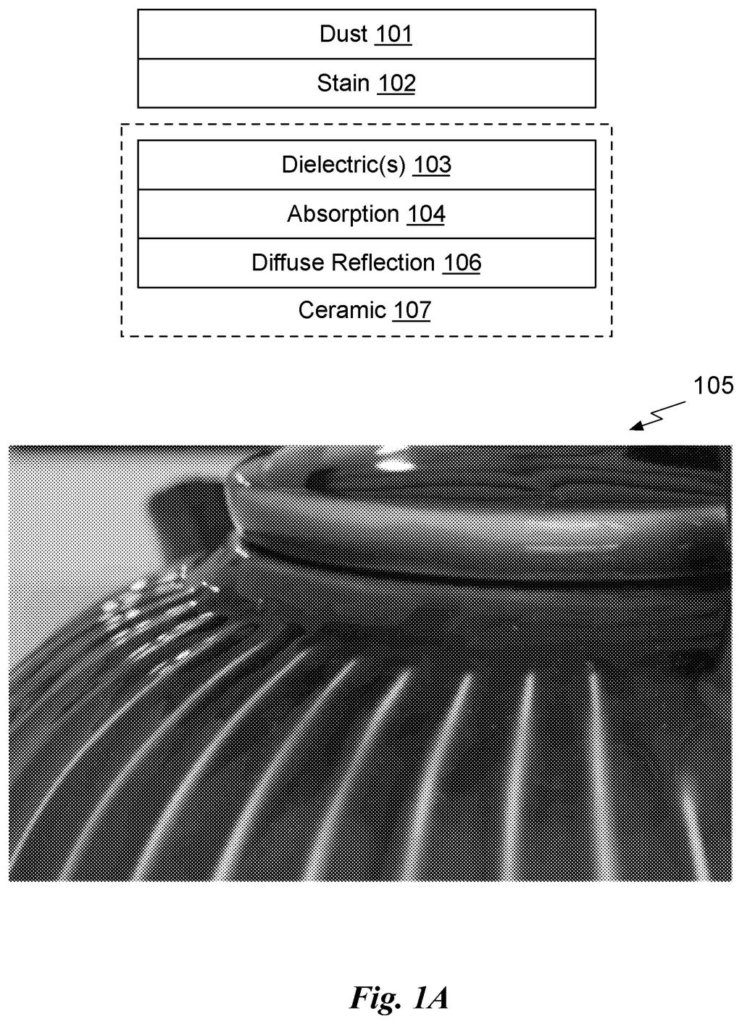
How Nvidia wants AI to handle lifelike surfaces in games
Ever looked at a car's paint job in a video game and thought it looked slightly off, like the shimmer was missing? That flatness exists because accurately simulating how light bounces off layered, textured surfaces is extraordinarily expensive to compute, so game engines fake it with shortcuts.
Nvidia's patent describes a system where the behavior of a material, say, the way velvet absorbs light at one angle and reflects it at another, is compressed into a small bundle of data called a latent code. When the engine draws a scene, an AI network reads those codes and instantly predicts how every surface should look from your current viewpoint.
The goal is bringing the quality level that animators and film studios currently reserve for overnight render jobs into experiences that run at dozens of frames per second on your screen.
… transforming one or more surface vectors at the point intersected by the ray using the at least one extracted property to produce transformed surface vectors; predicting, by a neural network, reflectance attributes for the surface based on the encoding and the transformed surface vectors …
Translation: The system adjusts surface angles and uses AI to predict how light bounces off the material.
How the neural decoder turns encoded textures into shading
The system works in three broad steps tied together by a neural network.
First, material properties are pre-encoded into a compressed, hierarchical texture called a latent code. Think of it as a zip file that captures not just the color of a surface but its microscopic structure, how its fibers or crystals are oriented, and how those features scatter light.
When the renderer shoots a ray into a scene and that ray hits a surface, the system reads the latent code for the exact point of contact. A key step here is extracting the local orientation of the material at that point (the tiny bumps and grooves that change how light bounces) and using it to rotate the geometric vectors describing the surface. That rotation step is what makes the shading physically coherent regardless of viewing angle.
A neural decoder (a small, fast neural network) then takes the encoded data and the corrected surface vectors and outputs two things:
- Reflectance attributes: how bright, colored, and shiny the surface appears
- Importance-sampled directions: a prioritized list of where to trace the next rays for maximum visual accuracy with minimum wasted computation
Those outputs feed directly into the final pixel color calculation, completing a loop that the patent claims can run fast enough for real-time use.
Using a neural decoder, scenes are rendered in real-time with complex material appearance previously reserved for offline use. Learned hierarchical textures representing the material properties are encoded as latent codes.
Translation: An AI decoder instantly renders intricate textures that usually take hours to compute.
What this means for real-time graphics and game visuals
For people who play games or use real-time 3D applications, the practical promise is surfaces that look the way physical objects actually look, without the engine cheating. Leather should look different when you're looking along the grain versus across it. Painted metal should shift color as the light angle changes. These effects currently require either pre-baked lighting tricks or expensive GPU time that real-time engines can't afford.
Nvidia has been filing around neural rendering since at least 2022, and this patent sits squarely inside that effort. The specific claim here, covering the combination of latent encoding, local orientation extraction, and neural decoding into a single rendering pipeline, is broad enough to touch most AI-based material shading approaches, which makes it strategically meaningful beyond any single product.
Nvidia's 29th filing we've tracked since July in the GPU rendering race adds to a run that includes one on reusing light bounce data and one on filling missing video frames.
Claim 1 is written at a high level of abstraction. It covers any method that receives an encoding of material properties, extracts local orientation, transforms surface vectors using that orientation, runs a neural network to predict reflectance, and outputs rendered images. That scope is wide.
If granted as written, it could put Nvidia in a position to challenge competing approaches to neural material shading that follow the same logical sequence, even if the underlying networks or data formats differ. Whether the claim survives that broad as written is a separate question, but the drafting intent is clear: this is a structural claim on a pipeline, not a narrow claim on one algorithm.
For the average player or developer, none of that legal architecture changes the underlying promise: AI doing in milliseconds what used to take minutes per frame. That is a real shift in what real-time graphics can be.
There are more where this came from
We read every patent application Big Tech publishes and send you the ones worth knowing. Plain English, free, every week.
The drawings
14 drawing sheets from US 2026/0289901 A1 · click any drawing to enlarge


Want this weekly breakdown for a company we don't cover? Patentlyze Pro →
Be the first to weigh in