
Nvidia Patents a System That Lets AI Write Its Own Simulation Scripts
Training an AI to handle the real world takes enormous amounts of data, and building realistic simulations by hand is slow, expensive, and prone to gaps. Nvidia's new patent describes a system that hands the job of scripting simulation events back to an AI model itself.
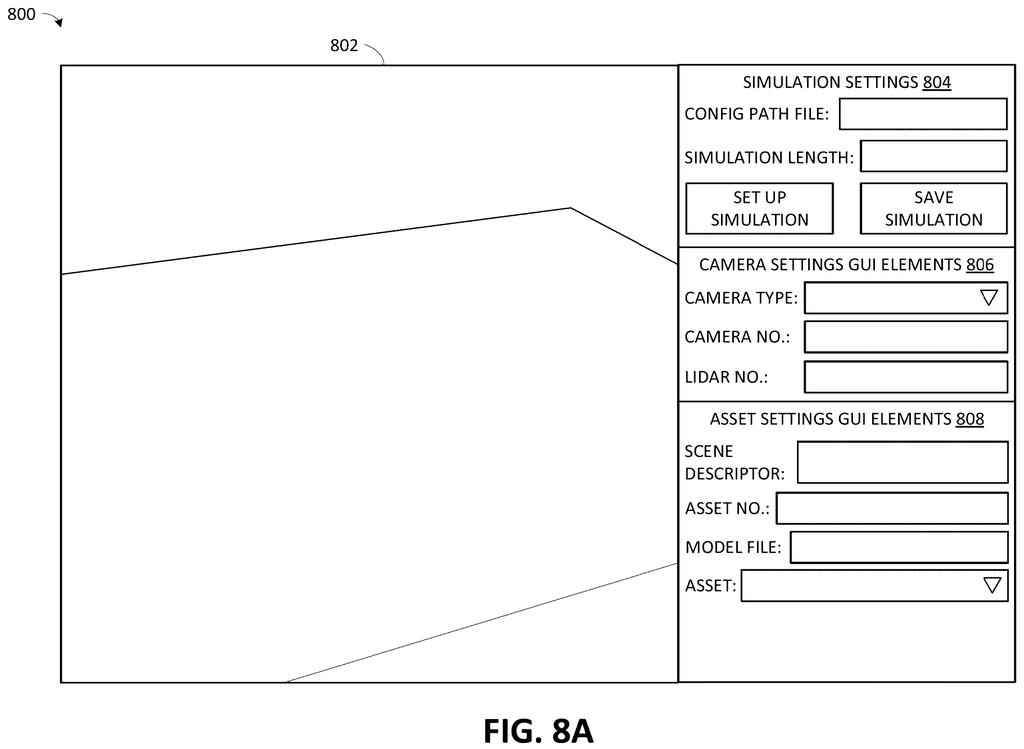
What Nvidia's self-directing simulation system actually does
Building AI that drives cars or controls robots requires showing it thousands of different situations, most of which are rare or dangerous to recreate in real life. Today, engineers have to manually write the rules for how simulated objects should behave, which is labor-intensive and easy to get wrong.
Nvidia's approach puts an AI model in charge of that scripting step. The system watches what is already happening in a simulation, checks a record of past events in that same session, and then asks the AI model what should happen next. The model's answer gets translated directly into new simulation steps, which run automatically.
The result is a simulation that can steer itself toward varied, contextually appropriate scenarios without a human writing each one. That generates more diverse training data, faster, and with less manual overhead.
… providing the contextual data and the historical simulation data as an input to an artificial intelligence (AI) model; determining, based at least on one or more outputs of the AI model: an action associated with the asset in view of the contextual data and the historical simulation data, and one or more second simulation operations associated with the action; …
Translation: The system feeds past data and environment details into an AI to figure out what the virtual object should do next and how to simulate it.
How the AI model picks actions and runs them in sequence
The patent describes a pipeline with a clear sequence of steps:
- Initial simulation run: A first round of simulation operations runs, positioning an asset (a car, pedestrian, robot, or any object) inside a virtual environment.
- Context and history capture: The system collects contextual data (what the scene looks like right now, where other objects are, what the environment's rules are) and historical simulation data (what that asset has already done in this session).
- AI model query: Both data streams are fed as a combined input to an AI model. The model is not just classifying or labeling; it is generating a decision about what the asset should do next, along with the specific simulation instructions needed to carry that action out.
- Automated execution: Those instructions are extracted from the model's output and run directly, advancing the simulation without human intervention.
The patent also mentions bounding box data, a standard computer-vision technique that draws a tight rectangle around each object so the system knows exactly where everything is in 3D space. That spatial awareness feeds the context the AI model uses when picking its next action.
The loop can repeat, with each new round of actions feeding back into the historical record, letting the simulation build complexity over time.
Apparatuses, systems, and techniques for automated activity simulation and synthetic data generation are provided. Bounding box data for a first object in an environment is obtained.
Translation: The technology handles automated testing scenarios by tracking the specific locations and boundaries of objects within a virtual world.
What this means for training self-driving and robot AI
Synthetic data has become one of the main ways companies train autonomous systems without needing millions of miles of real-world driving or robot operation. The bottleneck has shifted from collecting raw sensor data to generating varied, realistic scenarios at scale. A system that automates the scripting of those scenarios could meaningfully speed up that process.
For you as a consumer, the downstream effect is AI that has been exposed to a wider range of edge cases before it ever touches the real world. Nvidia keeps filing on simulation-based AI training, and this patent fits that pattern: the goal is fewer surprises when autonomous systems meet situations they have not seen before.
Nvidia's 64th filing in AI simulation we've tracked since May adds to a run that includes one on tracking objects across cameras and one on building realistic worlds.
When a human writes a simulation script, they decide which situations get practiced and can explain why. When an AI model makes those decisions instead, you get far more variety with far less effort, but you lose the ability to easily check what scenarios are actually being created.
That gap is the real risk. If the AI skips generating certain situations, a self-driving system trained on that data could fail in exactly those gaps, and nothing in this patent describes a way to catch the omission before it becomes a problem on the road.
The trade is probably worth it, because manual scripting simply cannot produce enough variety to train a reliable system. But the efficiency gain only holds up if Nvidia pairs this with coverage checks that flag what the model is not generating, because without that safeguard, the quality problem just becomes harder to see.
There are more where this came from
We read every patent application Big Tech publishes and send you the ones worth knowing. Plain English, free, every week.
The drawings
25 drawing sheets from US 2026/0278210 A1 · click any drawing to enlarge


Want this weekly breakdown for a company we don't cover? Patentlyze Pro →