
Nvidia Patents an AI System That Tracks Objects in 3D Across Multiple Cameras
Most security and tracking cameras give you a flat, two-dimensional picture of the world. Nvidia is patenting a system that stitches feeds from multiple camera clusters together into a living 3D map, letting AI follow objects and people across an entire space in real time.
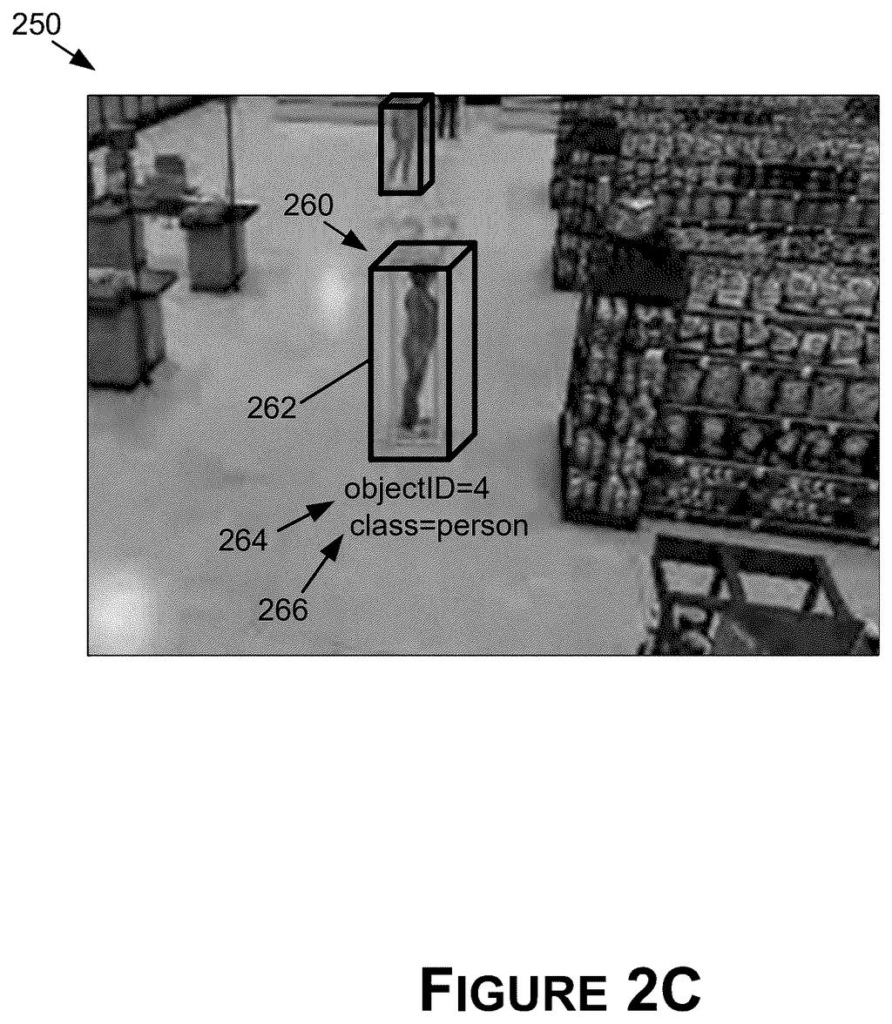
What Nvidia's multi-camera 3D tracking actually does
You're managing a large warehouse, and a forklift and three workers are moving through the same aisle at the same time. A single overhead camera might lose one of them behind a shelf, and a flat video feed makes it nearly impossible to judge real depth or distance automatically.
Nvidia's patent describes a system that groups cameras into teams called "sensor pods," each covering a section of a space. Each pod builds a 3D picture of what's moving through its zone, then all the pods share and sync that data so the full system can follow any object as it crosses from one pod's territory to another. Two AI models handle the work: one pulls the 3D data from all the pods together, and a second one tracks how each object moves through time.
The result is a continuous, 3D record of where everything is, even in busy, crowded environments where a single camera would struggle.
… compute an aggregated 3D behavior dataset based at least on applying the synchronized behavior data to a spatial aggregation model …
Translation: The system combines data from different camera groups into a unified spatial view.
How the sensor pods and AI models coordinate in real time
The system starts with sensor pods, groups of cameras placed near each other that cover overlapping sections of a monitored space. Each pod uses its camera feeds to compute 3D behavior data (depth-aware representations of how objects are moving, not just flat pixel positions).
Those 3D snapshots are then time-synchronized across all pods so the system knows which readings from different pods happened at the exact same moment. Synchronization matters because if one pod's data is even slightly delayed, the system might think the same object is in two places at once.
Two AI models then take over:
- A spatial aggregation model (a graph neural network, which is an AI that reasons about connected relationships, like a map of which pods neighbor which) merges the per-pod 3D data into a single, unified picture of the whole space.
- A temporal tracking model (another graph neural network) watches that unified picture change over time, linking each detection to the same object across multiple frames so it can follow a specific person or item continuously.
A state management system can also feed extra context into the temporal model, helping it handle situations where objects disappear briefly behind obstacles and then reappear.
The spatial aggregation model aggregates 3D perception data across the sensor pods, while the temporal tracking model refines object associations across time.
Translation: One model merges spatial views while another tracks how objects move over time.
What this means for warehouses, stadiums, and retail floors
For anyone running a space with lots of moving people or equipment, like a sports arena, a factory floor, or a large retail store, this kind of system could mean the difference between knowing where things are and guessing. A 3D tracking record is far more useful than a flat video log because software can automatically reason about proximity, collisions, and flow without a human watching every screen.
From your perspective as an end user, this is most likely to surface in enterprise products: store analytics, logistics monitoring, or crowd management tools. the pattern in Nvidia's computer-vision filings points toward building out a full stack for physical-world AI, and this patent slots into that picture as the perception and tracking layer those products would need.
Nvidia's 63rd filing in our AI simulation coverage we've tracked since May builds on earlier applications, including one that builds realistic training worlds and one mapping objects in 3D.
If you rely on cameras to track people moving through a crowded space, the moment someone walks behind a pillar or another person, they disappear from the record. This system prevents that gap by having multiple camera clusters build a shared three-dimensional picture of the space, so no single camera is guessing on its own.
The failure it prevents is concrete. A security operator, a logistics manager, a sports analyst: all of them lose confidence the moment a scene gets crowded. A system built on this architecture holds the track through that moment.
Whether this reaches you depends on whether Nvidia builds it into a product or licenses it to a vendor. You may never see their name on it, but if your facility cameras suddenly get better at crowded scenes, this is a plausible reason why.
There are more where this came from
We read every patent application Big Tech publishes and send you the ones worth knowing. Plain English, free, every week.
The drawings
10 drawing sheets from US 2026/0278806 A1 · click any drawing to enlarge


Want this weekly breakdown for a company we don't cover? Patentlyze Pro →