
Nvidia Patents a Neural Network System That Chooses When to Ray-Trace a Scene
Ray tracing makes digital scenes look stunning, but it's also brutally expensive to run. Nvidia's new patent describes a system that uses a neural network to pick and choose which objects in a 3D scene actually need that treatment, rather than applying it everywhere at once.
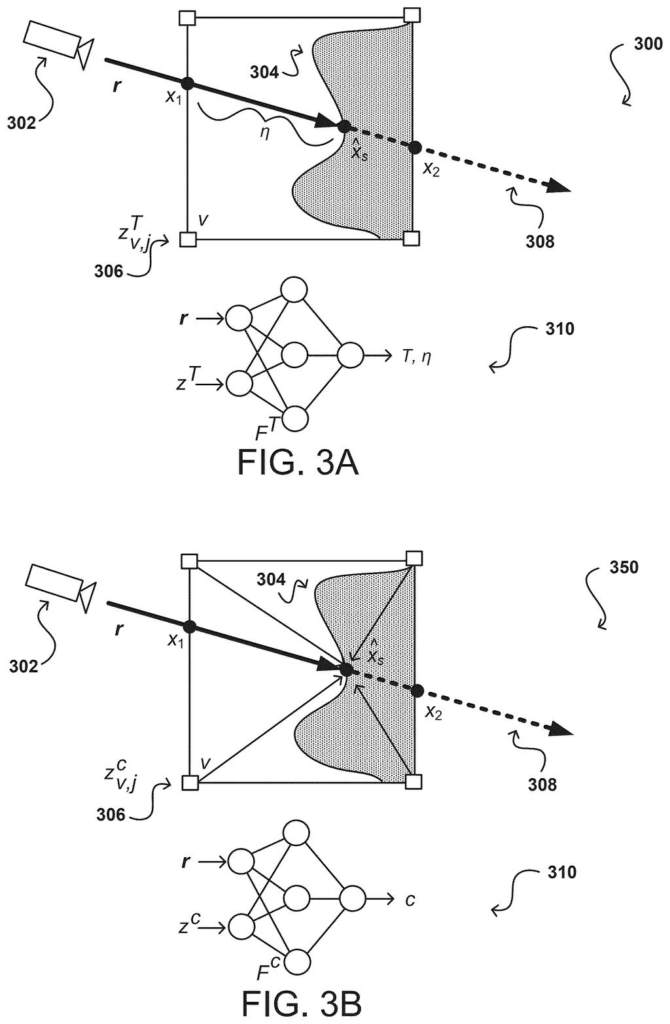
What Nvidia's selective ray-tracing system actually does
You're watching a cinematic cutscene in a game, and the lighting looks almost photographic: reflections ripple across a car door, shadows fall exactly right. That visual quality comes from a rendering technique called ray tracing, which traces the path of light the way physics actually works. The catch is that it takes serious computing power, and doing it for every single object on screen at once is slow and costly.
Nvidia's patent describes a way to be selective. Instead of ray-tracing the whole scene, a neural network figures out which objects actually benefit from the technique and skips the rest. A dusty wall in the background probably doesn't need the full treatment; a shiny helmet in the foreground does.
The result, in theory, is scenes that look as good as full ray tracing but run faster, because the system isn't wasting effort on objects where the visual difference would be invisible to you anyway.
one or more circuits to cause ray tracing to be selectively performed on one or more objects within a three-dimensional (3D) environment.
Translation: Specialized hardware decides which parts of a 3D scene actually need realistic lighting.
How the processor decides which objects get ray-traced
The patent centers on a processor with circuits designed to apply ray tracing selectively across a three-dimensional environment, guided by a neural network that makes per-object decisions.
Ray tracing (a technique that simulates how light bounces, reflects, and refracts in a scene) is computationally heavy because it requires tracing thousands or millions of light paths per frame. Doing it for every surface simultaneously can push even powerful hardware to its limits.
The neural network component is where the "view synthesis" part of the patent title comes in. View synthesis means generating a photorealistic image from a particular camera angle, potentially without rendering every element from scratch. The system appears to combine a neural representation of parts of the scene with traditional ray tracing for other parts, blending the two approaches based on where each will have the most visual impact.
The practical pipeline suggested by the claim looks roughly like this:
- The scene is parsed and objects are identified individually.
- The neural network evaluates which objects are likely to benefit visibly from ray tracing (for example, reflective or translucent surfaces).
- Ray tracing is applied only to those selected objects; the rest are rendered through faster, less expensive methods.
- The outputs are composited into a final frame.
This kind of hybrid rendering sits at the intersection of neural radiance fields (a method for representing 3D scenes as learned mathematical functions) and traditional real-time graphics pipelines.
Apparatuses, systems, and techniques are presented to generate images. In at least one embodiment, ray tracing is caused to be selectively performed on one or more objects within a three-dimensional (3D) environment.
Translation: The patent describes a method for rendering graphics by applying ray tracing only to specific objects.
What this means for game graphics and real-time rendering
For everyday users, this is about getting better-looking graphics without needing newer or more expensive hardware. If a neural network can intelligently route rendering work, the same GPU could produce higher-quality images in games, design software, or virtual reality than it can today with blanket ray tracing rules.
Nvidia keeps filing around neural rendering and real-time graphics hints at how central this approach is to where the company sees the next generation of visual computing going. The boundary between "rendered" and "AI-generated" imagery is getting blurry, and systems like this sit right on that line. For you as a user, the distinction won't matter much, but the performance gains could show up in your frame rates.
Nvidia's 30th filing we've tracked in our GPU rendering race watch since July adds to a run that includes real-time film-quality surfaces and reusing light bounce calculations.
The risk in letting a neural network decide what to render expensively is that the network can be wrong. A shiny surface that deserves full visual treatment might get the cheap path, and the resulting glitch could look worse than if the system had never tried to be clever at all.
There is also a hidden time cost before any image is even drawn. The decision-making step itself takes processing time, and at the frame rates games require, that overhead has to earn its keep or the whole scheme runs slower than the problem it was solving.
The underlying bet is still a reasonable one: spending heavy compute everywhere in a scene is wasteful, and a system that learns where to focus that effort has real value. Whether the decision-making is fast and accurate enough to justify what it takes away is the question this design has not yet answered.
There are more where this came from
We read every patent application Big Tech publishes and send you the ones worth knowing. Plain English, free, every week.
The drawings
56 drawing sheets from US 2026/0289899 A1 · click any drawing to enlarge


Want this weekly breakdown for a company we don't cover? Patentlyze Pro →
Be the first to weigh in