
Nvidia Patents a System for Controlling How GPUs Blend Visual Surfaces on Screen
GPUs automatically decide how to smooth out textures on the fly, but sometimes that automatic choice is exactly what developers do not want. Nvidia's new patent describes an API that lets developers freeze that decision for specific textures.
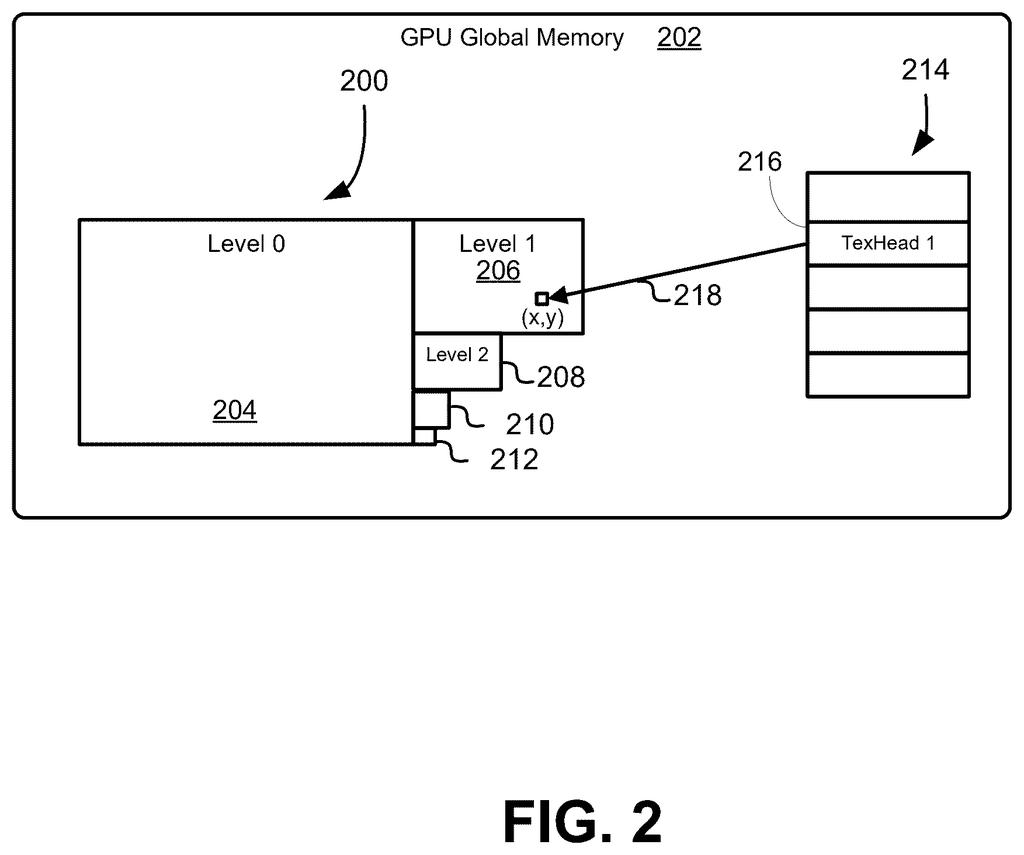
What Nvidia's texture-locking API actually changes
Imagine you are designing a video game and one texture in your scene, say a pixel-art logo or a medical scan overlay, must look exactly the same every single frame, with no smoothing applied. Your GPU, trying to be helpful, keeps blending and softening it automatically. That automatic behavior is almost impossible to turn off for individual textures without rewriting a lot of low-level code.
Nvidia's patent describes a programming interface (think of it as a settings dial that developers can reach into their code and turn) that lets them mark specific textures as off-limits for automatic blending decisions. The GPU then simply stops applying its default smoothing logic to those textures, leaving them exactly as the developer intended.
This sounds narrow, but the ability to lock individual texture objects rather than changing a global setting is the key distinction here. Developers get surgical control without disrupting how the rest of the scene is rendered.
… prevent the one or more processors from dynamically selecting at least one texture interpolation operation to be performed on the one or more texture objects.
Translation: Stop the graphics chip from automatically deciding how to blend certain visual textures together.
How the circuit blocks automatic interpolation choices
GPUs perform a process called texture interpolation (blending the colors of nearby pixels together to make surfaces look smooth rather than blocky) as a default step whenever they render any image onto a 3D surface. Normally, the GPU picks the interpolation method dynamically, meaning it decides on its own how to do the blending based on the situation.
Nvidia's patent introduces circuitry and an application programming interface (API) (a standardized way for software to talk to hardware) that lets a developer flag one or more specific texture objects and tell the GPU: stop making that dynamic choice for these. The GPU's own selection logic is blocked for those flagged textures, and whatever interpolation setting the developer chose stays locked in.
The key technical step in the first claim is "prevent the one or more processors from dynamically selecting at least one texture interpolation operation." In plain terms, the GPU loses its ability to override the developer's choice for the targeted textures, while everything else in the scene continues to operate normally.
- Identify specific texture objects from a larger pool
- Apply the API flag to those objects
- Block the GPU's automatic interpolation selection for flagged textures only
… one or more circuits are to perform an application programming interface (API) to selectively enable one or more texture interpolation operations.
Translation: Specialized hardware uses software commands to turn specific texture blending methods on and off.
What this means for graphics developers and GPU control
For most consumer gaming, automatic texture blending is fine and often looks better. But certain workloads demand pixel-perfect consistency: medical imaging overlays, machine learning inference pipelines that use textures as data containers, scientific visualization, and pixel-art games where blurring is actively wrong. In those cases, losing control of interpolation causes real errors, not just cosmetic ones.
This patent addresses a gap that exists in current GPU APIs, where toggling interpolation behavior has typically been an all-or-nothing global switch rather than a per-texture control. If Nvidia ships this in a future driver or API layer, developers working on non-gaming GPU workloads (compute, AI inference, simulation) gain a tool they have had to hack around for years.
Nvidia's 31st filing we've tracked in our GPU rendering race watchlist since July adds to a run that includes one on when to ray-trace and one on real-time film surfaces.
When a graphics chip blends colors together to create smooth, pleasing images, that behavior is a feature for games and a serious liability for medicine or satellite analysis. A doctor reading pixel values from a scan, or an analyst measuring color in aerial imagery, needs the number the camera recorded, not an average the hardware invented to make things look prettier.
The cost of that silent substitution is not aesthetic. It is a measurably wrong answer in a context where wrong answers carry real consequences, whether a misread tissue boundary or an incorrectly classified land use.
What this patent addresses is the ability to switch that blending off selectively, image by image, leaving decorative rendering untouched while locking precision work to exact recorded values. The scope of the fix is narrow because the problem is narrow, and that match between problem and solution is itself a sign that the stakes were understood clearly.
There are more where this came from
We read every patent application Big Tech publishes and send you the ones worth knowing. Plain English, free, every week.
The drawings
45 drawing sheets from US 2026/0289894 A1 · click any drawing to enlarge


Want this weekly breakdown for a company we don't cover? Patentlyze Pro →
Be the first to weigh in