
Intel Patents a Technique to Smooth Rough Edges on 3D Graphics Lines
Thin lines in 3D scenes — think wireframes, UI elements, or road markings in a game — have a notorious habit of looking jagged or flickery at their edges. Intel's new patent targets exactly that problem at the hardware level.
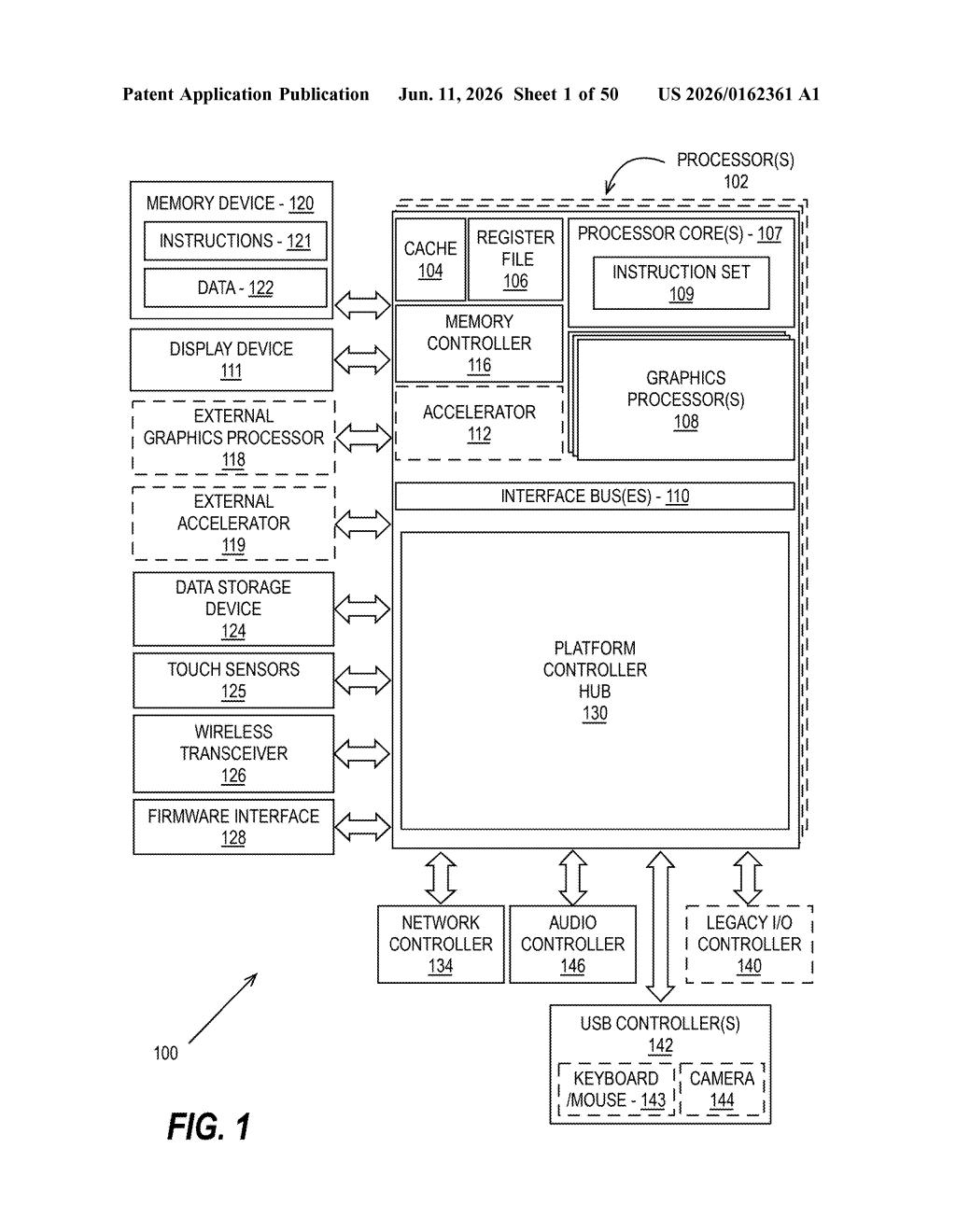
What Intel's smoother line-rendering actually does
Imagine drawing a diagonal line on a grid of tiny squares. Because the squares are fixed in place, the line has to cut across some of them at weird angles — and those cut squares end up looking like a staircase instead of a smooth edge. That's aliasing, and it's one of the oldest annoyances in computer graphics.
Intel's patent describes a circuit built into a graphics processor that figures out how much of each edge-crossing pixel the line actually covers, then uses that coverage measurement to set the pixel's transparency (called an alpha value) accordingly. A pixel that's barely clipped by the line gets set mostly transparent; one that's nearly fully inside the line gets set mostly opaque. The result is a visually smooth, softly blended edge rather than a hard staircase.
The clever part is that the circuit picks its sampling direction based on which way the line's edge is pointing — so a steep diagonal line gets measured differently than a nearly horizontal one. That orientation-awareness is what lets it stay accurate across all the different angles a line might take.
How the alpha circuit picks orientation and coverage
The patent describes dedicated alpha calculation circuitry inside a GPU's rasterization pipeline — the stage that converts 3D geometry into the flat grid of pixels you actually see on screen.
When a line's edge falls partway across a pixel, the circuit does three things in sequence:
- Selects a sampling orientation — it looks at the angle of the line's edge and picks the perpendicular direction to sample across, so the measurement always cuts cleanly across the coverage boundary rather than running along it.
- Determines partial coverage — using MSAA (multi-sample anti-aliasing), a standard technique that tests multiple points inside each pixel rather than just the center, it works out what fraction of the pixel sits inside the line.
- Sets the alpha value — that coverage fraction becomes the pixel's transparency value, blending it smoothly with whatever is behind the line.
This all happens inside the existing MSAA hardware path, meaning it's not a separate post-processing step bolted on afterward. The orientation-aware sampling is the key novelty: by rotating the sample axis to match the line's edge, the circuit avoids systematic errors that would otherwise appear when lines run at steep or shallow angles.
What this means for GPU graphics quality at the edge
For game developers and GPU designers, anti-aliasing quality on thin lines has historically been a pain point — lines narrower than one pixel can flicker or disappear entirely between frames, and existing MSAA implementations don't always handle partial coverage accurately. Baking a smarter alpha calculation directly into rasterization hardware means this quality improvement costs nothing in extra rendering passes.
For you as a user, the downstream effect is graphics that look cleaner without requiring you or a developer to crank up resolution or enable expensive supersampling. Wireframe overlays, HUD elements, road lines in driving games, and architectural line-work in CAD previews are all candidates to benefit from this kind of per-pixel edge smoothing.
This is solid, unglamorous GPU engineering — the kind of incremental rendering quality improvement that accumulates invisibly over hardware generations. It's not a headline feature, but orientation-aware partial-coverage sampling is a genuinely thoughtful fix for a real artifact. Worth watching if you follow Intel's Arc GPU roadmap.
There are more where this came from
We read every patent application Big Tech publishes and send you the ones worth knowing. Plain English, free, every week.
Want this weekly breakdown for a company we don't cover? Patentlyze Pro →