
Adobe Patents an AI That Writes Email Subject Lines From a Few Keywords
Coming up with the right email subject line can make or break an entire marketing campaign. Adobe has filed a patent for an AI that does the heavy lifting: you drop in a few keywords, twist a creativity dial, and the system spits out a subject line.
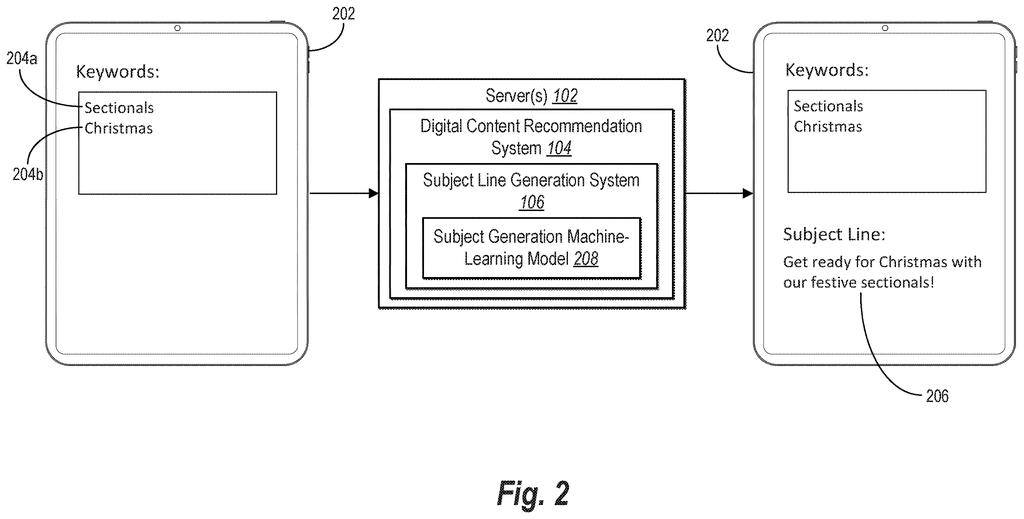
What Adobe's keyword-to-subject-line AI actually does
Ever stared at an empty subject line field, unsure whether to write "Sale ends tonight" or "Last chance for 40% off"? That blank-page paralysis is exactly what this Adobe patent is trying to fix.
The system works like this: you type in a handful of keywords, say "summer," "discount," and "shoes." The AI then writes a complete subject line for you. There's also a creativity score you can adjust. Turn it up and the AI takes bigger swings with unusual word choices; turn it down and you get something more predictable and safe.
This is aimed squarely at marketers who send large volumes of email and need subject lines fast, without hiring a full-time copywriter. The AI learns from examples over time, so its suggestions are shaped by what kinds of subject lines have worked before.
… modifying, based on the creativity score, a machine learning parameter of a sequence-to-sequence neural network; generating, utilizing the sequence-to-sequence neural network, a subject line by: selecting each word for the subject line using a conditional next word distribution …
Translation: It tweaks the AI's settings based on your creativity score to pick words one by one.
How the neural network builds subject lines word by word
The patent describes a sequence-to-sequence neural network (a type of AI that takes one sequence of text and converts it into another, like a translator converting keywords into a sentence) trained to generate email subject lines.
When you provide keywords, the model doesn't just slot them into a template. Instead, it builds the subject line one word at a time, each time consulting a conditional next word distribution (a probability table that scores how likely each possible next word is, given the keywords you entered and the words already chosen). The highest-scoring word gets picked, and the process repeats until the subject line is complete.
The standout piece is the creativity score. The claim says this score directly modifies a parameter inside the neural network, which changes how probable or improbable word choices become. A low creativity score keeps the model conservative and predictable. A high score nudges it toward less obvious words, producing punchier or more unexpected subject lines.
- User supplies keywords and a creativity score
- Model adjusts its internal probability weighting based on the creativity score
- Subject line is assembled word by word using those adjusted probabilities
- The finished subject line is returned to the user's screen
The present disclosure relates to systems, methods, and non-transitory computer readable media that utilize machine learning to generate subject lines from subject line keywords.
Translation: The patent describes an AI system that turns simple keyword lists into fully formed email subject lines.
What this means for email marketers using Adobe tools
For anyone running email marketing campaigns inside Adobe tools like Marketo or Journey Optimizer, this could mean subject line generation built directly into the workflow, no separate copywriting tool needed. You control how adventurous the AI gets, which matters because a subject line that works for a bank sounds nothing like one for a streetwear brand.
The creativity dial is the detail worth paying attention to. Most AI writing tools just generate output; this patent makes that tuning parameter a formal, claim-protected part of the system. If granted, Adobe's bet on AI-assisted marketing copy could mean competitors offering a similar knob to control tone would need to design around this approach or risk a legal challenge.
Adobe's new filing is the 29th in our Language AI coverage since May, a series that includes applications like an AI chat for sales leads and prompts from cursor hover.
Claim 1 is broader than it first looks. It doesn't just cover a specific model or interface. It covers any sequence-to-sequence network that adjusts a machine learning parameter based on a creativity score and then builds a subject line word by word using a conditional probability distribution. That's a fairly general description of how a lot of AI text generation works, and that breadth is exactly what makes it interesting from a competitive standpoint.
If granted as written, this could give Adobe leverage against any email marketing platform that lets users tune an AI's output style when generating subject lines from keywords. That's a wide target. The claim doesn't require a specific architecture, a specific dataset, or a specific interface, just the input-score-output pipeline.
The practical question is whether the USPTO finds this combination novel enough. Sequence-to-sequence models and temperature-style creativity controls are both well-established ideas in AI. Adobe's argument is that combining them specifically for subject line generation from keywords is new. Whether that argument holds is the real story here, not the feature itself.
There are more where this came from
We read every patent application Big Tech publishes and send you the ones worth knowing. Plain English, free, every week.
The drawings
21 drawing sheets from US 2026/0289188 A1 · click any drawing to enlarge


Want this weekly breakdown for a company we don't cover? Patentlyze Pro →
Be the first to weigh in