
Nvidia Patents a Way to Train AI Across Many Computers Without Sharing Data
Training a powerful AI model usually means pooling everyone's data in one place. Nvidia's new patent describes a system where each machine trains the model privately, passing control along like a relay baton.
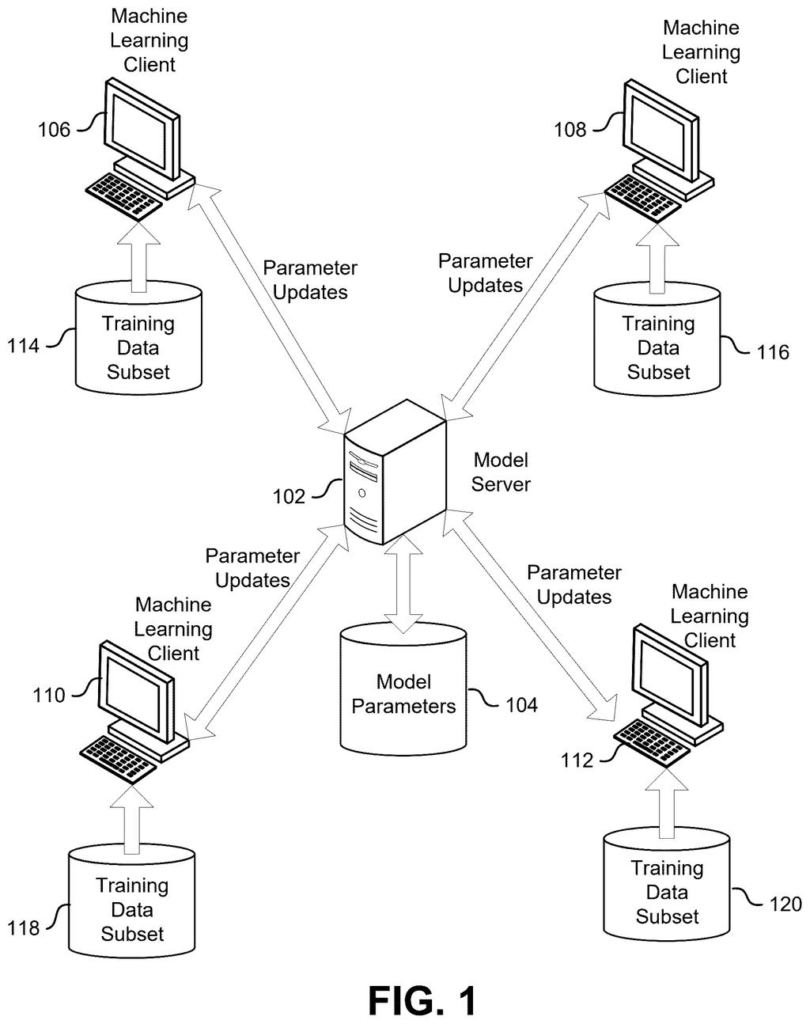
What Nvidia's take-turns AI training actually does
You're part of a team building an AI model, but every teammate's data is confidential. Maybe it's medical records, financial history, or proprietary business data. Right now, most AI training systems require you to hand all that over to a central server. That's a problem.
Nvidia's patent describes a different approach. A group of computers each take turns making updates to a shared AI model. When it's your machine's turn, only your machine gets to touch the model, and it uses data nobody else can see. Then it passes control to the next machine in line, which does the same with its own private data.
The end result is a model trained on everyone's data combined, but without any single party ever seeing what the others contributed. Think of it like each chef seasoning the same dish without seeing the other chefs' recipes.
… one or more neural networks to be at least partially trained based, at least in part, on the one or more neural networks being at least partially trained by a second processor.
Translation: Multiple computers help train the same AI system by building on each other's work.
How each client gets its exclusive training window
The patent covers a distributed training system for neural networks (the type of AI behind image recognition, language models, and more). Instead of one central machine doing all the learning, the work is spread across multiple "training clients," each of which holds its own private dataset.
The key mechanism is an exclusive update lock: only one client at a time is allowed to modify the shared model. That client trains the model on its local data, then releases the lock so the next client can take a turn. No client can see another's training data at any point in the process.
The first independent claim is broad. It describes a processor that causes a neural network to be trained "based, at least in part, on" training done by a second processor. That framing covers a wide range of multi-machine training setups, not just the specific take-turns approach described in the abstract.
This architecture is closely related to a concept called federated learning (where AI models learn from decentralized data without that data ever leaving its source), though Nvidia's system appears to use sequential exclusive access rather than averaging updates from many machines simultaneously.
… a plurality of training clients each obtain an exclusive right to update a model in turn, and each client trains said model with training data not accessible to other training clients.
Translation: Different computers take turns updating the AI using their own private data that never gets shared.
What this means for private, distributed AI training
For industries where data privacy is non-negotiable, like healthcare, finance, or defense, this kind of system could allow AI models to be trained on far richer datasets than any single organization could legally or practically share. Your hospital's patient records could contribute to a better diagnostic AI without ever leaving the building.
The pattern in Nvidia's distributed-AI filings points toward the company positioning its hardware as the infrastructure layer for exactly these kinds of sensitive, multi-party training jobs. Whether that translates into a commercial product or simply protects Nvidia's existing work in enterprise AI platforms remains to be seen.
Nvidia's third filing we've tracked since July in our on-device AI privacy watch follows earlier work on picking networks via federated learning and locking secret codes inside chips.
The design asks every participant to wait its turn before touching the shared model, which means training slows down in direct proportion to how many parties are involved. That is a real cost, and for large groups or urgent projects, it could make the whole approach impractical.
The sequential structure also creates a vulnerability: any one participant, while holding the exclusive update slot, can corrupt the model before passing it along. Spreading that risk across many simultaneous contributors would dilute it, but this design does not do that.
The underlying problem being solved, training AI across organizations that cannot legally or practically share their raw data, is genuine and growing. Whether this particular answer is worth the slowdown and the trust it demands from each participant depends entirely on how small and cooperative the groups using it turn out to be.
There are more where this came from
We read every patent application Big Tech publishes and send you the ones worth knowing. Plain English, free, every week.
The drawings
58 drawing sheets from US 2026/0288904 A1 · click any drawing to enlarge


Want this weekly breakdown for a company we don't cover? Patentlyze Pro →
Be the first to weigh in