
Samsung Patents a Way to Let Tiny AI Models Train Their Larger Teachers
Training a powerful AI model to run on a phone usually means teaching a small model to copy a big one. Samsung's new patent flips part of that process around, making the big model learn with the small one in the loop from the start.
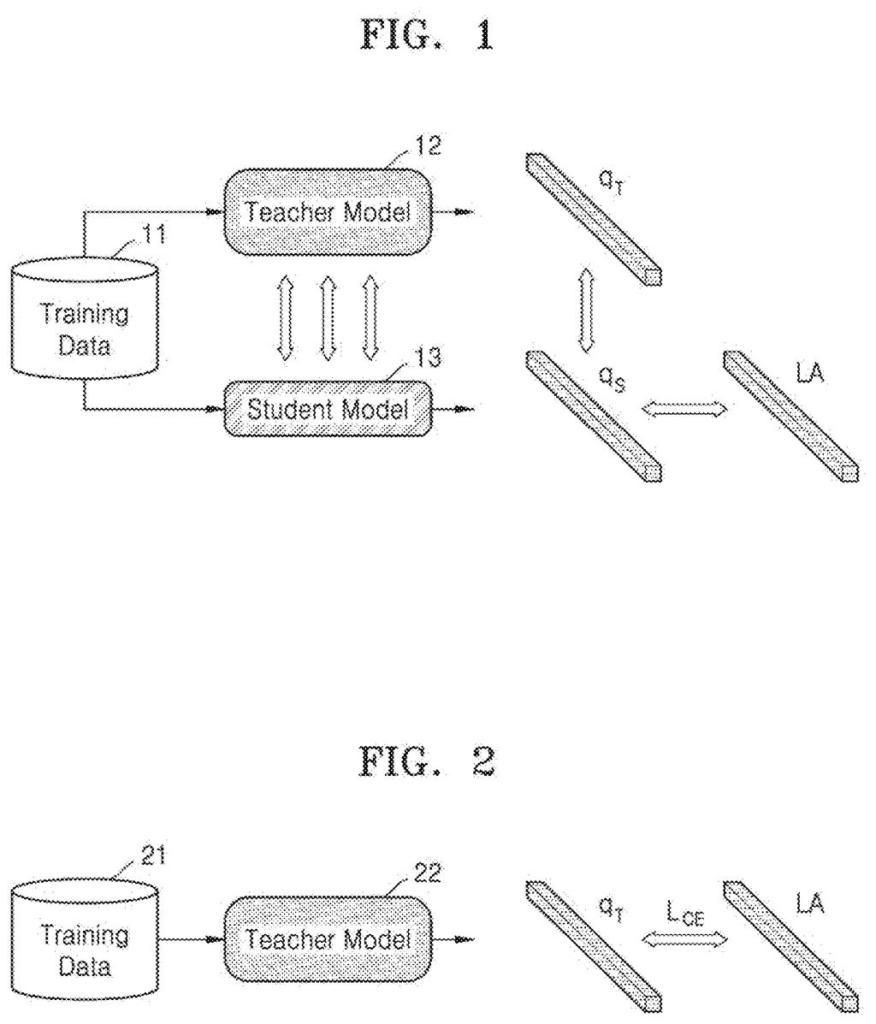
How Samsung's AI shrinking trick actually works
Imagine you're teaching a complex skill to an expert by watching a beginner try to copy them in real time. Sounds backwards, but that's roughly the idea behind Samsung's new patent.
Right now, most companies train a large, powerful AI model first and then separately squeeze it down into a smaller version that can fit on a phone or a chip. The problem: the big model was never designed with the small one in mind, so important information can get lost in translation.
Samsung's approach trains the two models together. A small "student" branch attaches to the large "teacher" model during training and sends signals back, nudging the teacher to organize its knowledge in a way the student can actually absorb. The result is a more compact AI that can run directly on a device, including Samsung's own chips, without losing as much accuracy as the usual method.
divide a teacher model into a plurality of teacher blocks each comprising at least one layer; generate a student branch, which receives a first feature output from a first teacher block among the plurality of teacher blocks; train the teacher model to decrease a difference between one or more outputs of the teacher model and an output of the student branch; …
Translation: The system chops up the big AI and uses a smaller helper branch to guide its training.
How the student branch reshapes the teacher's training
The patent describes a training system built around two types of AI models: a large teacher model (the expert) and a smaller student model (the learner that will eventually run on a device or chip).
Here's the process the system follows:
- The teacher model is divided into sequential teacher blocks, each handling one stage of processing (think of them as chapters in a textbook).
- A lightweight student branch is attached to one of these early chapters. It receives the teacher's intermediate output at that point and tries to produce a prediction on its own.
- The teacher is then trained to minimize the gap between what it and the student branch output. This forces the teacher to organize its internal knowledge in a form a small model can work with.
- Once the teacher is trained that way, a full student model is trained to learn from it, layer by layer.
Critically, the patent's claim ties the final trained student model to semiconductor process modeling, meaning Samsung sees this not just as a general AI trick but as a tool for simulating chip manufacturing. Chip simulation requires high accuracy and must run fast on specialized hardware, making compact but precise models especially valuable there.
A computer-implemented method of training a teacher model and a student model includes dividing the teacher model into a series of teacher blocks each comprising at least one layer; generating a first student branch receiving a first feature output from a first teacher block among the series of teacher blocks; …
Translation: This method breaks down a large artificial intelligence model into manageable pieces to train a smaller companion model.
What this means for AI on Samsung phones and chips
For you as an end user, this kind of patent is about the AI that runs inside your device. A better-trained small model means a voice assistant that responds faster, a camera that picks the right settings more accurately, or a chip that makes fewer manufacturing errors, all without needing a cloud server in the loop.
The explicit mention of semiconductor process modeling in the claim is telling. Samsung makes its own chips and runs its own chip fabrication plants. A compact AI that can accurately simulate manufacturing steps could reduce costly production errors. a growing pile of Samsung AI-efficiency filings suggests the company sees on-device and on-chip AI as a long-term priority, and this approach is one building block in that direction.
Samsung's 22nd filing we've tracked since June in our on-device AI privacy watchlist follows work on shrinking AI models and retaining old object knowledge.
Most people buying a Samsung phone will never think about the AI models running behind the scenes to keep chip manufacturing precise, but those models directly affect whether their device works flawlessly or ships with subtle flaws. This patent describes a smarter way to shrink those AI models down to a size that can run efficiently on factory hardware, while keeping them accurate enough to catch manufacturing problems before they become defective chips.
The benefit reaches a phone owner as reliability, not as a feature they can tap or see. Fewer defective chips in production means fewer devices that fail early, run hot, or underperform, which is a failure prevented rather than a capability added.
For most buyers, the honest answer is that this will never appear on a spec sheet or feel like anything at all. The value is baked into the baseline expectation that the device simply works.
There are more where this came from
We read every patent application Big Tech publishes and send you the ones worth knowing. Plain English, free, every week.
The drawings
9 drawing sheets from US 2026/0278482 A1 · click any drawing to enlarge


Want this weekly breakdown for a company we don't cover? Patentlyze Pro →
Be the first to weigh in