
Sony Patents a System That Catches Faulty Stations That Feed Accuracy Data to Your GPS
High-precision GPS relies on a network of fixed ground stations sending out correction signals, but if one of those stations goes wrong, your device might never know. Sony's new patent describes a system that watches those stations for problems and can automatically cut off bad correction data before it corrupts your location fix.
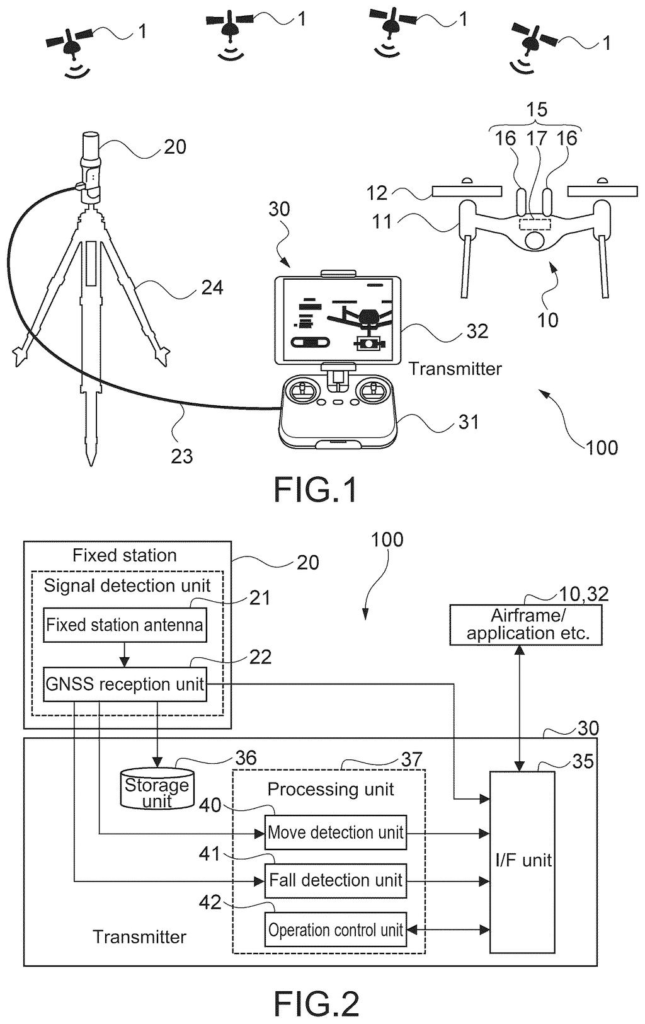
What Sony's GPS correction station watchdog actually does
Your phone's basic GPS is accurate to a few meters, but many applications, from self-driving cars to delivery drones to precision agriculture, need accuracy down to centimeters. They get that accuracy by receiving correction signals from fixed ground stations, which compare what satellites say versus what they measure locally and broadcast the difference. The trouble is: what happens when one of those ground stations has a problem?
Right now, a malfunctioning station can keep sending out correction data even when that data is wrong, and any device trusting it can end up with a worse location fix than if it had ignored the correction entirely. Sony's patent describes a computer system that continuously watches each fixed station for state changes, meaning any condition that would make its correction data unreliable.
When a problem is detected, the system can do two things: alert operators that something has changed, and automatically stop the station from broadcasting bad correction data. The goal is to make sure faulty corrections never reach the devices depending on them.
detecting a state change of a fixed station which outputs correction data used in GNSS positioning on a basis of GNSS information received by the fixed station; …
Translation: The system watches for unusual changes at stationary ground units that send out GPS correction signals.
How the system detects and responds to station state changes
The patent targets a specific layer of the GPS ecosystem called GNSS correction services. GNSS (Global Navigation Satellite System) is the umbrella term for GPS and similar satellite networks. To get centimeter-level accuracy, receivers use correction data from fixed reference stations whose own precise positions are known. These stations compare incoming satellite signals against what the signals should say, calculate the error, and broadcast a correction. Receivers nearby apply that correction to sharpen their position estimate.
Sony's invention is a monitoring system that sits alongside or inside the fixed station infrastructure. It watches for state changes at each station. A state change could be anything that affects the quality of the correction data: hardware faults, signal obstructions, antenna issues, or environmental interference.
When the system detects a state change, it triggers at least one of two responses:
- Notification processing: alerting operators or connected systems that the station's status has changed, so human or automated action can follow.
- Stop processing: immediately halting the station's output of correction data, preventing bad corrections from reaching receivers that trust them.
The design is intentionally simple at the decision level. Rather than trying to evaluate how bad the correction data is, the system treats any detected state change as a trigger. That conservative approach avoids the risk of continuing to broadcast corrections that look plausible but are subtly wrong.
… at least one of notification processing for notifying of an occurrence of the state change of the fixed station or stop processing for stopping the output of the correction data is executed.
Translation: When something looks wrong, the system either warns operators or cuts off the bad data feed immediately.
What this means for high-precision GPS in cars and drones
For most smartphone users, this patent changes nothing. Phones use basic GPS accuracy that doesn't depend on fixed correction stations. But for applications where location precision is safety-critical, such as autonomous vehicles, drone delivery, precision farming equipment, or surveying tools, a corrupted correction signal can cause real failures. A car trusting a bad correction could think it is in the wrong lane. A drone following bad position data could miss its landing zone.
The value here is failure prevention at the source. Rather than leaving it to each device to notice that its location fix seems off, this system shuts off the bad data before it ever leaves the station. Sony's track record in GNSS infrastructure patents suggests this is part of a longer investment in the correction-services layer that underpins high-precision positioning.
Sony's second filing in our antenna and radio coverage since June builds on chaining signals to locate people indoors, extending the thread we've tracked.
The patent solves a problem you would never see coming: a correction station that helps your car or delivery drone pinpoint its location to within centimeters malfunctions, keeps broadcasting bad data, and the vehicle trusts it anyway. Sony's system catches that moment and either raises an alarm or shuts the bad data off before it propagates downstream.
You would feel the benefit as an absence. Your autonomous vehicle stays in its lane, your precision farming equipment cuts the right row, and nothing goes wrong. The failure this prevents is the kind that only surfaces in accident reports.
Narrow in scope, the filing covers monitoring and control rather than any new sensor or algorithm. That makes it more of a reliability layer than a breakthrough, but reliability layers are exactly what lets high-accuracy positioning move safely from specialized hardware into everyday products.
There are more where this came from
We read every patent application Big Tech publishes and send you the ones worth knowing. Plain English, free, every week.
The drawings
11 drawing sheets from US 2026/0287759 A1 · click any drawing to enlarge


Want this weekly breakdown for a company we don't cover? Patentlyze Pro →
Be the first to weigh in