
Samsung Patents a Phone That Cuts One Connection to Keep Calls Running When Overheating
When your phone gets too hot, it could lose your call or your data connection without telling you why. Samsung's new patent describes a system that decides, in advance, which radio connection is worth keeping and which one to drop first.
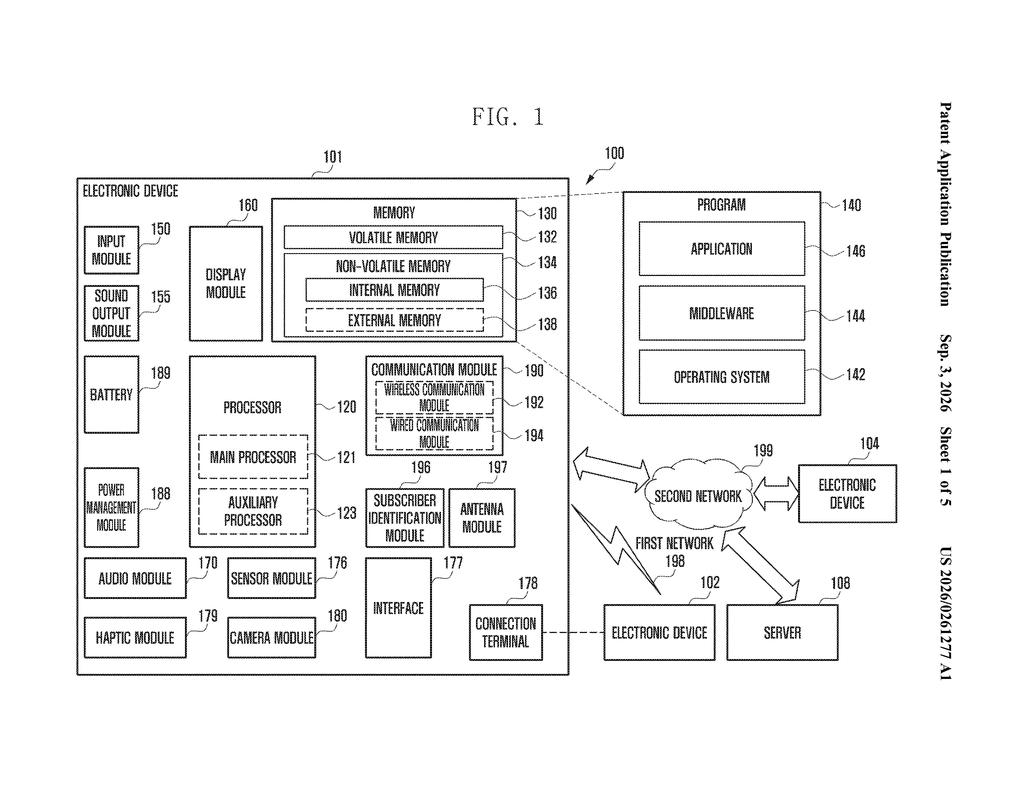
What Samsung's heat-triggered radio swap actually does
Modern smartphones run two or more wireless connections at the same time. Your phone might be on a 5G data link while simultaneously holding a voice call over a separate channel, each one burning through a different radio amplifier chip inside the device. When all those amplifiers run at once, they generate real heat.
Samsung's patent describes a phone that watches its own internal temperature while those connections are live. If the temperature climbs past a set limit, the phone doesn't just throttle everything randomly. It makes a deliberate choice: drop the secondary connection, then shift the primary connection to a different amplifier so that connection can continue at a lower thermal cost.
Think of it as triage for your phone's radios. Instead of your call breaking up unpredictably because the hardware got too hot, the phone sheds the less important link on purpose and keeps the more important one running on cooler hardware.
… identify a temperature of the electronic device by using the temperature sensor while performing the first communication and the second communication, in response to a situation in which the temperature of the electronic device exceeds a first predetermined threshold temperature, release the second communication …
Translation: It monitors how hot the device gets during two simultaneous connections and drops the second one if it gets too warm.
How the processor picks which amplifier to cut first
The device runs multiple power amplifiers (chips that boost the radio signal strong enough to reach a cell tower) in parallel. A first amplifier handles what the patent calls the first communication, and a second amplifier handles the second communication. Both are active simultaneously during normal operation.
A temperature sensor continuously feeds temperature readings to the processor. The processor compares that reading against a stored threshold temperature. When the reading crosses the threshold, two things happen in sequence:
- The second communication is released, meaning that radio link is terminated.
- The first communication is migrated to a different power amplifier, switching away from the one that was already running hot.
The amplifier swap for the primary connection is the less obvious part. Simply killing the secondary link frees up some power, but the thermal stress on the first amplifier doesn't instantly disappear. Handing off to a cooler amplifier gives the primary connection a fresh thermal budget to work with.
The patent also implies a tiered structure with at least one additional threshold, suggesting the device may take further steps (beyond what this claim covers) if the temperature keeps rising after the initial intervention.
… perform first communication by using a first power amplifier among the multiple power amplifiers, perform second communication by using a second power amplifier among the multiple power amplifiers …
Translation: The phone uses separate hardware amplifiers to handle two separate communication streams at the same time.
What this means for 5G phones running hot
Heat management is one of the quiet pain points in 5G phones. Running millimeter-wave or sub-6 GHz radios alongside voice calls is genuinely power-hungry, and users experience the failure mode as dropped calls or slowdowns that seem random. Samsung's approach gives the phone a predictable fallback instead of letting the hardware decide arbitrarily which connection suffers.
Samsung's run of thermal-management filings fits a broader industry effort to make multi-radio devices more reliable in real conditions. For you as a user, the practical payoff would be a phone that protects your active call even when the device is under thermal stress, at the cost of a background data session you may not notice losing.
This is the 68th Samsung filing we've tracked since May in our 5G and network work, following one on faster Wi-Fi processing and one on AI-based location.
The phone deliberately sacrifices one connection to protect another when it gets too hot, and that prioritization is the real bet. If the device guesses wrong about which connection matters more at that moment, say you're on a video call over the link it just cut, the fix is worse than the original problem.
Swapping to a cooler amplifier chip buys recovery time but assumes a spare one is sitting idle and ready. That works on flagship phones with several discrete chips for different wireless bands, but it adds meaningful complexity when a simpler approach of just reducing power could have served.
The tradeoff reads as reasonable for most phone-call scenarios, where the primary connection is obviously the one worth protecting. The gap in the design is that it appears to follow a fixed priority order, with no room for the user's actual situation to change the outcome.
Get our take in your Top Stories
Liked this breakdown? Add Patentlyze as a preferred source on Google, and our plain-English take shows up more often in your Top Stories the next time Samsung patent news breaks.
There are more where this came from
We read every patent application Big Tech publishes and send you the ones worth knowing. Plain English, free, every week.
The drawings
5 drawing sheets from US 2026/0261277 A1 · click any drawing to enlarge


Want this weekly breakdown for a company we don't cover? Patentlyze Pro →
Be the first to weigh in