
Google Patents an AI That Reads Your Screen and Operates Apps on Your Behalf
Google has filed a patent for an AI system that looks at whatever is on your screen, figures out what needs to be tapped or typed, and then does it for you, repeating that loop until the job is finished.
What Google's screen-operating AI actually does for you
A person sits down to book a flight, fill out a form, or find a buried setting in an app. Ten steps later, they've forgotten why they started. Google is working on a system that handles all of that for you.
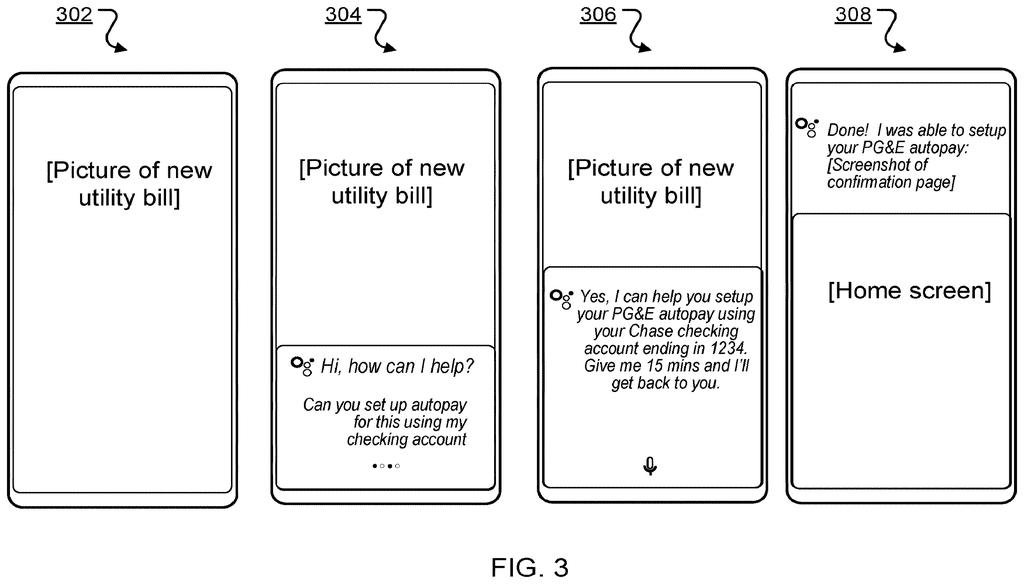
The idea is straightforward: you tell the AI what you want to accomplish, it looks at your screen, decides what to click or type, does it, looks again, and keeps going until the task is done. The AI isn't following a fixed script, it reads each new screen as it appears, so it can adapt when the app throws up an unexpected dialog box or a new page loads differently than expected.
This is meaningfully different from today's virtual assistants, which mostly answer questions or set reminders. This system is designed to actually operate an app on your behalf, step by step, the way a human would.
… generating, by the language model neural network, based on the first input subsequence and the second input subsequence, output data that describes one or more actions to be performed within the current user interface …
Translation: The AI creates instructions for what to tap or type next on your screen.
How the language model reads screens and decides what to tap
The patent describes a method where a language model neural network (the same class of AI behind chatbots like Gemini or ChatGPT) takes on the role of a hands-on operator inside your device's apps.
Here is how the loop works:
- You describe a task in plain language.
- The system converts that into structured data the AI can work with.
- The AI takes a snapshot of the current screen and encodes it as a second chunk of data.
- It combines both chunks, figures out what action to take (tap a button, type text, scroll down), and performs it.
- The cycle repeats on the new screen until a stopping condition is reached, for example, a confirmation message appears.
The key technical detail is how the AI ingests the screen. The patent calls for deriving a second input subsequence from an image of the current user interface, meaning the AI is literally looking at a screenshot rather than reading a structured code description of the page. That approach lets it work across almost any app without special integration from the app's developer.
The termination criterion (the rule that tells the AI to stop) is part of the claim, which means the system has some mechanism for deciding when it's finished rather than running indefinitely.
… automating the interaction with user interfaces for task execution using a language model neural network …
Translation: An artificial intelligence takes control of apps and screens to finish jobs for you.
What this means for AI assistants that go beyond answering questions
For regular users, a working version of this would mean you could hand off tedious multi-step tasks, filing expense reports, navigating insurance portals, updating account settings, and let the AI work through them. That's a bigger leap than a voice assistant that reads you a weather forecast.
The broader implication is architectural. Because the system reads screenshots rather than requiring apps to expose special hooks, it could theoretically operate any existing app on a device. That is a much wider scope than agent systems that only work inside purpose-built integrations. Google keeps filing on on-device AI agents and autonomous task execution, and this patent fits squarely into that pattern.
Google's 41st filing we've tracked since May on our AI agents that act for you watch adds to a run that includes the smart photo timing patent and the live network watching patent.
Claim 1 is written very broadly. It covers any computing device that uses any language model to look at any user interface image and perform any action, in a loop, until some stopping condition. That scope, if granted, would reach far beyond Google's own products.
In practice, broad claims like this often get narrowed during examination. The USPTO will look hard at whether the loop-and-screenshot approach was already obvious from prior art, and there is a lot of prior art in this space, robotic process automation tools have been doing something similar for years, and several AI agent frameworks already read screen images to decide actions.
What the patent does signal clearly is that Google wants a legal stake in the specific framing of language-model-driven, screenshot-based task automation. Whether that claim survives examination intact or gets trimmed, the underlying engineering direction is real: Google is building AI that doesn't just talk about doing things, it does them.
There are more where this came from
We read every patent application Big Tech publishes and send you the ones worth knowing. Plain English, free, every week.
The drawings
4 drawing sheets from US 2026/0289251 A1 · click any drawing to enlarge


Want this weekly breakdown for a company we don't cover? Patentlyze Pro →
Be the first to weigh in