
Samsung Patents a Refrigerator Camera That Reads the Room Before You Open the Door
Built-in refrigerator cameras are only as useful as the photos they take, and bad lighting kills both. Samsung's new patent tackles the awkward moment when a camera inside a dark fridge gets blasted by bright kitchen light the instant you open the door.
What Samsung's pre-adjusted fridge camera actually does
You're standing in your kitchen, and you want to check what's inside your fridge without walking over to it. Your phone app pulls up the fridge's built-in camera, but the photo is washed out or too dark to read the labels. That's the problem Samsung is trying to fix.
This patent describes a camera system inside a home appliance (most likely a refrigerator) that doesn't just switch on and shoot. Before the door opens, it takes a reading of the light in the room around it, then adjusts its own camera settings to match. By the time the door swings open and light conditions change dramatically, the camera already has a head start on getting the exposure right.
The goal is a cleaner, more accurate image of what's on your shelves, captured right at the moment the door opens. It's a small quality-of-life fix, but one that could make interior appliance cameras actually useful rather than just a checkbox feature.
… control the camera to perform first correction of at least one setting value based on a surrounding light environment around the home appliance …
Translation: The fridge adjusts its camera settings based on how bright it is outside.
How the camera corrects for light before the door swings open
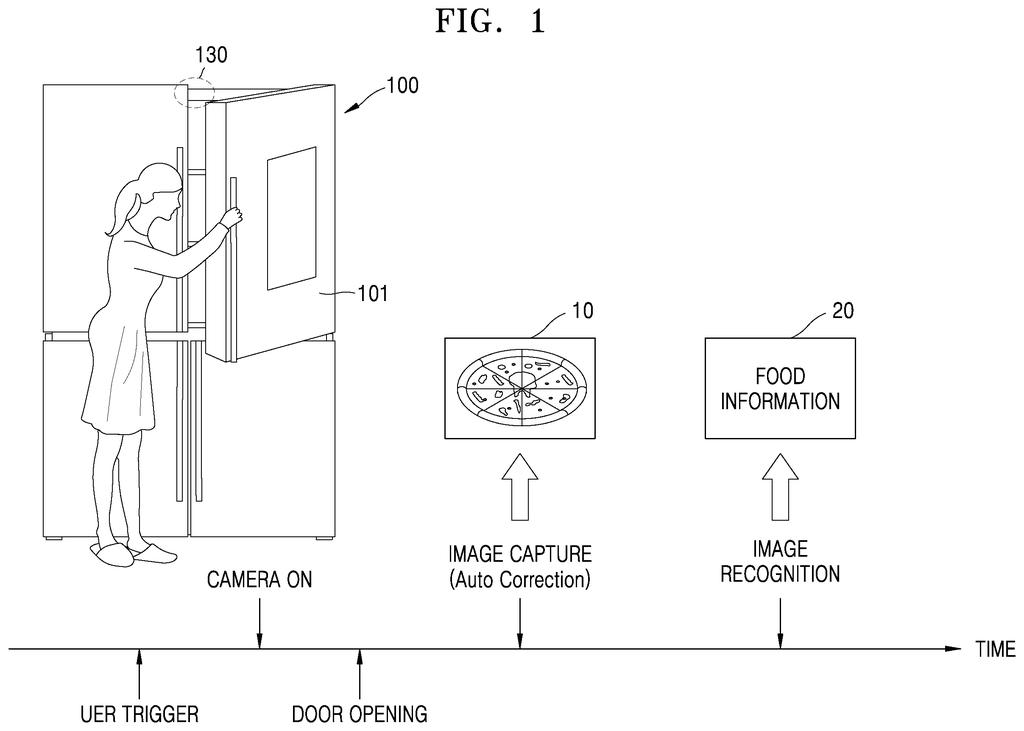
The patent describes a sequence that kicks off when the user triggers the camera (for example, through an app or a physical button). Here's what happens:
- Step 1, Wake-up: The processor powers on the camera.
- Step 2, First correction: Before anything else, the camera reads the ambient light in the room around the appliance and adjusts at least one setting value (think exposure, white balance, or ISO) to match those conditions. The patent calls this the "first corrected setting value."
- Step 3, Door trigger: The system waits for the door-opening event, a physical signal that the appliance detects when the seal breaks.
- Step 4, Capture: The camera takes an image using the pre-corrected settings, not a default factory profile that may have nothing to do with your actual kitchen lighting.
The key insight is sequencing. Camera systems typically adjust after the scene changes, which leads to blown-out or underexposed frames right when the image matters most. By pre-correcting to room light before the door opens, the camera has a calibrated baseline to work from, even though the interior of the appliance may be lit very differently.
The patent leaves room for additional correction steps (it refers to "first correction" specifically, implying secondary corrections may follow), but the core claim is about that pre-door-opening calibration pass.
… based on a door opening event of the home appliance and based on the at least one first corrected setting value, obtain an image captured through the camera …
Translation: It takes a picture once the door opens using those adjusted settings.
What this means for inside-fridge photo quality
Refrigerator cameras have been a selling point on premium appliances for years, but the photos they produce are often mediocre: grainy, color-shifted, or blown out by the contrast between a dark interior and bright room light. If this system works as described, it could meaningfully close the gap between what your fridge's camera captures and what your phone camera would capture if you just opened the door yourself.
The practical payoff is for features like remote inventory checking (you're at the grocery store, unsure if you need milk), food expiration tracking, or AI-based meal suggestions that rely on actually seeing what's in the fridge clearly. Samsung's interest in integrating AI and cameras into home appliances suggests this is less a one-off idea and more part of a longer push to make appliance cameras functional enough to feed real software features.
Samsung's 138th filing we've tracked since May in our camera sensor work watchlist follows one on a dual-metal light filter and one on auto pixel correction in video.
Samsung's refrigerators already have cameras inside them, so this patent isn't waiting on new hardware. It describes a software change to when and how the camera adjusts to lighting conditions, specifically calibrating before the door opens rather than after, which means it could arrive as a firmware update to existing appliances.
The scope here is intentional and modest. The patent protects one specific step in a sequence, not a full image quality system, so the path to shipping it is short but the feature it enables is narrow.
Whether everyday users notice depends on what Samsung builds around it. A cleaner, better-lit photo of your fridge shelves only becomes useful if the app or voice assistant on the other end does something smart with that image.
There are more where this came from
We read every patent application Big Tech publishes and send you the ones worth knowing. Plain English, free, every week.
The drawings
23 drawing sheets from US 2026/0287250 A1 · click any drawing to enlarge


Want this weekly breakdown for a company we don't cover? Patentlyze Pro →
Be the first to weigh in