
Microsoft Patents a Two-Layer AI System for Keeping Cloud Apps on Target
Every cloud app has a performance promise it has to keep, and right now, hitting that promise without over-spending on server power is mostly guesswork. Microsoft has filed a patent for a two-layer AI system that tries to take that guesswork out of the equation.
What Microsoft's two-layer resource manager actually does
Every time you open a web app, the servers behind it are constantly deciding how much computing power to throw at your request. Too little and the app slows down; too much and the company burns money on idle machines. Right now, getting that balance right is genuinely difficult, especially as demand spikes and falls throughout the day.
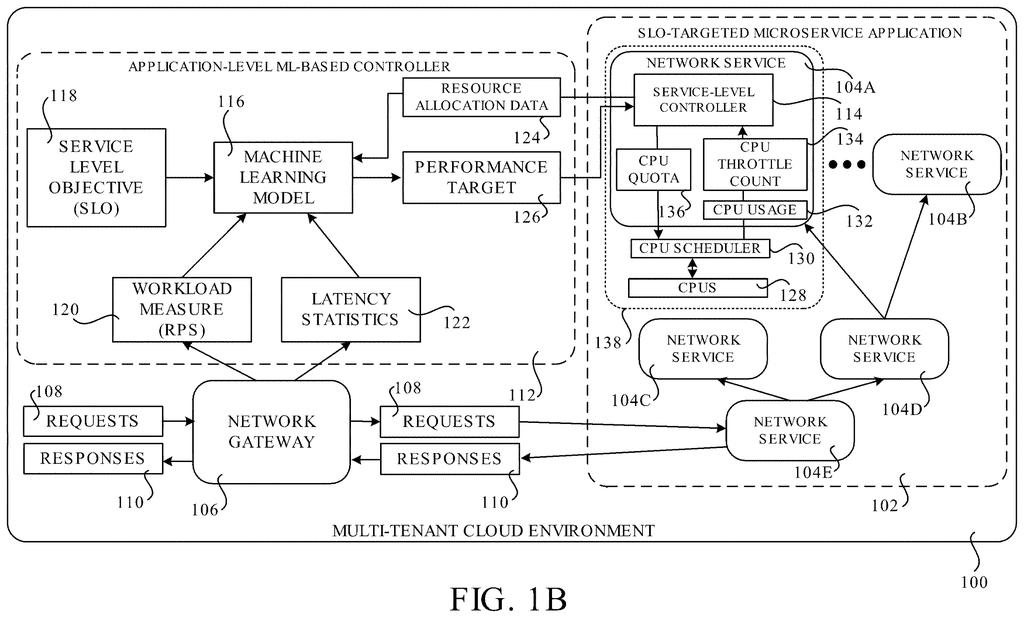
Microsoft's patent describes a system with two AI-powered layers working together. The first layer watches your specific app and figures out what performance level it needs to meet its promises to users. It passes that target down to a second layer, which controls the actual server resources and adjusts them in real time.
The idea is that neither layer has to do all the heavy lifting alone. The app layer knows what good performance looks like; the resource layer knows how to allocate servers efficiently. Together, they aim to keep the app running smoothly without over-provisioning.
A bi-level machine learning (“ML”)-assisted framework for resource management is provided that includes an application-level controller that operates in concert with a service-level controller to scale the allocation of a computing resource to a network service in a manner that satisfies a service-level objective (“SLO”) .
Translation: A two-layer AI system works together to adjust cloud computing resources so applications meet their performance goals.
How the app controller and service controller divide the work
The patent describes what Microsoft calls a bi-level ML-assisted framework for resource management, meaning a two-tier system where machine learning (AI that improves from experience) operates at two separate levels of a cloud infrastructure.
At the top sits the application-level controller. It runs a machine-learning model that observes how a specific network service is behaving and learns what performance target that service needs to satisfy its service-level objective (SLO), basically the performance contract the service is supposed to meet, such as responding to requests within a certain number of milliseconds.
That learned performance target is then passed down to the service-level controller, which sits closer to the actual computing infrastructure. This lower layer looks at real-time resource utilization data (how busy the servers actually are) and uses the target from above to decide how much CPU, memory, or bandwidth to allocate.
- The app-level controller learns what the service needs.
- The service-level controller decides how much to give it.
- The two layers coordinate so neither has to solve the whole problem alone.
The claim structure covers the interplay between these two controllers, with the ML model sitting in the upper layer doing the goal-learning work.
What this means for cloud costs and app reliability
Cloud providers and their enterprise customers spend significant money on over-provisioning, keeping extra servers running just in case demand spikes. A system that could accurately predict and meet performance targets without padding would trim those costs. For companies running high-traffic services, even small efficiency gains add up fast.
For you as an end user, the benefit is less visible but real: apps that hit their performance targets more consistently without the back-end scramble that sometimes causes slowdowns. The two-layer design also means changes at one level don't break the logic at the other, which makes the system easier to adjust as conditions change. Microsoft's interest in automated cloud resource management shows up across several recent filings, suggesting this is an area the company is actively building out.
Microsoft's 36th filing in our Enterprise AI coverage since May follows earlier applications like one that scans emails for deals and one predicting form text.
The path from this patent to a working feature is short. Both controllers described are software, the underlying learning models are standard, and Microsoft already runs cloud infrastructure at the scale where this would be tested.
What the patent actually describes is a two-layer system where one piece of software learns what a cloud application needs, and a second piece of software adjusts computing power to match. That structured handoff between an app-aware layer and a resource-aware layer is an incremental but practical improvement on how cloud platforms already tune themselves automatically.
If this makes it into Azure, most customers will never see it directly. The benefit shows up as better reliability during traffic spikes, reflected in dashboard numbers that enterprise customers care about a great deal.
There are more where this came from
We read every patent application Big Tech publishes and send you the ones worth knowing. Plain English, free, every week.
The drawings
9 drawing sheets from US 2026/0288527 A1 · click any drawing to enlarge


Want this weekly breakdown for a company we don't cover? Patentlyze Pro →
Be the first to weigh in