
Salesforce Patents a Way to Teach AI Models to Understand and Discuss Images
What if you could hand an AI a photo and ask it anything about what's in the frame, in plain English, and get a useful answer back? Salesforce has filed a patent that lays out exactly how to build that kind of system.
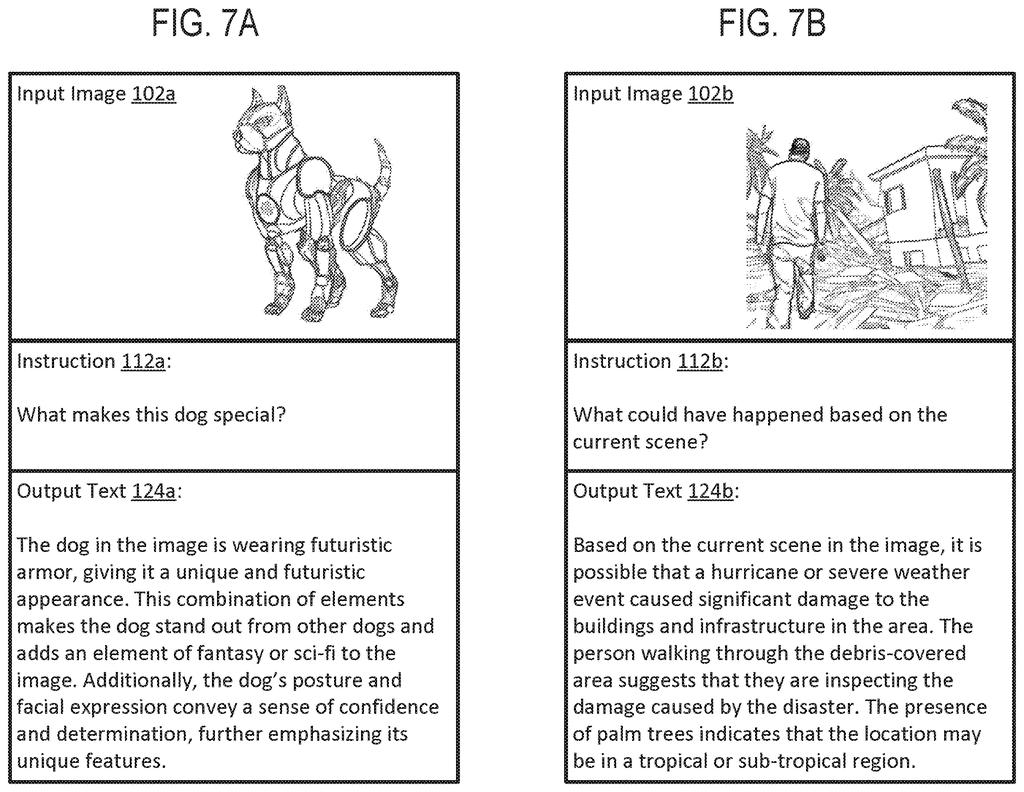
How Salesforce's image-question AI actually works
Imagine you upload a photo of a broken appliance to a customer support chatbot and type, "What's wrong with this, and how do I fix it?" Today, most AI chat tools handle text well but stumble badly when pictures enter the conversation. Salesforce's patent describes a way to close that gap.
The system works in three stages. First, a dedicated image-reading component converts your photo into a format a computer can analyze. Then a middle layer, called a multimodal encoder, translates that visual data into something a language model (the kind of AI that generates text) can actually understand. Finally, the language model combines your typed question with that translated image data and writes a response.
The practical result is an AI that can read an image and a text prompt together, then answer questions, describe what it sees, or complete tasks that require understanding both at once. Think of it as giving a text-based AI a working set of eyes.
… adapting, by a multimodal encoder connected to the image encoder, the first image representation to generate a second image representation compatible with a neural network based language model; …
Translation: A special translator component converts picture data into a format that text processing models can read.
How the multimodal encoder bridges pixels and language
The patent describes a three-component pipeline designed to let a standard large language model (an AI trained on text) handle visual inputs it would otherwise be blind to.
- Image encoder: Takes the raw input image and converts it into a dense numerical representation, called an "image embedding" (essentially a compact description of the image's contents in a form computers can process).
- Multimodal encoder: Acts as a translator between the image encoder and the language model. Because image embeddings and text embeddings speak different "dialects" internally, this middle layer adapts the image data so the language model can treat it like any other input. This is the architectural core of the invention.
- Neural network language model: Receives a combined input made up of the adapted image representation and the user's text instruction, then generates a response. The language model itself is largely off-the-shelf; the novelty is in how the other two layers prep and deliver the visual data to it.
The training approach described is instruction tuning, meaning the model is trained on examples of image-plus-instruction pairs with known correct outputs, so it learns to follow natural-language directions about visual content rather than just label or classify images in a fixed way.
… generating, by the neural network based language model connected to the multimodal encoder, the vision-language task output in response to the text instruction based on an input combining the second image representation and the text instruction.
Translation: The system then combines the picture data with user text to produce a response about the image.
What this means for AI assistants that handle images
For everyday users, this kind of architecture is what makes the difference between an AI assistant that can only chat and one that can actually look at something with you. Uploading a screenshot, a product photo, a medical image, or a document scan and asking a follow-up question in plain language is only possible if the system has a reliable bridge between what it sees and what it reads.
Salesforce's interest in AI-driven enterprise tools suggests this is headed toward business applications like CRM platforms where customer service agents or sales teams might ask an AI to analyze images from client reports, product feedback, or field photos. Whether this specific filing becomes a shipping feature depends on many factors beyond the patent itself.
That makes this Salesforce's 22nd filing we've tracked since May on our AI agents that act for you, after one on pulling live business data and one on guiding store workers by voice.
What Salesforce is patenting here is the plumbing that lets an AI assistant look at an image and respond to a question about it, without a human having to describe the image in text first. If you have ever pasted a screenshot into a chat tool and watched it fail, this is the failure that gets fixed.
The practical payoff is narrow but specific. A customer service agent uploads a photo of a broken product, types "what's wrong here," and gets a useful answer instead of a blank stare. The system handles the translation between what the camera sees and what the language model can reason about, which is harder than it sounds.
Whether this matters to you depends entirely on whether Salesforce ships it somewhere you actually work. The architecture is sound, but patents describe intentions, and the improvement only lands when it shows up in a tool you open on a Tuesday.
There are more where this came from
We read every patent application Big Tech publishes and send you the ones worth knowing. Plain English, free, every week.
The drawings
12 drawing sheets from US 2026/0278302 A1 · click any drawing to enlarge


Want this weekly breakdown for a company we don't cover? Patentlyze Pro →