
Apple Patents a Way to Build a Complete Face Model by Combining Two Devices' Cameras
Your Apple headset can't see your whole face, so this patent asks a nearby device to fill in the gaps. The result is a complete 3D face model stitched together from two separate cameras.
How Apple's face-stitching idea actually works for wearers
Imagine you're wearing Apple's Vision Pro headset and you join a video call. The headset has cameras, but they face inward or to the side, so they miss a big chunk of your face. Anyone looking at your avatar sees something incomplete.
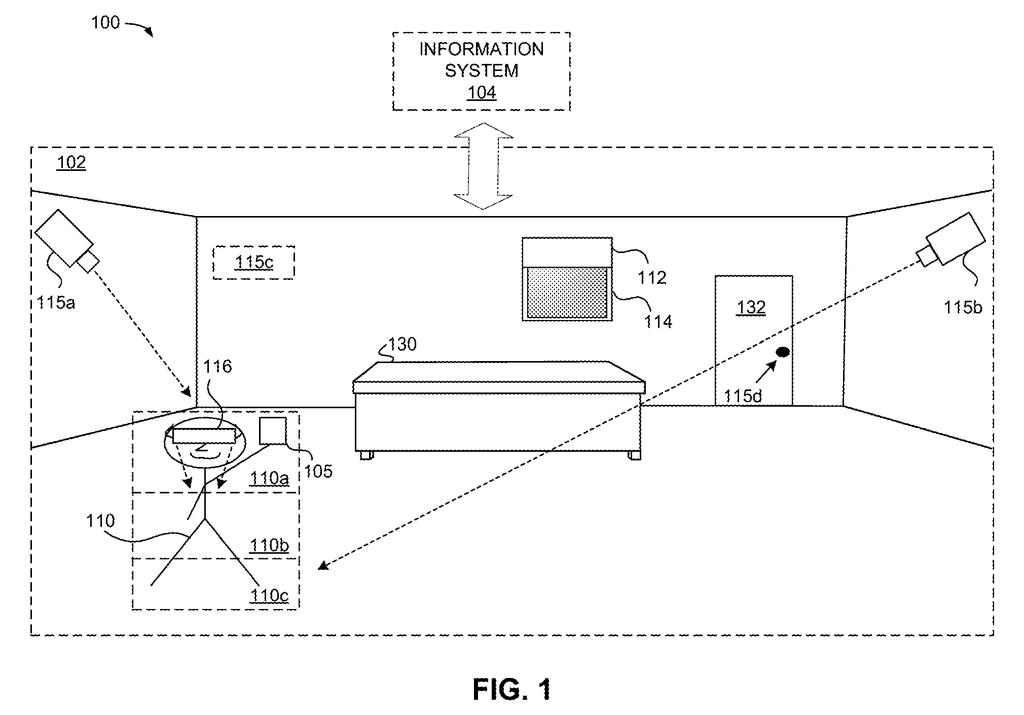
This patent describes a fix: a second device, maybe your iPhone sitting on the desk or a Mac with a webcam, captures the parts of your face the headset can't see. The headset then confirms both cameras are looking at the same person, combines the two streams of data, and assembles a single, complete face model.
The result is a fuller picture of your face than either device could produce alone, which could make your avatar in a virtual meeting or game look much more like you.
receiving, from a sensor of the wearable electronic device, first sensor data depicting a first facial region of a user wearing the wearable electronic device; obtaining, from a second device separate from the wearable electronic device, second sensor data depicting a second facial region of the user …
Translation: The headset captures one part of your face while a separate device captures the rest.
How the system merges two cameras into one face model
The patent describes a three-step pipeline running on a wearable electronic device (think a headset or smart glasses).
- Step 1, Capture two partial views. The wearable's own sensor grabs one facial region, such as the area around the eyes and forehead. A second, separate device captures a different region, such as the lower face and mouth, that the wearable simply cannot see because the headset itself is in the way.
- Step 2, Confirm it's the same person. The system checks that the two data streams belong to the same user before combining anything. The patent doesn't lock in a single verification method, leaving room for face-geometry matching, biometric signals, or account-level confirmation.
- Step 3, Generate the unified model. The headset merges both data sources into one user model, a structured representation of the wearer's face that can be used for avatars, facial-expression tracking, or personalization features.
The second device is described only as "separate" from the wearable, so the patent covers a wide range of companion hardware. The wearable does the final computation, pulling data from the external device rather than offloading its own work.
What this means for AR headset avatars and privacy
For anyone using an AR or VR headset in a social setting, a realistic avatar is the closest thing to eye contact you get. A headset that can only see part of your face produces an avatar that looks stiff or wrong, which breaks the sense of presence that makes virtual meetings feel real. This patent points toward a fix that doesn't require redesigning the headset itself.
The privacy angle is also real. Stitching face data across two devices raises questions about where that combined model is stored and who can access it. The patent says nothing about data handling, so those questions would need answers before a feature like this ships in any consumer product.
Apple's 61st filing we've tracked since May in our AR glasses research watch adds to earlier applications like two-sensor headset detection and dark hand tracking with invisible light.
The core problem is real: face-covering headsets make video calls look uncanny because the camera can never see what the headset is hiding. Using a second nearby camera, say a laptop or phone, to fill in the missing parts of your face is a sensible fix, and this patent describes exactly that approach.
Getting there is harder than it sounds. The headset has to find the second device, confirm it is looking at the same person, and stitch two video feeds together in real time without any visible seam or delay. That is a coordination challenge the patent identifies but does not solve in detail.
The shortest road to a product is probably a paired setup where both devices already know each other and one is already pointed at your face during a call, but that requires new software on at least two devices before any of this works in the real world.
There are more where this came from
We read every patent application Big Tech publishes and send you the ones worth knowing. Plain English, free, every week.
The drawings
6 drawing sheets from US 2026/0289929 A1 · click any drawing to enlarge


Want this weekly breakdown for a company we don't cover? Patentlyze Pro →
Be the first to weigh in